
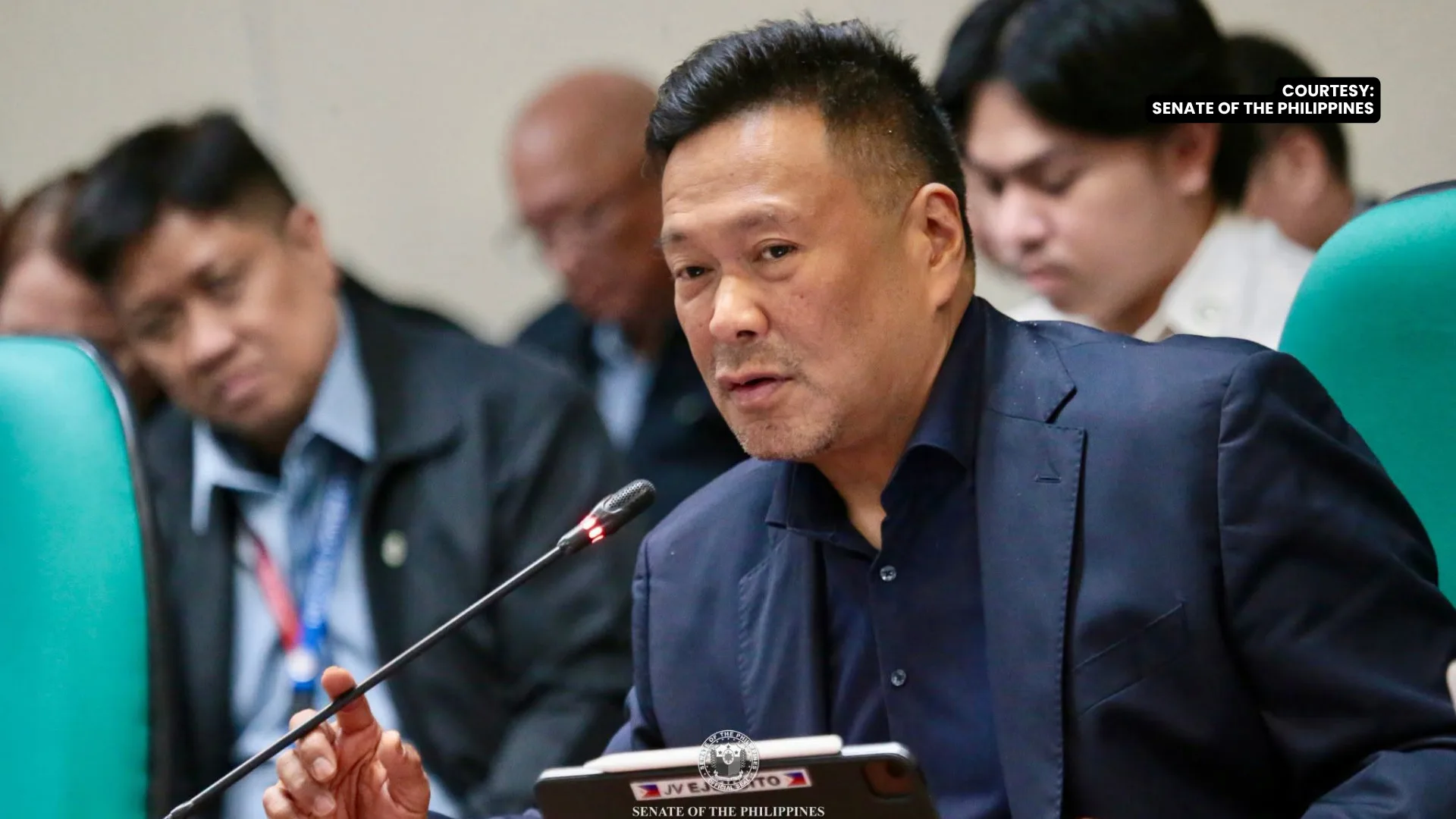
At Thursday’s budget hearing, Senate Finance Committee Chairperson Senator JV Ejercito pressed the National Irrigation Administration (NIA) to pivot away from piecemeal projects and commit to long-term water impounding and retention infrastructure, citing the double benefit of mitigating chronic floods in Bulacan and Pampanga while securing agricultural irrigation.
Ejercito advocated for a unified master plan for Central Luzon designed to capture severe rainfall during wet months to safeguard farmlands during dry spells.
”Dapat paghandaan na rin natin hindi lamang kung paano magdadala ng tubig sa ating mga sakahan, kundi kung paano tayo mag-iipon at magre-retain ng tubig habang mayroon pa tayong sapat na supply,” Ejercito said.
“Kung gagastos din lang tayo sa irrigation, pero kung wala ring dadaloy na tubig, parang sayang, ‘no? So we really need to think about the water retention facilities, masimulan man lang,” Ejercito said.
The lawmaker from San Juan emphasized that solving the region’s water challenges requires deep operational synergy between the NIA and the Department of Public Works and Highways (DPWH), aligning major public works with agricultural needs.
“Dapat ’yan, ‘yung tubig, lahat may convergence from NIA, ’yung mga irrigation, mga retention, pati dun sa mga malalaking proyekto rin ng DPWH,” he noted.
Calling out the agency’s history of delayed flagship projects, Ejercito questioned why critical water developments remain stalled on paper while funding gets dispersed across smaller, fragmented initiatives.
“Parang just like in any other department or agencies, instead na mag-concentrate tayo dun sa mga big-ticket items na mga dapat gawin, eh patsi-patsi,” Ejercito said.
“So we must ask: Were the projects funded actually implemented? Ilang kilometro ng irrigation canals ang naitayo o naayos? Ilang ektarya ng sakahan ang nadiligan? Ilang magsasaka ang nakinabang? At higit sa lahat, nadagdagan ba ang kanilang ani at kita?” he added.
He also voiced skepticism over the widespread construction of concrete river barriers and revetments, suggesting that such structures often yield fewer long-term returns compared to functional water storage infrastructure.
“Parang naging paborito nila, dati ripraping, tapos ngayon lahat ng ilog na puwedeng i-semento, kahit walang community, lahat naka-semento,” he remarked.
In contrast, well-designed dams and retention basins offer multi-purpose solutions, simultaneously tackling flood control, irrigation needs, municipal water supply and clean hydroelectric power.
To turn these concepts into reality, Ejercito requested that NIA present detailed proposals for priority dams and impounding units alongside multi-year financial roadmaps, allowing the Senate finance panel to allocate initial funding in the upcoming budget cycle.
“Yun ang kulang sa atin talaga, yung master plan eh, no? Laging kung ano lang ang puwede, may patsi-patsi na proyekto. Kailangan natin pang-matagalan,” Ejercito said.
Acknowledging the tight fiscal constraints currently facing national coffers, Ejercito maintained that high-impact water infrastructure remains a non-negotiable priority for Central Luzon’s long-term safety and food security.
“Kailangan nang gawin eh, kailangan ‘to ginawa kahapon pa,” Ejercito said.
The committee subsequently approved NIA’s proposed P233.85-billion budget for 2027, a 266% increase over its 2026 allocation, clearing the measure for full plenary debates.