
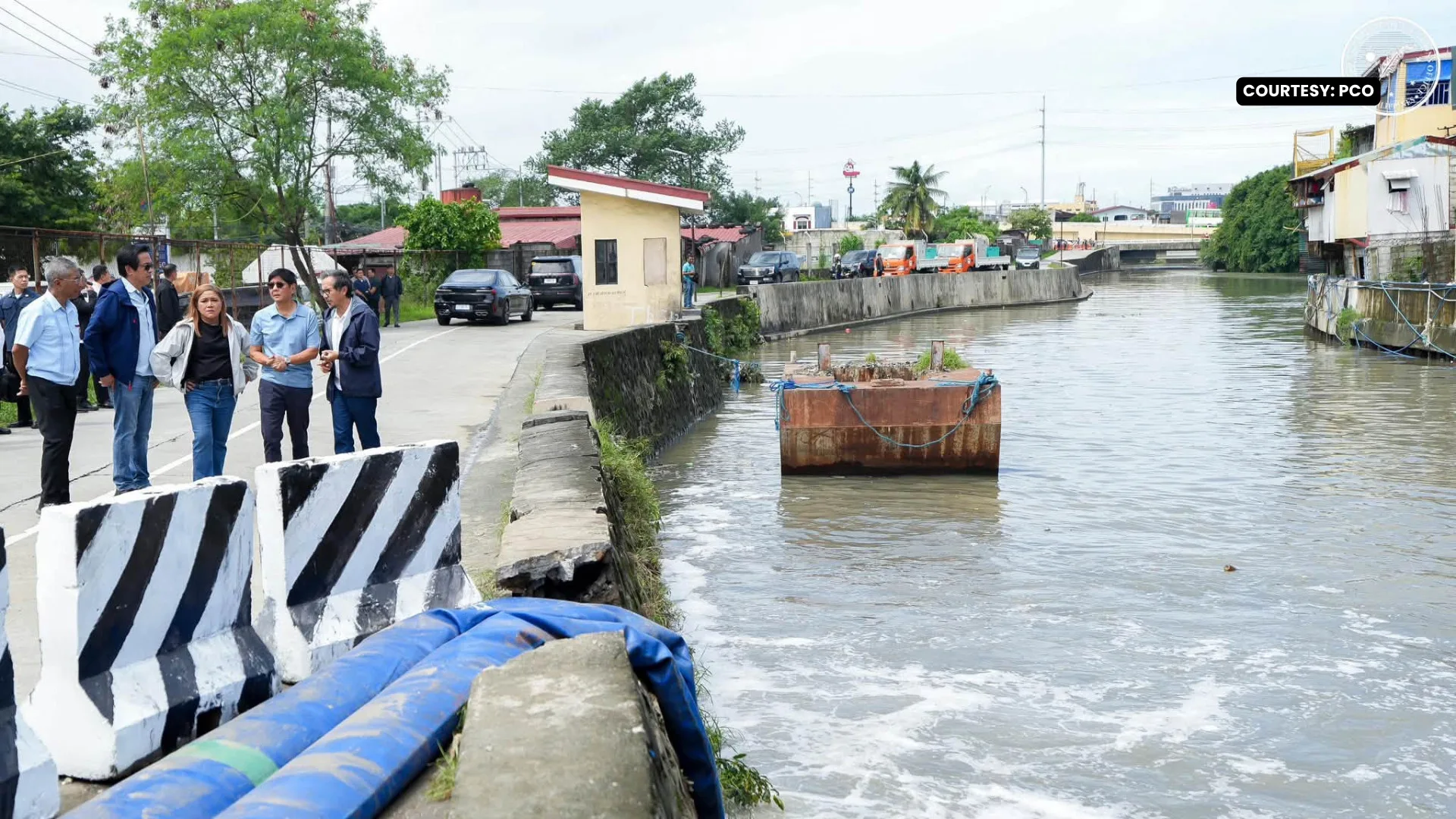
Senator Panfilo Lacson on Wednesday called on the government to establish a technically sound, long-term flood control master plan that remains insulated from political shifts to guarantee continuity across changing presidential administrations.
Lacson raised the concern after noting a repetitive cycle where comprehensive flood control programs developed under previous leaders were routinely scrapped by incoming successors, leaving citizens exposed to severe seasonal flooding.
“Dapat may continuity, multi-administration. Dapat nagko-cross nga administration ang plano kung ito’y maayos. Puwede siguro mag-modify, mag-adapt sa bagong situwasyon sa pagbabago ng panahon, ero nandiyan ang basic master plan kung paano tutugunan ang problema ng pagbaha,” Lacson said in a radio interview.
He highlighted that under the Aquino administration, former Public Works Secretary Rogelio Singson had established a comprehensive flood control master plan, which was subsequently set aside when the Duterte administration took office.
“But when there was a change in administration, that plan was discarded. This has been the pattern where each administration insists on having its own master plan,” Lacson noted.
Had Singson’s framework been sustained and executed, Lacson pointed out that much of the P1.939 trillion poured into the Department of Public Works and Highways (DPWH) for flood mitigation projects could have been saved or utilized far more efficiently.
Citing testimony provided by former DPWH officials Roberto Bernardo, Henry Alcantara and Brice Hernandez, Lacson stated that an estimated 35 to 40 percent of the P1.939 trillion budget was siphoned off through corruption.
To establish accountability over compromised public works, Lacson urged civil engineering organizations to assist the government in evaluating infrastructure damaged by monsoon rains. He suggested that professional engineers form dedicated inspection teams to conduct forensic investigations on damaged roads, bridges and dikes to determine whether failures were caused by faulty engineering designs or substandard construction.
“We call on associations of civil engineers to help in the inspection of infrastructures, including those damaged by recent floods. They can use forensics to determine the cause of the damages. If the damage stemmed from faulty structural design or implementation, then the contactors must be made accountable,” Lacson urged.
“As of now, no one is being held accountable. If we are to go after those responsible, we must start inspecting projects implemented in the last five years or so,” he added.