
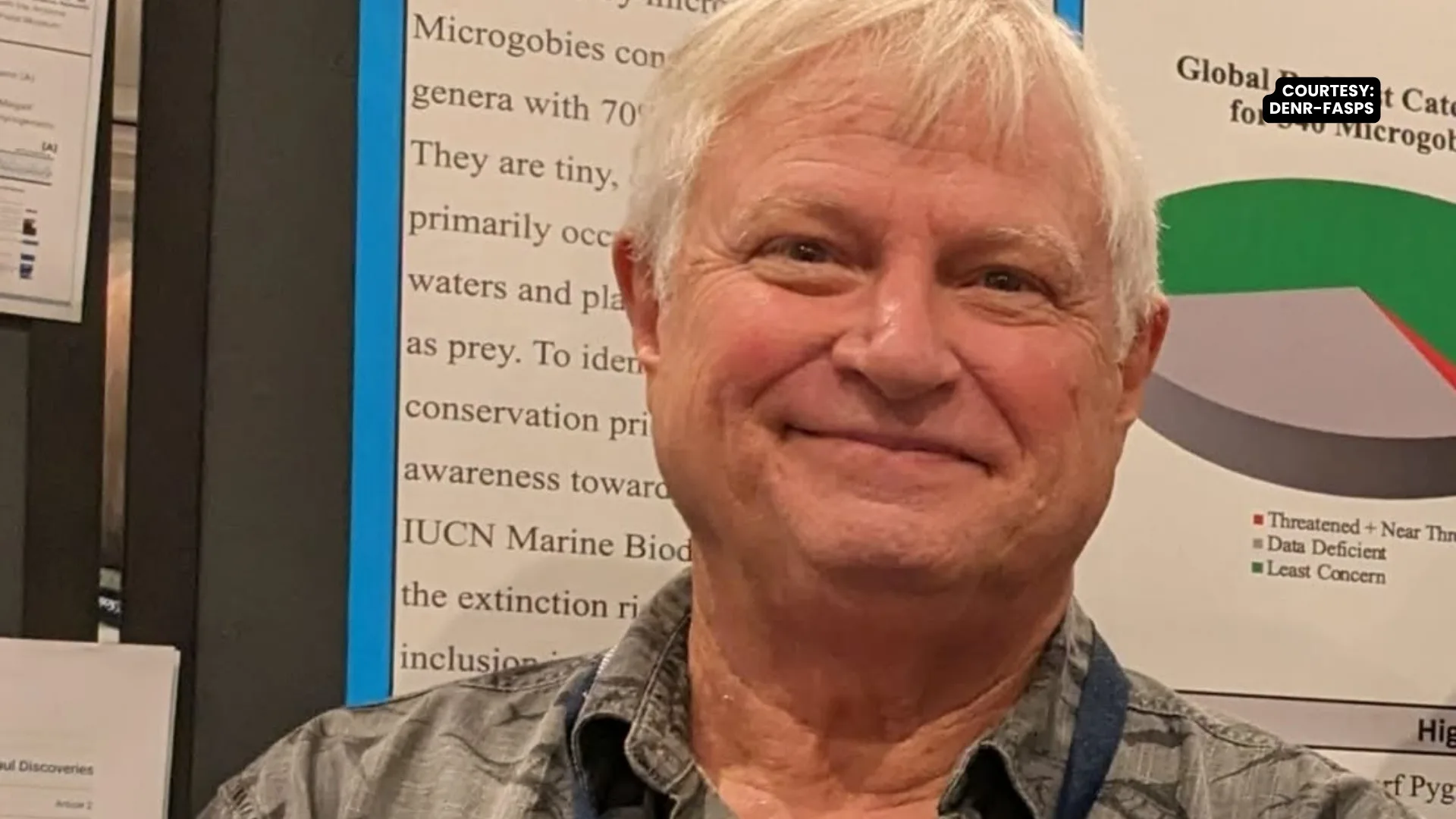
The Department of Environment and Natural Resources has paid tribute to slain American marine biologist Dr. Kent Carpenter, honoring his more than three decades of contributions to marine conservation and biodiversity protection in the Philippines.
Environment Secretary Juan Miguel Cuna expressed condolences to Carpenter’s family and the scientific community following his death in a shooting incident at his home in Barangay Ajong, Sibulan, Negros Oriental.
“The DENR stands in solidarity with Dr. Carpenter’s family, colleagues, and the scientific community during this time of profound loss,” Cuna said.
Cuna said the department would extend appropriate assistance to Carpenter’s family in recognition of his significant contributions to the country’s marine conservation efforts.
For decades, Carpenter collaborated with Filipino researchers, including National Scientist and former DENR Secretary Dr. Angel Alcala, in documenting the Philippines’ rich marine resources.
His studies on the Tubbataha Reefs and other marine ecosystems significantly expanded scientific understanding of the country’s biodiversity.
Carpenter’s research was also instrumental in identifying the Verde Island Passage as the “Center of the Center of Marine Shorefish Biodiversity,” one of the world’s richest marine biodiversity hotspots.
His work likewise reinforced the global significance of the Tubbataha Reefs Natural Park as a UNESCO World Heritage Site.
Beyond his scientific achievements, Carpenter served as an expert witness in the Philippines’ 2016 South China Sea Arbitration case, presenting scientific evidence on environmental damage caused by dredging and coral reef destruction in the West Philippine Sea.
The DENR said Carpenter’s research and legacy would continue to guide the management of marine protected areas, fisheries conservation and biodiversity initiatives across the country.
Silliman University and the advocacy group Agham also remembered Carpenter as an outstanding scientist, mentor, and environmental advocate whose lifelong dedication to marine conservation would continue to inspire future generations of researchers and conservationists.