
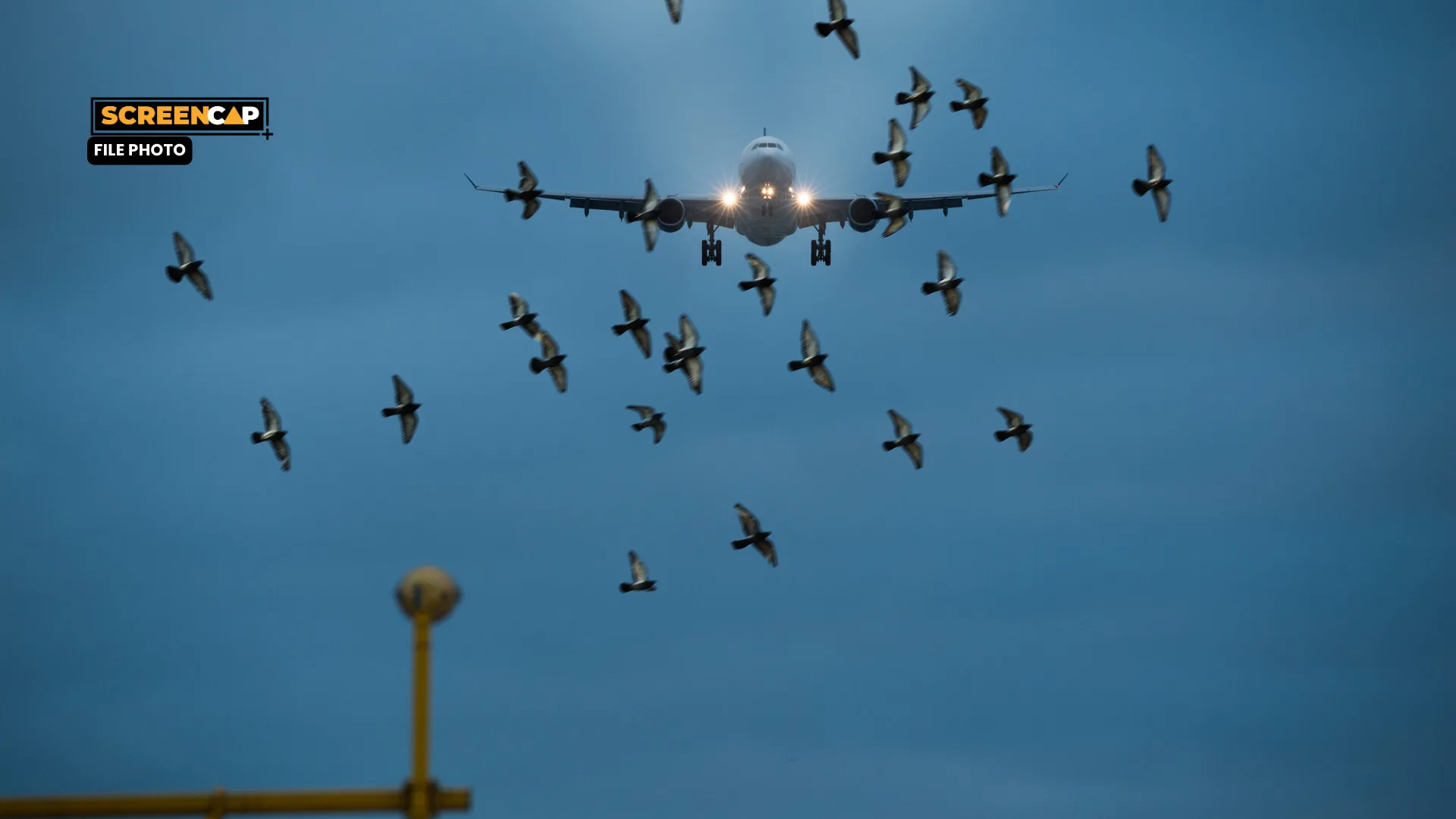
Sen. Raffy Tulfo on Thursday urged concerned government agencies to strengthen measures against bird strikes, warning that such incidents pose serious risks to lives, aircraft, and airport operations.
“In aviation, we spend billions making aircraft smarter, engines stronger, and pilots better trained. But sometimes, the biggest threat is not engine failure — it’s a flock of birds,” Tulfo said during the Senate Committee on Public Services hearing on the proposed Magna Carta of Commuters Act.
Tulfo cited the December 29, 2024, bird strike involving Jeju Air Flight 2216, which he described as the recorded “deadliest aviation accident” after a flock of birds hit the aircraft, killing 179 people.
In the Philippines, Tulfo said the government recorded 953 bird strikes in 2025, heavily concentrated at the Ninoy Aquino International Airport and Davao International Airport due to high flight volumes. He said 250 more bird strikes were recorded in the first half of the year.
“This is not about expecting the worst. It’s about preparing for what we already know is possible. Before the migration season starts this September to February, we need to be ready,” Tulfo said.
Tulfo noted that one of the reasons for the high number of bird strikes is the presence of wetland parks near airports.
He cited the Las Piñas-Parañaque Wetland Park, which is home to around 5,000 birds daily and is located just two to three kilometers from NAIA runway 06, the country’s busiest airport.
“That’s why it is not surprising that NAIA recorded 51 bird strike incidents this year,” Tulfo said.
He also said Clark International Airport is near the Candaba Swamp in Pampanga, while the Mactan-Cebu International Airport is close to the Olango Island Wildlife Sanctuary.
“These airports lie along the East Asian-Australasian Flyway, one of the busiest migratory bird corridors. This is nature. But to save lives, we must be willing to rethink old approaches,” Tulfo said.
Tulfo also raised concern over pigeon racing events conducted near NAIA, warning that bird releases close to airport runways could endanger incoming aircraft.
“Kapag may pigeon release Malapit sa airport like NAIA, habang may eroplanong lumalapag, obvious naman na safety hazard. What’s surprising is that pigeon racing events are not even required to coordinate with CAAP or Air Traffic Control before securing an Animal-Event Clearance (When there is a pigeon release near airports like NAIA, it is obvious that it is a safety hazard when airplanes come in to land. What’s surprising is that pigeon racing events are not even required to coordinate with CAAP [Civil Aviation Authority of the Philippines] or Air Traffic Control before securing an Animal-Event Clearance),” he said.
Sen. Joseph Victor “JV” Ejercito also called for the immediate allocation of funds for bird dispersal technologies to protect commercial flights, saying persistent bird strikes across major domestic gateways require proactive aviation safety measures.
Ejercito said the 953 bird strikes recorded last year are a matter of serious concern.
During the hearing, Ejercito questioned the Civil Aviation Authority of the Philippines on its existing wildlife hazard management equipment. CAAP officials said they currently rely on manual dispersal methods such as lasers, flags, gas cannons, and firecrackers.
As the new chairman of the Senate Committee on Finance, Ejercito said he would help CAAP secure modern, specialized acoustic or sonic bird deterrent systems for vulnerable airports.
He asked CAAP and the Department of Transportation to submit a comprehensive cost estimate for the specialized devices before deliberations on the proposed 2027 national budget.