
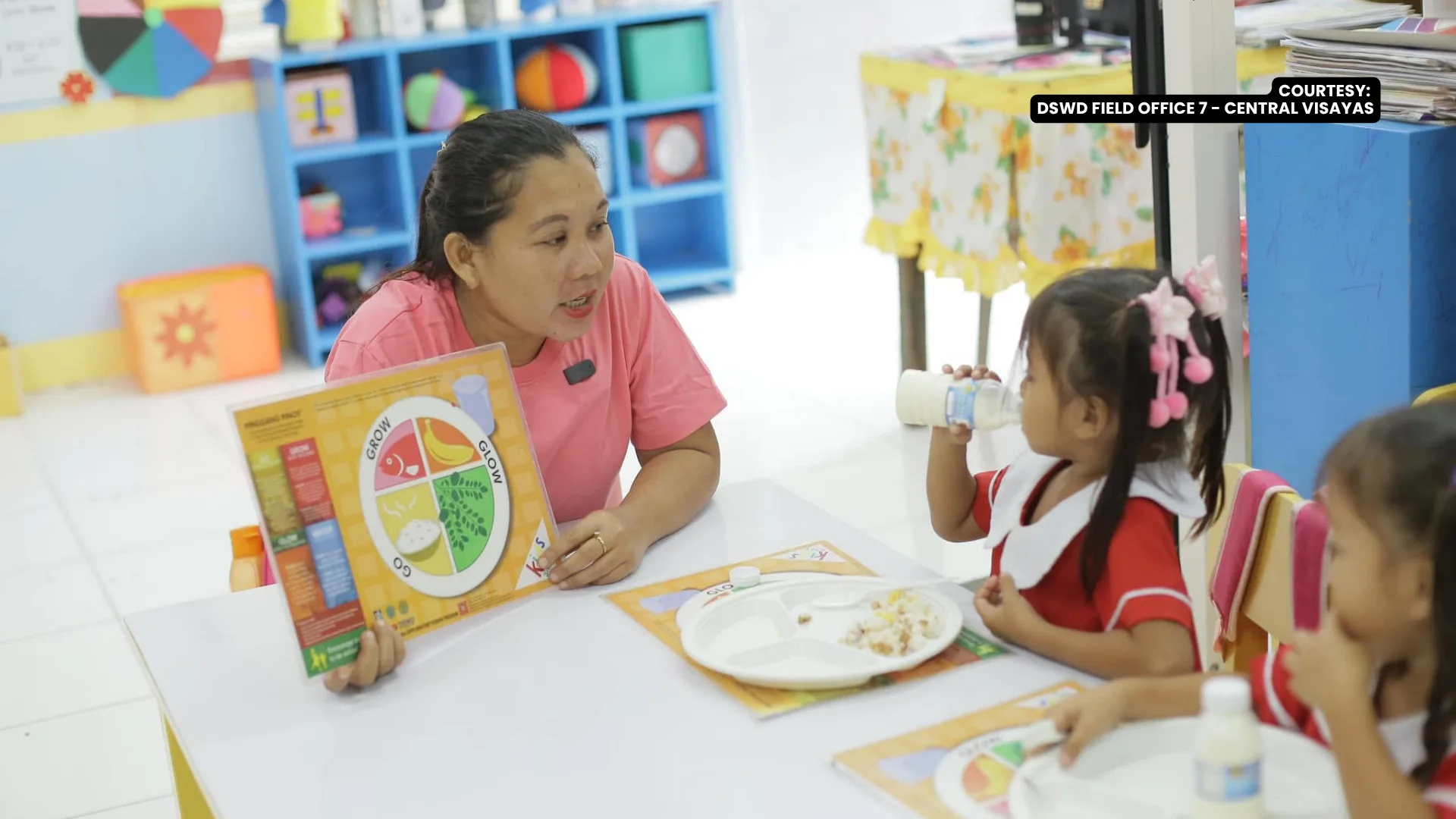
Local government units (LGUs) are being urged to intensify nutrition and early childhood interventions following new government data showing an uptick in child stunting among Filipino children.
The call comes amid a reported increase in stunting to 25.3 percent in 2025, up from 23.6 percent in 2023, based on a survey conducted by the Department of Science and Technology–Food and Nutrition Research Institute (DOST-FNRI)).
The rise reverses a previously steady downward trend, raising concerns over the nutritional status of children under five years old nationwide.
Senate President Win Gatchalian stressed that LGUs play a key role in addressing the issue, as they are tasked with implementing the Early Childhood Care and Development (ECCD) system under Republic Act 12199.
The ECCD framework covers health, nutrition, and development programs for children below five years old, particularly those in vulnerable communities.
Officials warned that stunting has long-term consequences on learning capacity, health outcomes, and future productivity, underscoring the urgency of stronger local intervention.
In a statement, Gatchalian emphasized that delaying action could further affect children’s development during their most critical growth years.
“Hindi tayo maaaring mag-aksaya ng panahon sa pagsugpo ng stunting, lalo na’t kalusugan, kakayahan, at pagkatuto ng ating mga kabataan ang nakataya. Kailangan kumilos agad ang mga LGU para magpatupad ng mga programang pang-nutrisyon para sa mga bata,” he said.
The 2026 national budget includes an allocation of about ₱9.26 billion for the Department of Social Welfare and Development’s Supplementary Feeding Program, which supports children aged two to five enrolled in child development centers and supervised neighborhood play programs.
Officials said sustained coordination between national agencies and LGUs is critical to reversing the recent increase and improving child nutrition outcomes nationwide.