
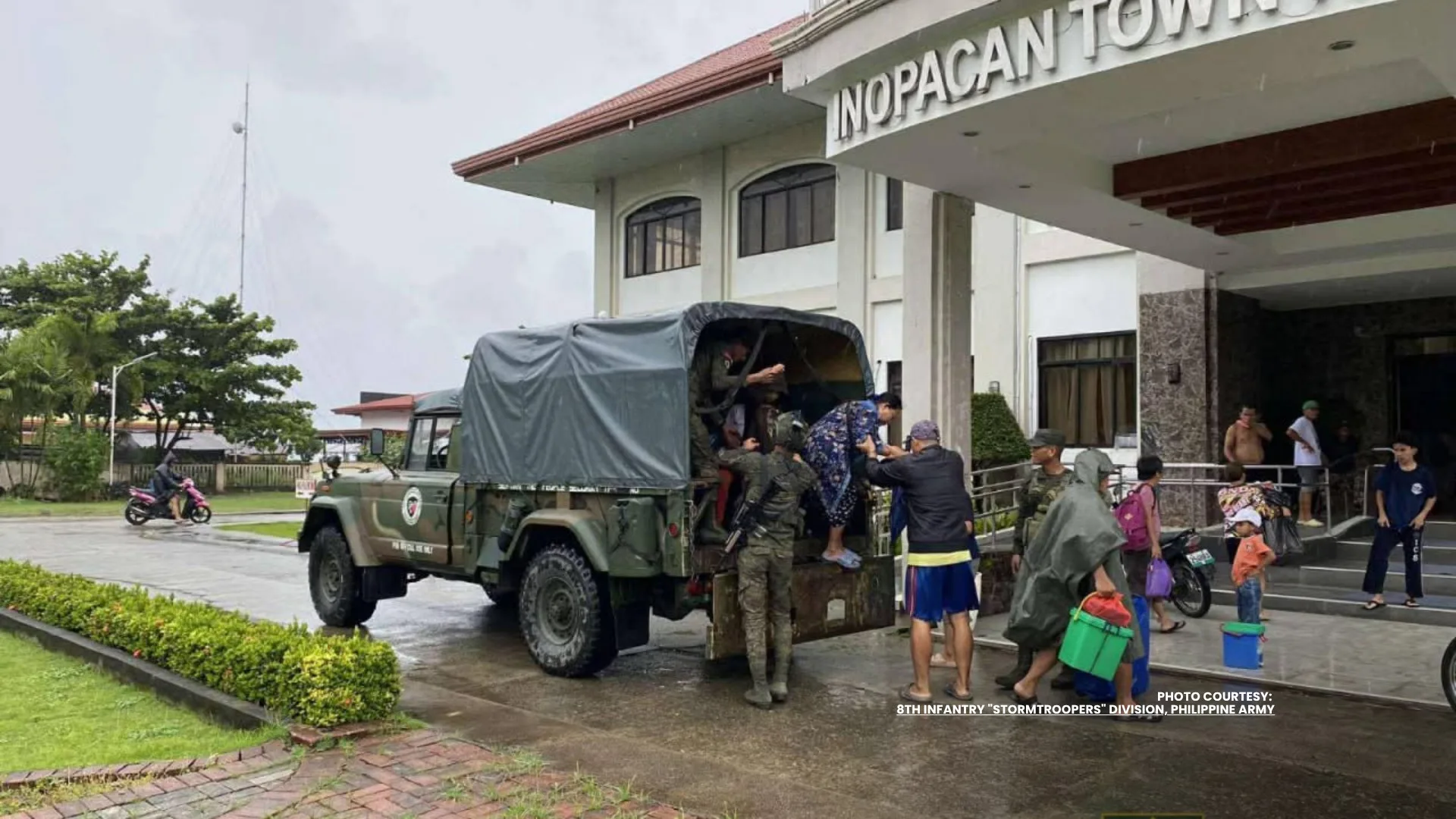
The Philippine Army’s 8th Infantry Division (8ID) is strengthening its disaster response capabilities in Eastern Visayas through a series of Tactical Combat Casualty Care (TC3) and Disaster Response and Rescue Operations (DRRO) training programs involving reservists and emergency response units across the region.
A total of 262 participants from Community Defense Centers under the Reserve Command and the 8ID Emergency Response Company are undergoing intensive training designed to enhance readiness for disasters, emergencies, and humanitarian operations.
The sessions are being conducted simultaneously over two weekends in June 2026 in Catarman (Northern Samar), Borongan City (Eastern Samar), Catbalogan City (Samar), Tacloban City (Leyte), Maasin City (Southern Leyte), and Naval (Biliran), bringing together reservists and active personnel in a coordinated capacity-building effort.
Training modules include Basic Life Support, Tactical Combat Casualty Care, disaster response and rescue operations, incident management, and emergency coordination. Participants are also exposed to scenario-based exercises aimed at developing practical skills in casualty handling, search and rescue, emergency medical response, and crisis leadership.
Subject matter experts from both military and civilian sectors are involved in the program, ensuring that instruction reflects real-world conditions and operational demands during large-scale emergencies.
The initiative forms part of the 8ID’s broader implementation of the “Total Force Concept,” which integrates regular troops, reservists, government agencies, and local communities into a unified disaster response framework.
It also supports Task Force AYUDA, a division-level initiative activated earlier this year to improve preparedness and response for humanitarian assistance and disaster relief operations in Eastern Visayas, a region frequently affected by typhoons, flooding, and other natural hazards.
Military officials said the growing pool of trained reservists will help augment frontline responders during large-scale emergencies, particularly when local government resources are overwhelmed.
By building this layered response structure, the 8ID aims to improve deployment speed, coordination, and operational effectiveness in crisis situations.
For many reservists, the training goes beyond military preparation, serving as a direct contribution to community resilience. As citizen-soldiers drawn from various civilian professions, they are positioned as additional manpower during emergencies when rapid response is critical.
Together with the 8ID Emergency Response Company, these reservists are being developed into a wider network of trained responders capable of supporting disaster operations across Eastern Visayas.
The division said continued investment in training and preparedness is essential to building a more responsive and resilient force, ensuring that assistance can be delivered quickly and effectively whenever disasters strike.