
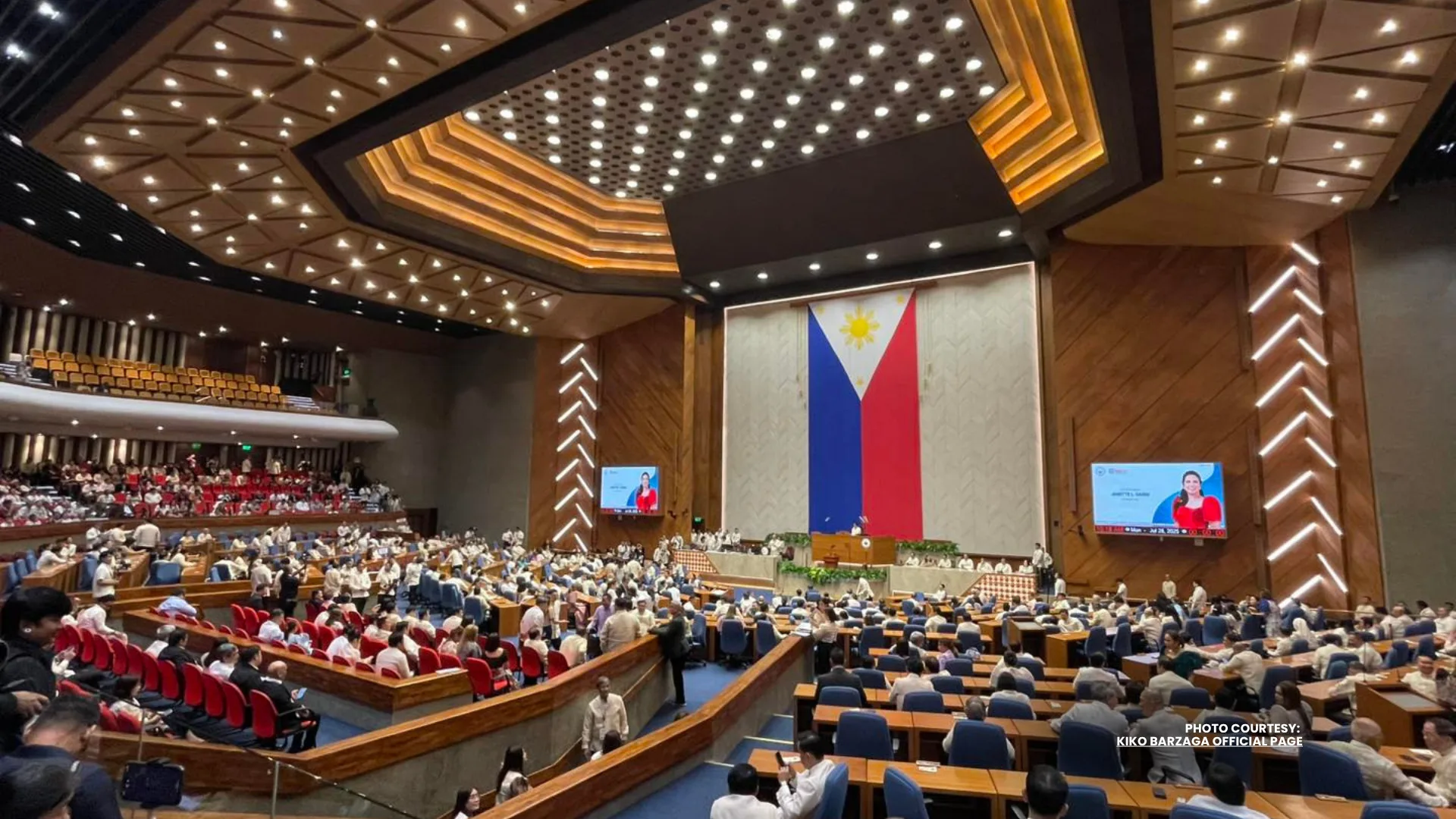
The House of Representatives has passed on third and final reading a major bill seeking to ban political dynasties, moving forward a decades-old constitutional directive to make public office more accessible to Filipinos beyond established political families.
Voting 271 in favor, 16 against, with seven abstentions, lawmakers passed House Bill No. 8389, or the proposed Anti-Political Dynasty Act, one of the most significant electoral reform measures approved by the chamber in recent years.
The bill was principally authored by Speaker Faustino “Bojie” G. Dy III and House Majority Leader Ferdinand Alexander “Sandro” A. Marcos. It also carried the support of 159 co-authors.
Under the measure, spouses and relatives within the second degree of consanguinity or affinity would be prohibited from simultaneously holding or seeking elective positions within the same political jurisdiction.
The proposed ban would apply to national and local elective posts, including the presidency, vice presidency, Senate, House of Representatives, provincial governments, cities, and municipalities.
Candidates would also be required to submit sworn declarations to the Commission on Elections stating that their candidacy would not create a prohibited political dynasty relationship.
Marcos said the House approval of the measure showed that Congress was prepared to confront one of the most entrenched problems in Philippine politics.
“This measure recognizes a reality in Philippine politics while also responding to a constitutional mandate that has remained pending for decades. The objective is to promote broader political participation and strengthen public trust in our democratic institutions,” Marcos said.
The bill seeks to implement Section 26, Article II of the 1987 Constitution, which directs the State to guarantee equal access to opportunities for public service and prohibit political dynasties “as may be defined by law.”
Marcos said the measure aims to restore public confidence in elections by opening the political system to more Filipinos, including those without family ties to established political clans.
“We want to encourage a political environment where leadership is determined not only by familiarity or family ties, but also by merit, competence and the confidence of the Filipino people,” he said.
“A stronger democracy requires broader participation. We want more Filipinos, especially young and capable leaders from ordinary backgrounds, to believe they have a real chance to serve their communities and their country,” he added.
The measure also provides penalties for concealment, submission of falsified documents, coercion, and other acts intended to evade the proposed prohibition.
Following its approval in the House, the bill will now be transmitted to the Senate for consideration.