
The Department of Social Welfare and Development (DSWD) clarified that beneficiaries of the Walang Gutom Program (WGP) are identified through government poverty and food security data, not through walk-in applications.
DSWD Undersecretary Edu Punay said the program remains a targeted anti-hunger intervention for food-poor households, with beneficiaries selected based on official datasets from the government.
Punay said the agency initially used Listahanan 3 as its baseline, cross-matched with the Philippine Statistics Authority’s (PSA) Family Income and Expenditure Survey to identify the first batches of beneficiaries.
“At the time of the WGP’s launch in 2023, the prevailing monthly food threshold set by the PSA for a family of five was P9,581. This means that a household is considered food-poor if it spends less than P106.46 for a single meal per day, or P21.29 per person,” Punay said.
“Sila yung mga target natin na maging benepisyaryo ng programa,” he added.
With the institutionalization of the Community-Based Monitoring System (CBMS), Punay said succeeding beneficiaries will be drawn from the updated CBMS database of food-poor households.
“Sa pagpapatuloy po ng ating programa, we are targeting to complete and reach the 750,000 household beneficiaries at the soonest possible time. Ang gagamitin na po natin ngayon ay ang most updated na listahan ng PSA na tinawag na CBMS,” he said.
Punay stressed that the program does not accept applications, unlike other social assistance initiatives, because selection is based on data-driven targeting.
“Wala pong aplikasyon dito sa WGP dahil ito ay targeted. Ibig sabihin, pinipili natin ang benepisyaryo na talagang nangangailangan base sa mga datos,” he said.
He said the program covers households that are food-poor, or those without sufficient capacity or access to food needed for a healthy diet.
Launched in 2023 and institutionalized in 2024 through Executive Order No. 44, the WGP serves as the government’s flagship anti-hunger initiative aimed at reducing food insecurity and involuntary hunger among Filipino families.
The DSWD is implementing the program in partnership with the Asian Development Bank through the Reducing Food Insecurity and Undernutrition with Electronic Vouchers Project, or REFUEL, to expand and strengthen its coverage.
The project has a total cost of P74 billion, supported by an ADB loan to the Philippines and co-financed by the Agence Française de Développement and the OPEC Fund for International Development.
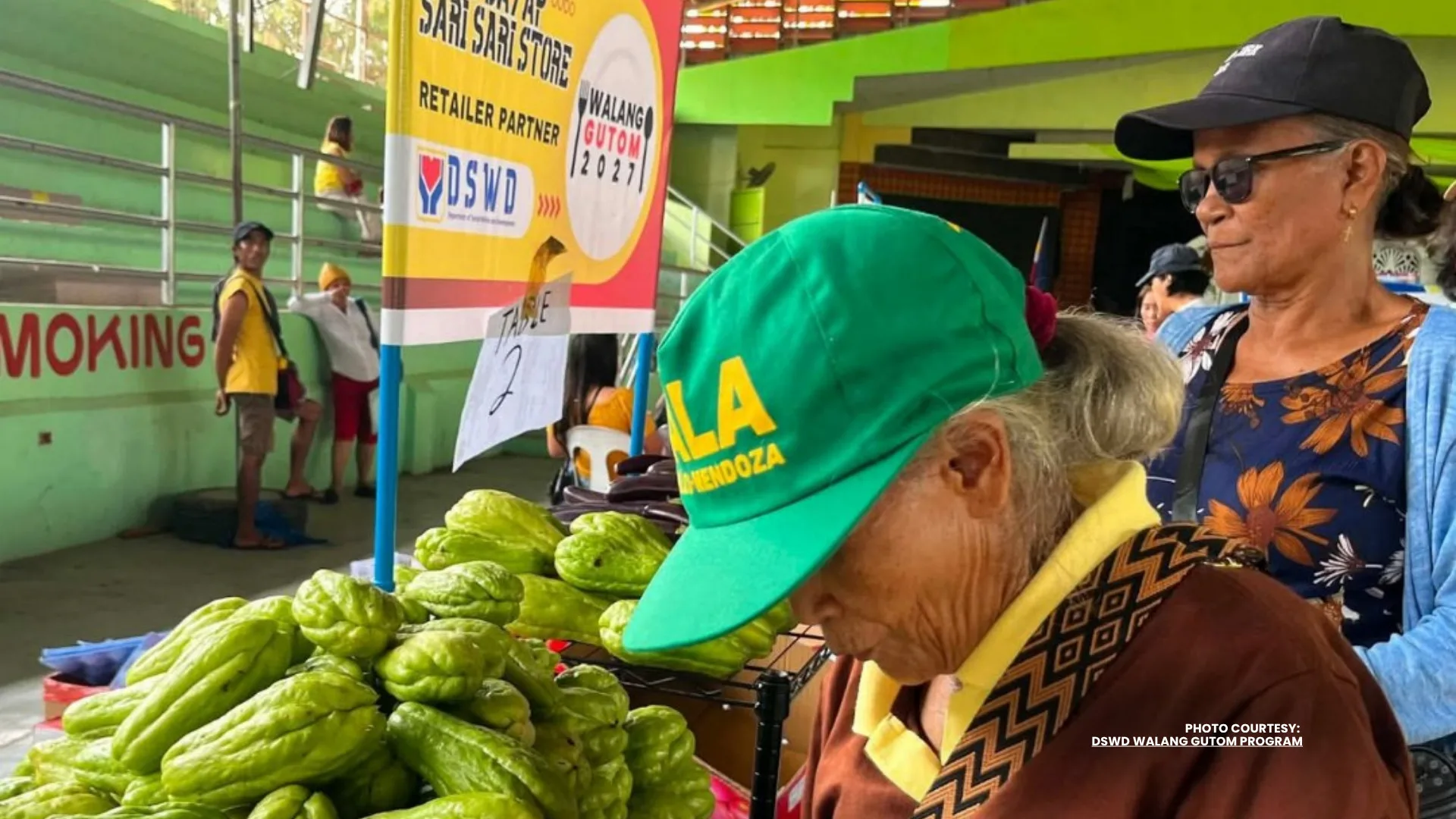
Under the program, beneficiaries receive P3,000 in monthly food credits through electronic benefit transfer cards, which may be used to buy nutritious food from DSWD-accredited retail stores.
The stores are allowed to sell only items included in the approved food basket or those recommended by the Food and Nutrition Research Institute.
Beneficiaries are required to allocate 50 percent of their monthly food credits to carbohydrates such as rice and sweet potato, 30 percent to protein items, and 20 percent to fiber-rich foods such as fruits and vegetables.
The DSWD said 600,000 households are currently benefiting from the program, with the agency working toward reaching 750,000 household beneficiaries.