
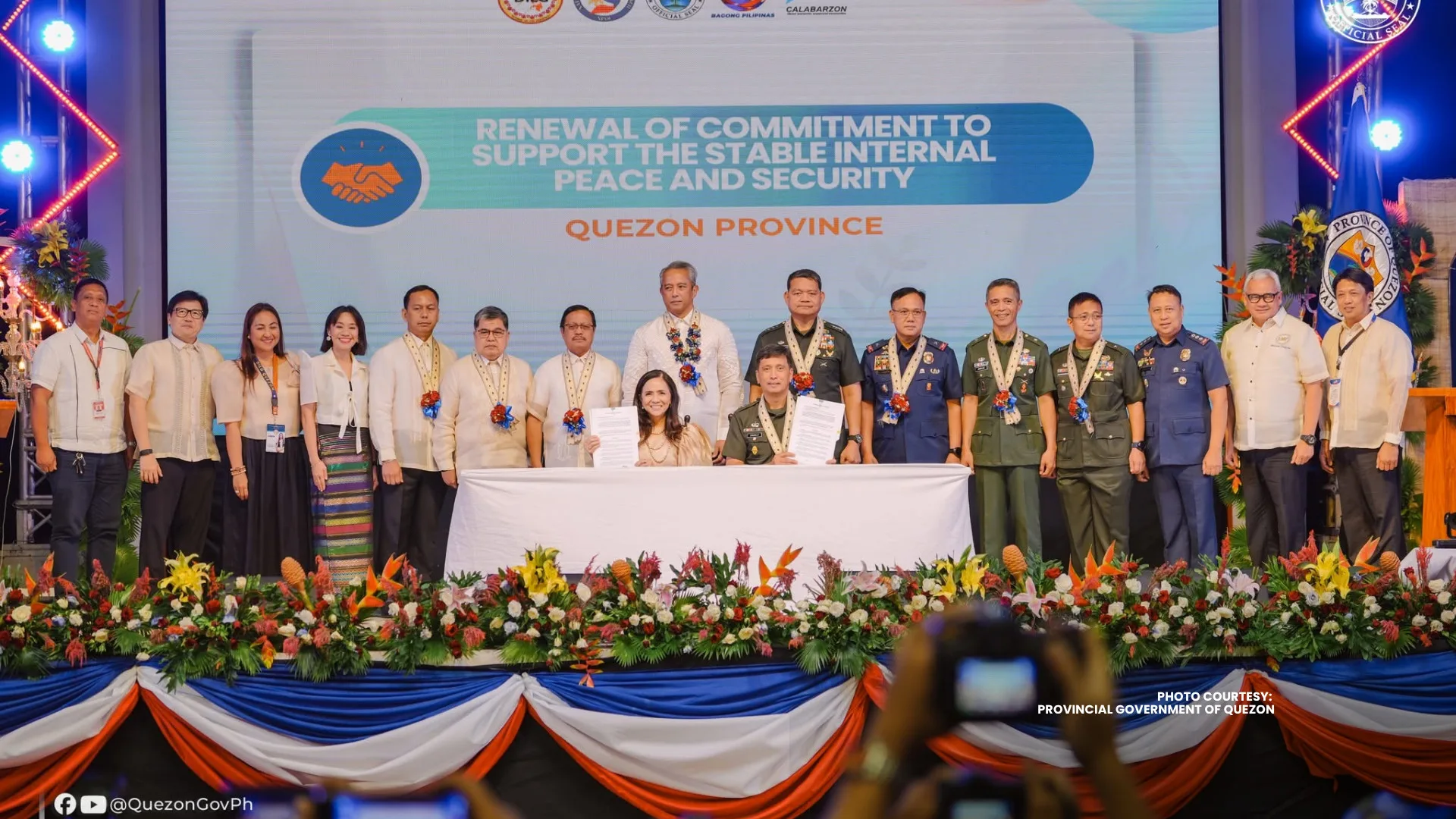
The CALABARZON region (Region 4-A) has been officially placed under a State of Stable Internal Peace and Security (SIPS), marking what authorities describe as a significant milestone in the government’s long-running campaign to end communist insurgency and consolidate peace in affected communities.
The declaration, made on June 12, 2026, is being framed as both a security achievement and a community-driven outcome, reflecting what officials say is the sustained rejection of armed violence by residents across Cavite, Laguna, Batangas, Rizal, and Quezon.
The development forms part of a broader national trend of declining insurgent influence, with several provinces and regions already declared insurgency-free or under SIPS status. Areas in Cagayan Valley, Central Luzon, Western Visayas, and parts of Mindanao have likewise been cited in similar assessments, while additional declarations are expected in the coming days.
Since the launch of the National Task Force to End Local Communist Armed Conflict (NTF-ELCAC) in 2018, authorities report that 58 provinces have transitioned into stable peace conditions, alongside earlier regional milestones in Regions I, IX, and XI.
Officials said Southern Tagalog, long regarded as a strategic stronghold of the Communist Party of the Philippines–New People’s Army–National Democratic Front (CPP-NPA-NDF), carries particular historical weight in the government’s counterinsurgency campaign.
For decades, parts of the region were affected by armed encounters, recruitment activities, and alleged extortion practices that disrupted local livelihoods and delayed development projects. Communities in remote and rural areas were among those most affected, according to past security assessments.
The SIPS declaration signals what authorities describe as the normalization of security conditions, allowing greater focus on infrastructure, investment, and social services in previously conflict-affected areas.
Government stakeholders and local partners credited a combination of security operations, community engagement programs, and local governance initiatives for the improvement in peace conditions. These included efforts to encourage the surrender and reintegration of former rebels, as well as expanded delivery of basic services in underserved areas.
Officials and community representatives also highlighted the role of local governments, civil society groups, security forces, and residents in sustaining peace-building initiatives over the years.
The declaration, however, is not being treated as an endpoint, but as a transition toward long-term development, with authorities emphasizing the need to sustain stability and prevent the resurgence of armed activity.
With the SIPS status in place, focus is expected to shift toward economic recovery, improved public services, and expanded opportunities in education, livelihood, and tourism across Southern Tagalog.
Authorities said the development underscores a broader national objective: to ensure that sustained peace translates into inclusive growth and long-term stability for communities that were once affected by decades of conflict.