
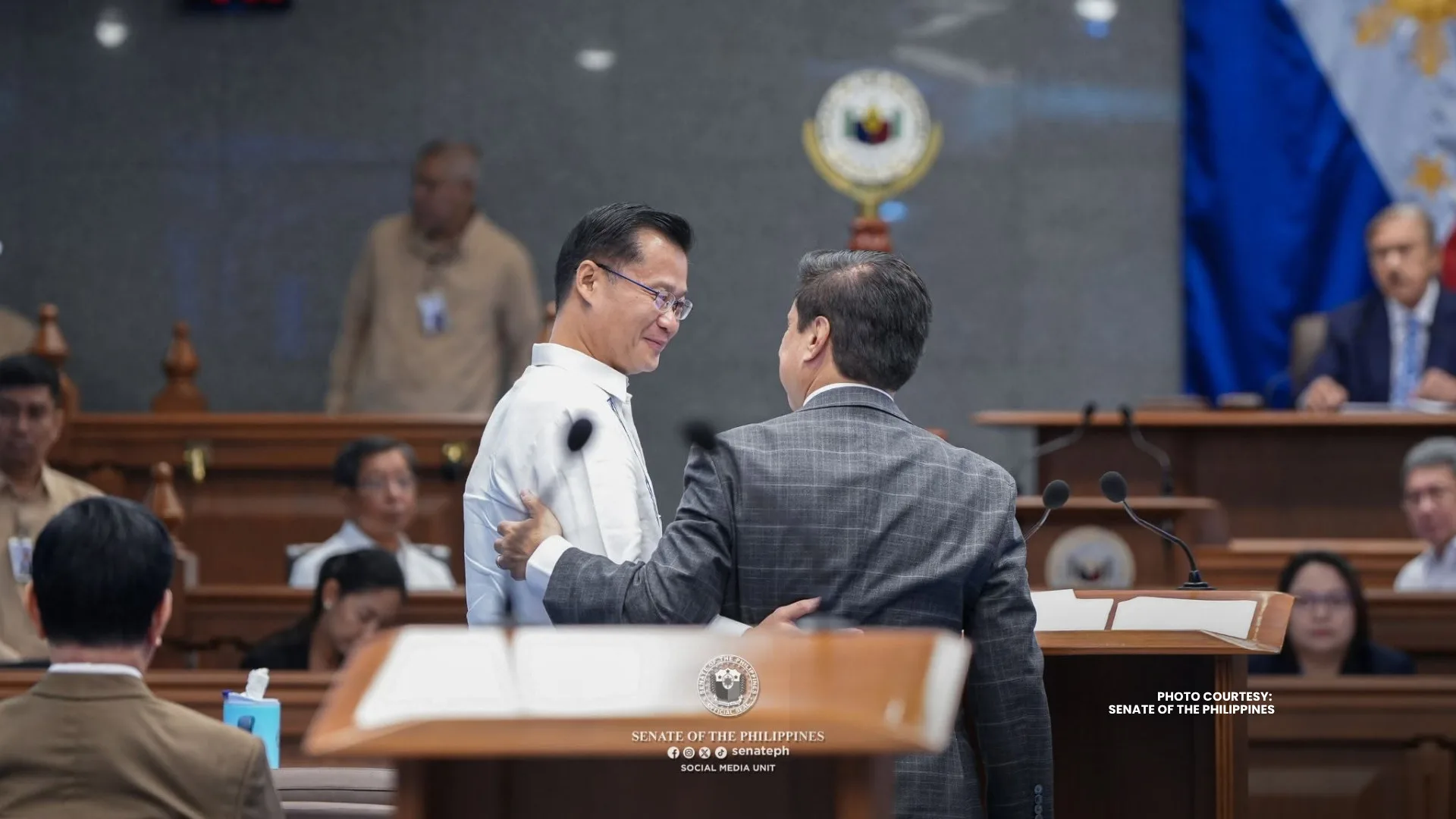
House Majority Leader Ferdinand Alexander “Sandro” Marcos on Wednesday welcomed the election of Senator Sherwin Gatchalian as Senate President, saying the leadership change could help the upper chamber move past recent internal divisions and return its focus to pending legislative work.
In an ambush interview, the legislator extended congratulations on behalf of the House of Representatives and expressed optimism over renewed coordination between the two chambers of Congress.
“On behalf of the House, we would like to congratulate Senate President Sherwin Gatchalian. We look forward to working with him,” he said.
He said Gatchalian’s assumption of the Senate leadership presents an opportunity to stabilize the chamber after weeks of political tension that had slowed down its proceedings and disrupted legislative momentum.
He cited Gatchalian’s leadership style as a key factor in restoring institutional focus.
“I have worked with him and I know how level-headed he can be. So I think that’s exactly what this current political climate needs… just the need for all of us to really get back to work,” he said.
The House Majority Leader also pointed out that Congress still has several matters to address during the special session called by President Ferdinand Marcos Jr., including pending bicameral conference committee reports awaiting ratification.
He added that the Commission on Appointments is also expected to act on pending nominations and promotions, particularly those involving senior officials of the Armed Forces of the Philippines.
“We passed a number of resolutions, we are awaiting some bicam reports for ratification, and of course for the Committee on Appointments to appoint and confirm the pending matters,” Marcos said.
He noted that delays in Senate proceedings had affected the confirmation of several military officers slated for promotion.
“I believe it’s the 7 or 8 generals who were due for promotion but as a result of the leadership struggle in the Senate were not able to be confirmed,” he added.
Gatchalian’s election to the Senate presidency comes after a period of leadership instability that had slowed legislative activity in the upper chamber, prompting calls for renewed institutional stability and coordination with the House.