Legislative oversight, statutory qualification frameworks, and systemic electoral integrity take priority in Congress as lawmakers evaluate legislative measures to address institutional weaknesses and enforce genuine constituency representation.
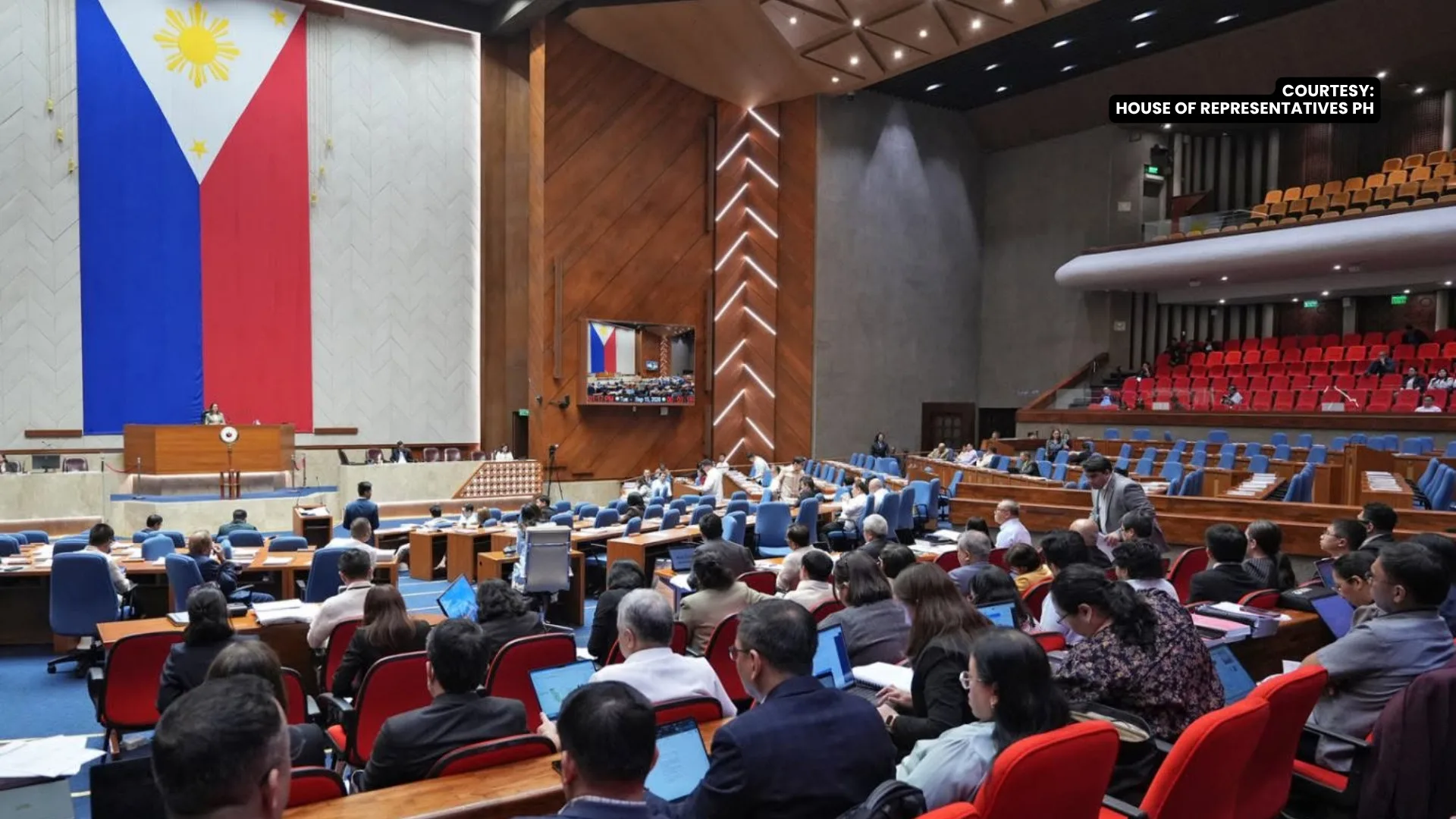
Speaking at a press conference following the first public consultation on House Bill (HB) 9906 in Butuan City, House Committee on Suffrage and Electoral Reforms Chairman and Lanao del Sur Rep. Zia Alonto Adiong said, “it is not a question of whether or not we should abolish (the party-list system). That should be taken out of the equation.”
Adiong added that the Constitution clearly intended the party-list system to give certain sectors of Philippine society a voice in the legislative process, providing a strong basis for efforts to address shortcomings in its implementation and strengthen its effectiveness.
For his part, Tingog Party-list Rep. Jude Acidre explained that reforms have become necessary following a 2013 Supreme Court ruling that broadened participation in the party-list system, allowing more organizations to secure seats in the House of Representatives.
“The manner of representation (has) actually evolved. However, what we noticed is that with the evolution of the representation, our way of testing genuine representation has not matched up with that growth,” Acidre, chairman of the House committee on higher and technical education, said.
According to Acidre, HB 9906 provides a framework for determining whether party-list organizations genuinely represent the constituencies they claim to serve. The bill classifies party-list organizations into three categories: advocacy, sectoral, and regional.
ACT-Teachers Party-list Rep. Antonio Tinio also said the measure also establishes criteria for determining whether an individual is qualified to represent a particular sector, including the person’s track record in advancing the sector’s interests or advocacy.
In addition, 4Ps Party-list Rep. JC Abalos acknowledged that the party-list system has imperfections, underscoring the importance of public consultations in identifying problems and developing appropriate reforms.
“Everything that has been discussed with the stakeholders, mga observations nila, kasama na rin ang observation ng media. These will all be considered as the committee would later on deliberate this very important measure,” Abalos also said.
Following the consultation in Butuan City, the Committee on Suffrage and Electoral Reforms will hold similar consultations in Iloilo City and Metro Manila to gather additional inputs from stakeholders in the Visayas and Luzon, respectively.
Party-list reform is among the legislative priorities identified by the Legislative-Executive Development Advisory Council (LEDAC).
DATE
TIME
CITY
Detecting...
WEATHER
--
USD ₱--
EUR €--
JPY ¥--
BTC $--

House panel seeks tighter rules for party-list groups
Facebook
X
LinkedIn
Reddit
- Peter Fernandez
- May 19, 2026
The Philippine Coast Guard (PCG)...
- Peter Fernandez
- May 31, 2026
The Philippines moved to deepen...
- Peter Fernandez
- May 17, 2026
A 52-year-old resident of Patnanungan,...
- Peter Fernandez
- June 10, 2026
Army chief Lt. Gen. Antonio...
- Jade Reyes
- August 27, 2026
President Ferdinand Marcos Jr. on...
- Esther Salem
- May 18, 2026
The 11-member House prosecution panel...
- Jade Reyes
- May 25, 2026
Executive Secretary Ralph Recto dismissed...
- Mervin Reyes
- August 2, 2026
Department of Migrant Workers (DMW)...