
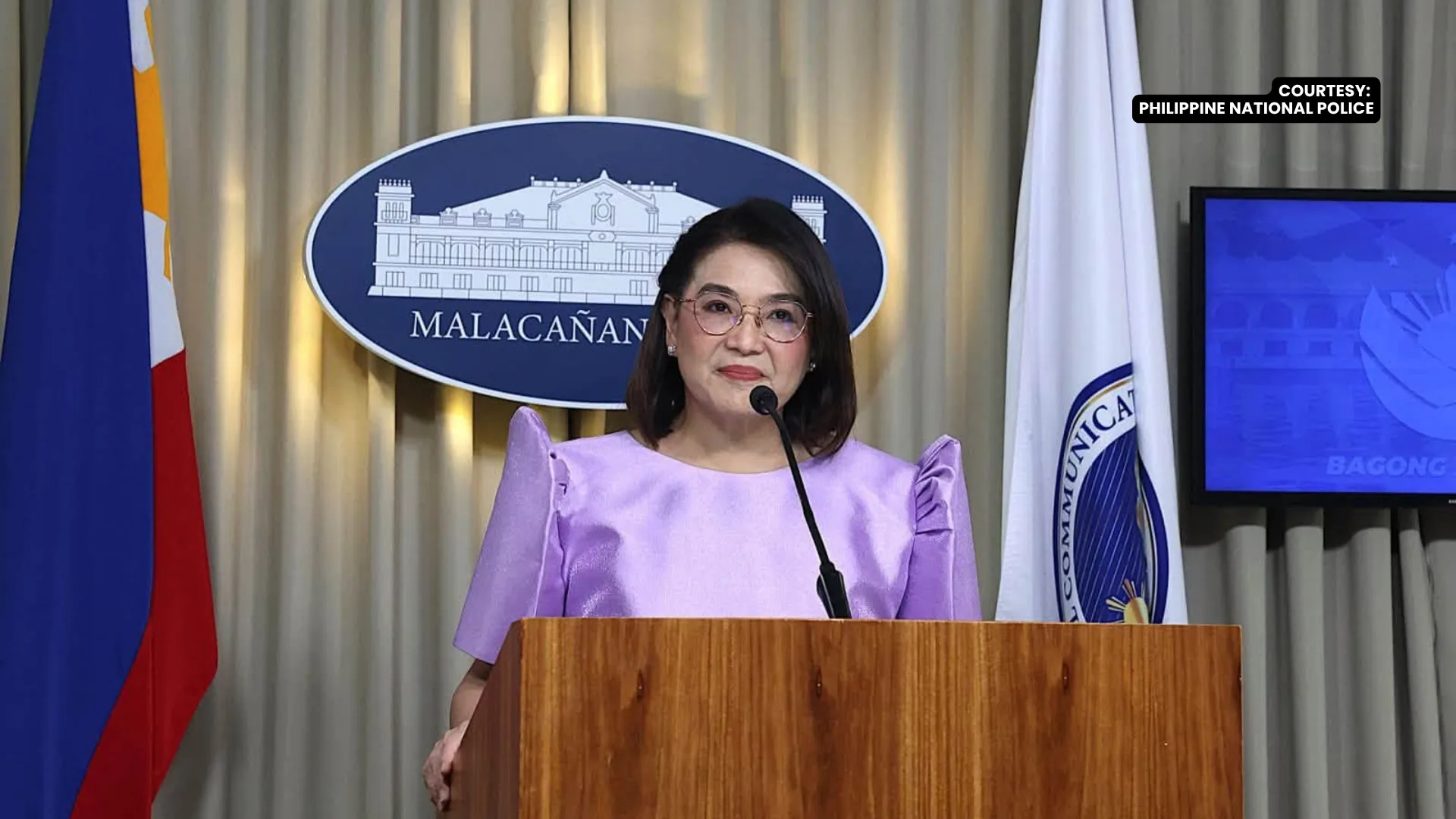
Malacañang confirmed on Tuesday that the administration is not considering any new tax proposals to cover the projected P10-billion revenue deficit resulting from the removal of the value-added tax (VAT) on power utilities’ allowable system loss charges.
During a news briefing at Malacañang, Palace Press Officer Claire Castro clarified that the executive branch will focus on maximizing existing revenue streams through improved efficiency and stricter tax enforcement rather than introducing new consumer burdens.
Castro stated that President Ferdinand Marcos Jr. ordered the removal of the system loss charge and its associated VAT primarily to relieve Filipino households from escalating electricity expenses. Offsetting the resulting revenue contraction was not the primary driver behind the policy decision.
“Sa ngayon ay wala pong napag-uusapan kung mayroong pangdagdag na buwis na ipapataw, dahil hindi po iyan ang concern sa ngayon ng pamahalaan (At present, there are no discussions regarding the imposition of additional taxes, as that is not the government’s priority right now),” Castro explained.
“Pero, marami pong paraan ang BIR (Bureau of Internal Revenue), ang DOF (Department of Finance) para magkaroon ng pondo na pwedeng panagot sa mawawalang P10 billion[(However, the BIR and the DOF have various ways to generate funds to cover the P10 billion shortfall],” she added.
According to Castro, financial authorities can bridge the funding gap by refining tax collection mechanisms, aggressively implementing the VAT framework on digital service providers, maximizing revenue yields under the Corporate Recovery and Tax Incentives for Enterprises to Maximize Opportunities for Reinvigorating the Economy (CREATE MORE) Law, and fostering a business environment that attracts foreign investment.
Updates on the UPLIFT Relief Program
Addressing questions regarding social safety nets, Castro indicated that no standalone funds have been earmarked for the Unified Package for Livelihoods, Industry, Food, and Transport (UPLIFT) program. Instead, relief disbursements are made directly to implementing agencies upon request.
The UPLIFT program serves as a targeted emergency intervention aimed at shielding vulnerable demographics from commodity and fuel price volatility caused by the ongoing conflict in the Middle East.
“Hindi po maglalaan ng additional funding for UPLIFT, depende po ito sa magiging actual na pangangailangan at request ng mga concerned implementing agencies (No additional funding will be allocated for UPLIFT at this time; it will depend on the actual requirements and requests from the concerned implementing agencies),” Castro said.
She further noted that the proposed 2027 national budget contains no standalone line-item allocation for UPLIFT, as emergency funding will be funneled directly through specific line agencies as needs arise.
Providing an execution update, Department of Social Welfare and Development (DSWD) Assistant Secretary and spokesperson Irene Dumlao reported that as of September 14, over 5.78 million poor, near-poor, and low-income households nationwide have received cash payouts under the expanded initiative.
For Group 1, which includes Pantawid Pamilyang Pilipino Program (4Ps) and Walang Gutom Program beneficiaries, more than 3.2 million families have already received their one-time cash aid of P2,000. Under Group 2, comprising poor and near-poor households identified via the Philippine Statistics Authority’s Community-Based Monitoring System, over 1.755 million households have accessed their initial tranche of the P2,000 monthly subsidy running from July through December. For Group 3, a total of 811,368 low-income members of the Social Security System have secured their initial distributions under the six-month financial assistance program.
Dumlao noted that DSWD field teams, in coordination with local government units and partner institutions, are actively validating remaining candidates under Groups 2 and 3 who have not received initial payouts due to unverified address changes, updated socioeconomic status, or inactive bank accounts.