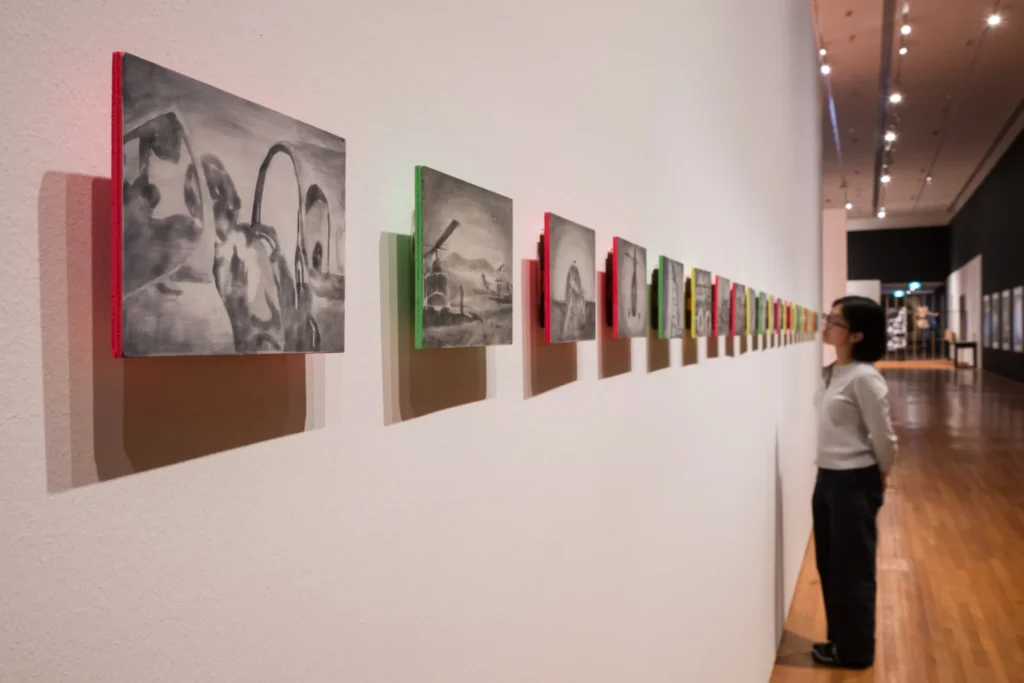
Archives are usually imagined as places of preservation, where photographs, documents and records are kept so the past can be recovered later.
Filipino American artist Josh Kline begins from a less reassuring premise: the technologies now entrusted with much of our personal memory are themselves temporary and disposable.
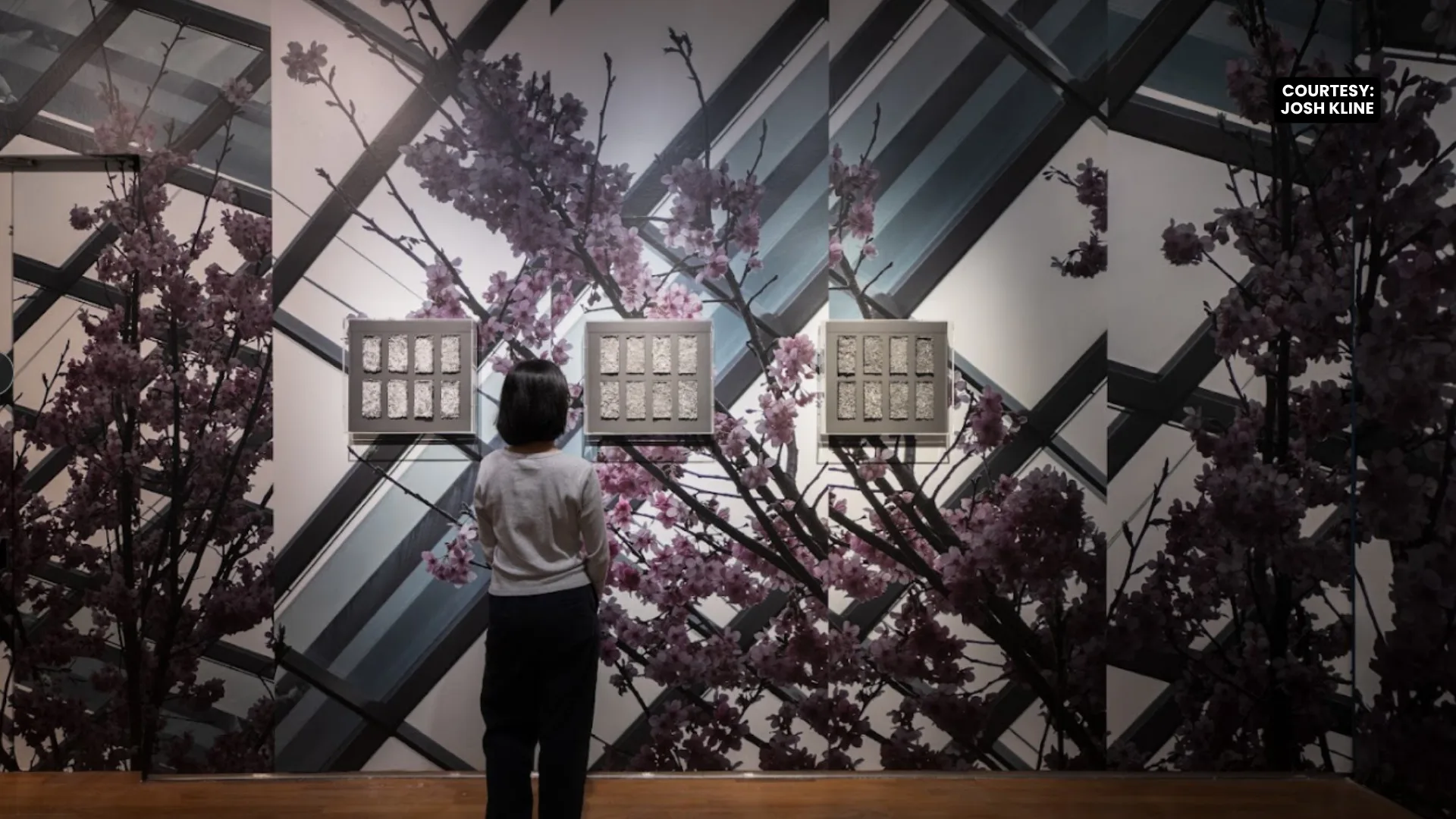
In Art Remembers, a contemporary art exhibition at National Gallery Singapore, Kline presents works made from iPhone SE devices that were pulverized and combined with cotton pulp and pigment during a residency at Singapore Tyler Print Institute.
A device built to hold photographs, messages, contacts and personal data is stripped of its function and remade as art, raising questions about what happens to memory when the technology storing it becomes obsolete.
Kline’s work provides a contemporary entry into an exhibition concerned with a much older problem: how histories are preserved, who determines what survives and what falls outside the archive.
Running until October 18, Art Remembers brings together 20 works using historical photographs, family testimony, wartime imagery, mass media, digital systems and traces found in the natural environment.
Dr. Eugene Tan, CEO and Director of National Gallery Singapore and project director of the exhibition, said artists have an important role in interpreting those records.
“Through Art Remembers, National Gallery Singapore presents archives as art and centres artists as important interpreters and storytellers of history and memory,” Tan said.
A fish carrying a history of war
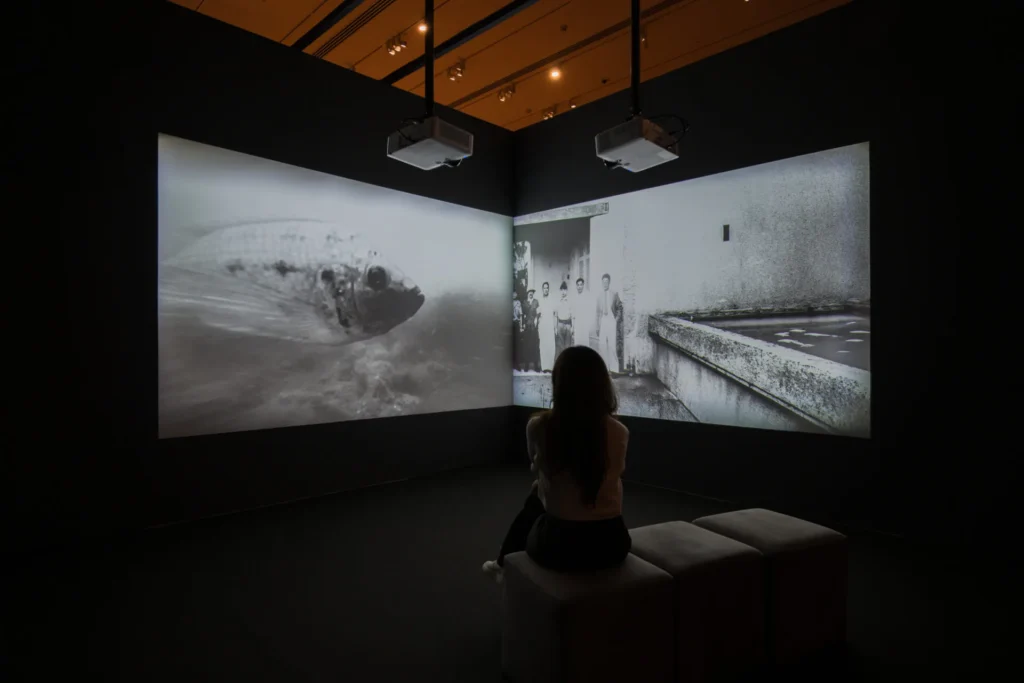
Singaporean artist Robert Zhao Renhui finds an unlikely historical record in the tilapia.
His The Fish Does Not Know the War Is Over traces the fish’s presence in Singapore to the Japanese occupation, when tilapia was introduced as a food source.
After the war, live specimens were brought to Taiwan, where the fish became commercially successful. In Singapore, tilapia continued to survive in drains, canals and reservoirs.
Zhao uses that journey to show how traces of war and migration can persist in unexpected places.
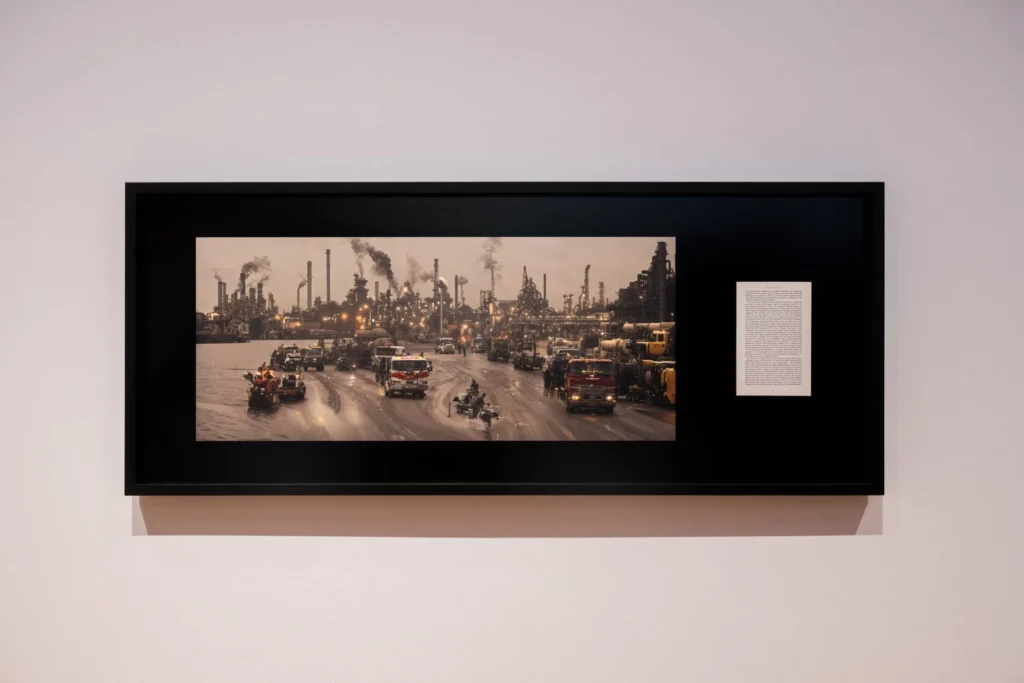
Reworking the historical image
Malaysian artist Ahmad Fuad Osman directly intervenes in the photographic record.
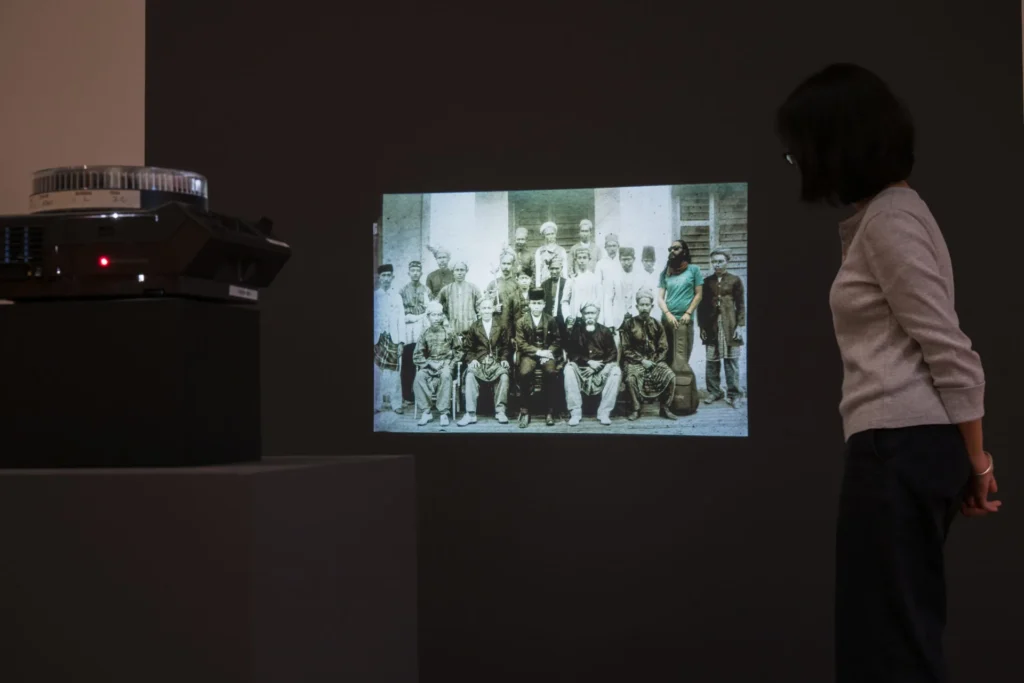
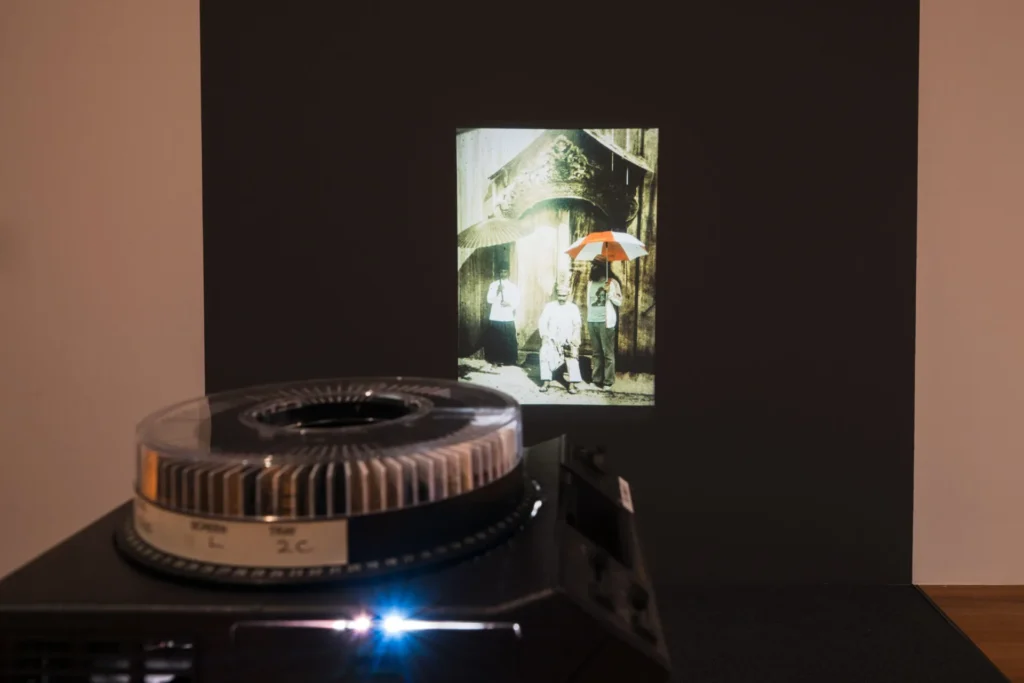
In Recollections of Long Lost Memories, he inserts a contemporary figure into images connected to Malaysia’s post-independence past.
The alterations are deliberately visible, challenging the authority often assigned to historical photographs and how later generations interpret them.
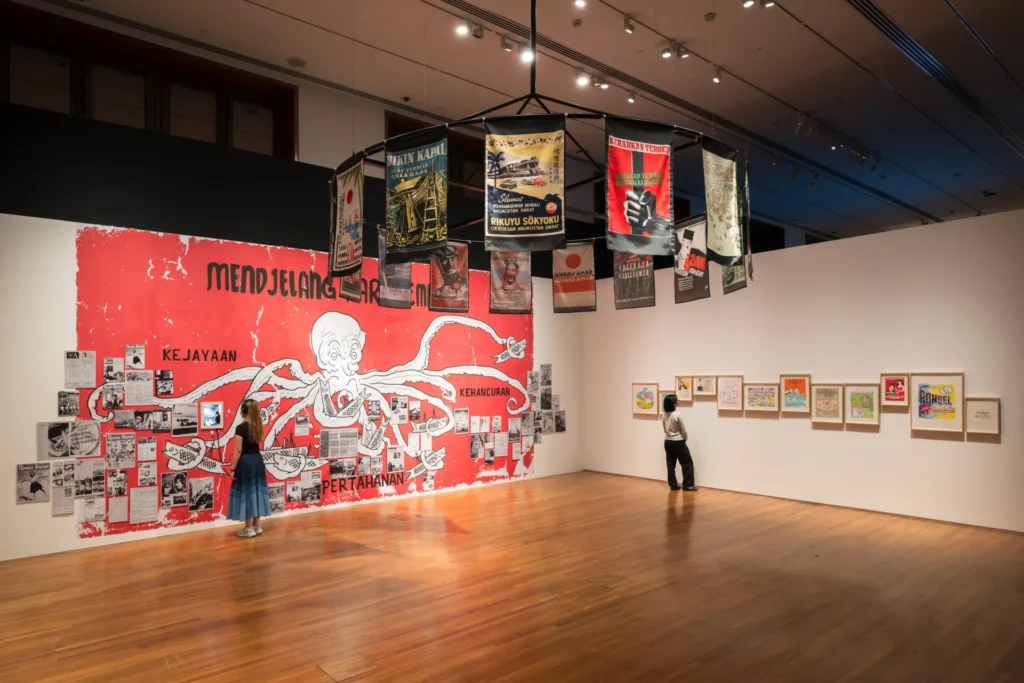
Yogyakarta printmaking collective Krack! turns instead to wartime imagery, propaganda and popular culture. Its commissioned installation Mendjelang Hari Gemilang (Towards a Glory Day) uses prints, banners and video to examine how images contribute to political and collective memory.
When family memory fills the gaps
For Hmong Australian artist Vanghoua Anthony Vue, history is also inherited.
His work examines the conflict in Laos that unfolded alongside the Vietnam War, combining archival images with accounts passed through his family.
Exhibition material says Vue’s father used a Hmong television documentary containing rare footage and photographs of American activities in Laos to recount his wartime experiences. Vue later incorporated those images into his paintings.
His work illustrates how events that profoundly affect families and communities can remain peripheral to broader historical narratives.
History without a final version
Singaporean artist Ho Tzu Nyen questions whether Southeast Asia can be represented through a single historical narrative.
His ongoing The Critical Dictionary of Southeast Asia, begun in 2017, uses an algorithmic editing system to continually rearrange audiovisual material about the region.
There is no permanent final sequence — an approach suited to a region shaped by colonialism, occupation, independence movements, war and migration.
Rather than resolving those histories into one account, Ho allows the archive to remain provisional.
Who determines what survives?
The works ultimately converge on the same problem: no archive is complete.
Governments preserve documents. Museums build collections. Newspapers decide what enters the public record. Families keep photographs and stories. Individuals increasingly entrust their lives to phones and digital platforms.
For Filipino audiences, the questions are recognizable in a society where colonial history, wartime memory, political upheaval and contemporary public life continue to be interpreted through competing records and accounts.
Kline brings the issue into the digital present. Zhao finds history in the movement of a fish. Vue turns to family testimony. Fuad questions the authority of photographs. Ho refuses the idea of a definitive regional narrative.
Together, their works make a simple but consequential point: history depends not only on what happened, but on what survived, who preserved it and how it is interpreted later.
Art Remembers runs until October 18, 2026, at National Gallery Singapore’s Singtel Special Exhibition Gallery 1 and City Hall Chamber. General admission is required, with free admission for Singapore citizens and permanent residents.