
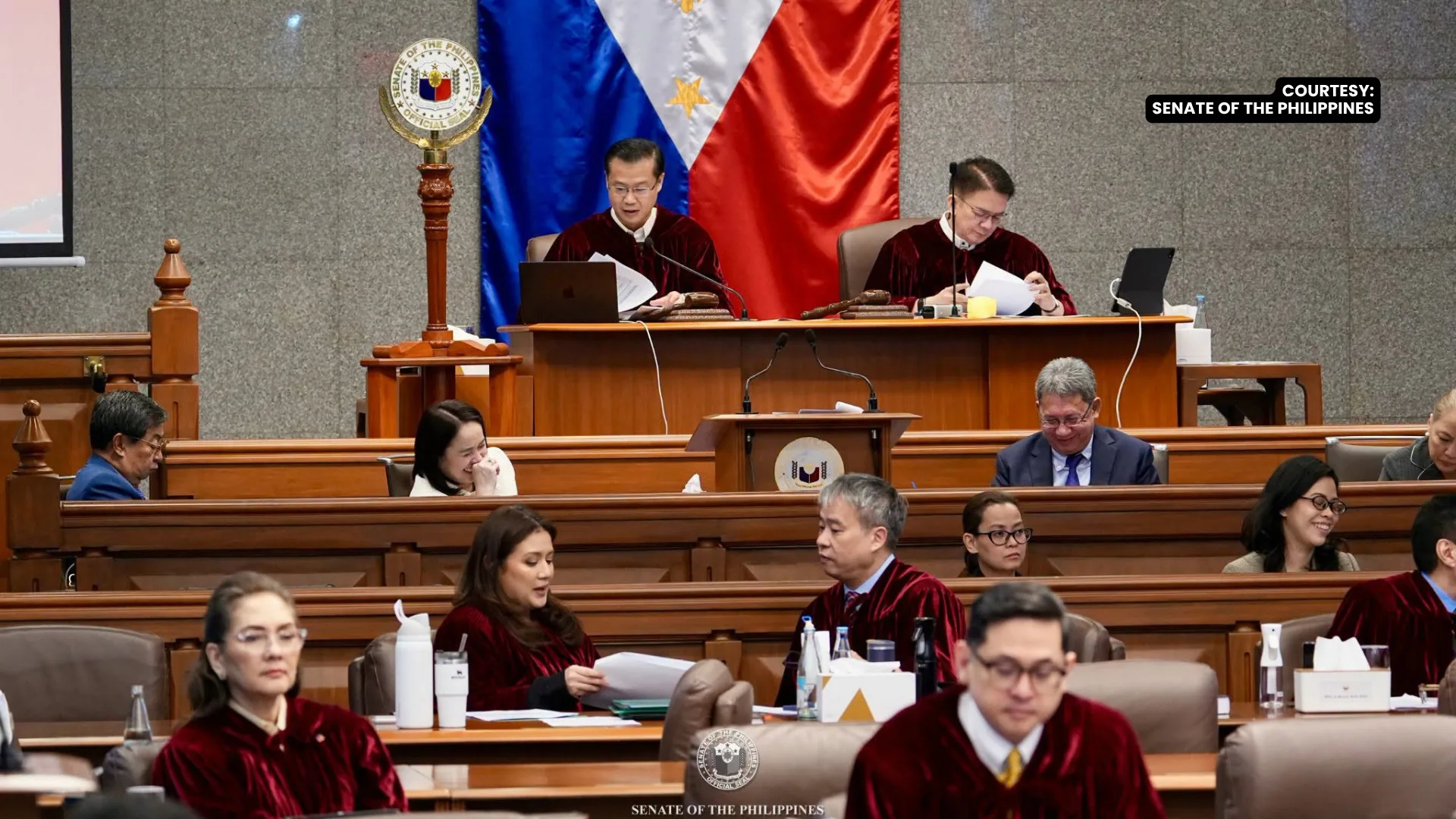
The Anti-Money Laundering Council’s (AMLC) refusal to detail portions of subpoenaed financial records involving Vice President Sara Z. Duterte may indicate that certain matters remain subject to an active investigation.
House prosecution panel spokesperson and Lanao del Sur Rep. Zia Alonto Adiong highlighted the inference on Wednesday, after AMLC Secretariat Executive Director Ronel Buenaventura repeatedly declined to answer questions that extended beyond the scope of documents subpoenaed by the impeachment court.
“Well, I think it was already clear by the presentation of AMLC that they were only, again, testifying on the subpoenaed documents, and when some of the senator-judges tried to delve into the contents of some portion of those documents subpoenaed,” Alonto Adiong explained.
Throughout his testimony, Buenaventura strictly limited his statements to financial records the council was explicitly ordered to submit, declining on several occasions to disclose broader details.
Under its statutory mandate, the AMLC is empowered to investigate suspicious financial transactions and refer findings to enforcement authorities for formal prosecution upon discovering sufficient grounds.
Alonto Adiong clarified that prosecutors were drawing a logical inference from the witness’s legal silence, rather than confirming the existence of a separate criminal case.
“I think very clear po ‘yung sinabi niya—he is unable to respond because he can’t divulge more information, and we presumed that this could be on an ongoing investigation, kasi ‘yun naman po talaga din ang mandato ng AMLC: to recommend to either DOJ or Sandiganbayan for the filing of cases,” Alonto Adiong noted.
The AMLC’s testimony before the impeachment tribunal has so far covered bank transactions tied to the Vice President, her husband attorney Manases Carpio and financial disclosures submitted by covered banking institutions.
Under existing law, a suspicious transaction report (STR) does not automatically establish criminal liability, and any independent prosecution would require separate legal processes under anti-money laundering statutes.
The impeachment trial continues to evaluate whether the financial evidence presented establishes the allegations framed in Article II and whether those findings warrant Duterte’s removal from office.