
The Armed Forces of the Philippines (AFP) on Tuesday defended ongoing construction and improvement works on Philippine-held features in the West Philippine Sea, insisting that the projects are fully within the country’s sovereign rights despite opposition from China.
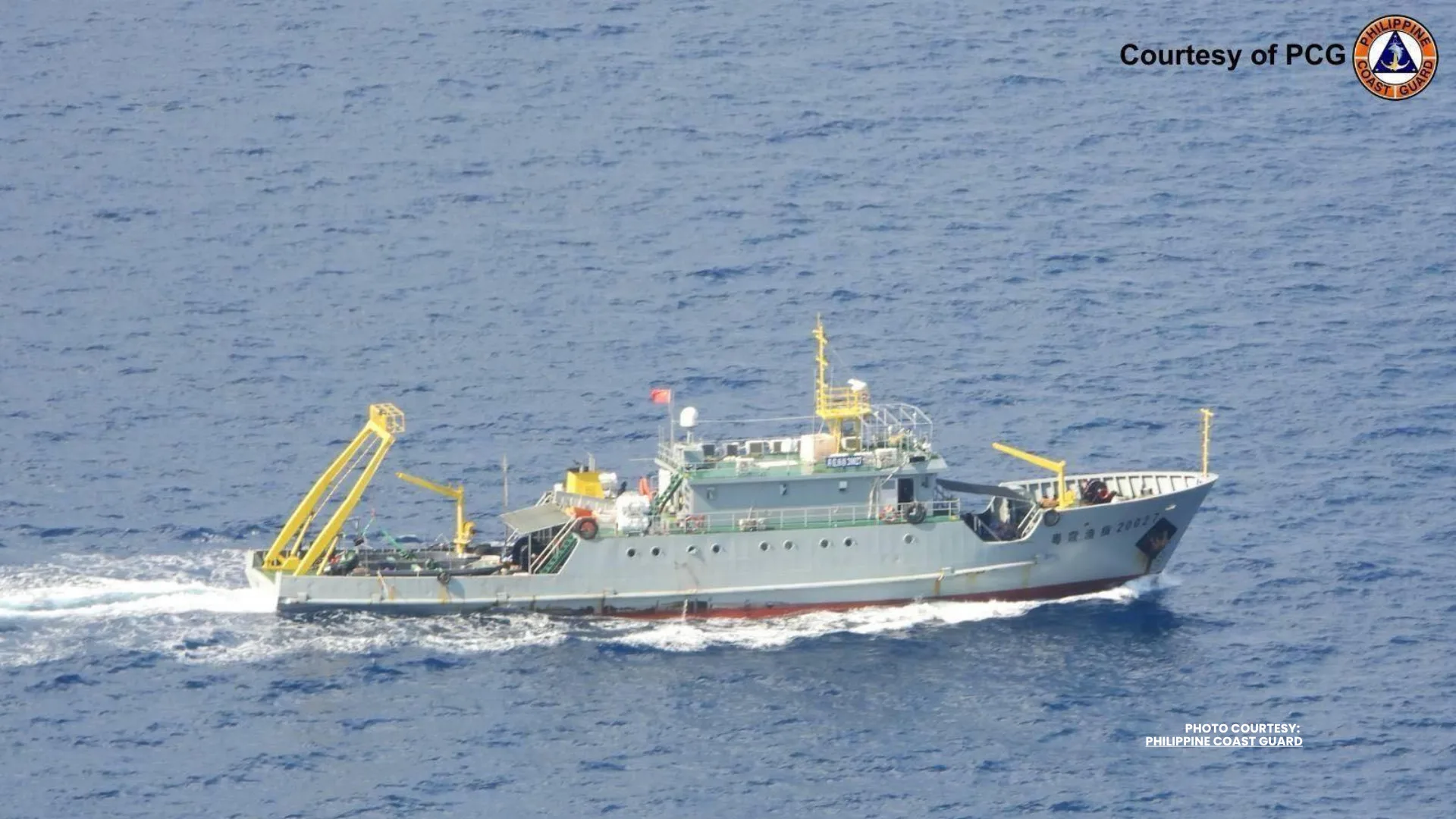
At the same time, the Philippine Coast Guard (PCG) reported confronting a Chinese Coast Guard vessel spotted within the Philippines’ exclusive economic zone (EEZ) off the coast of Zambales.
Rear Admiral Roy Vincent Trinidad said the Philippines has absolute sovereignty and jurisdiction over features occupied by Filipino forces, including Pag-asa Island and Lawak Island.
“Any repair, construction, enhancement or development that we do on these features are well within our legal rights,” Trinidad said during a press briefing at Camp Aguinaldo.
“We do not need to seek the permission of any country,” he added.
Trinidad’s remarks came after Chinese Defense Ministry spokesperson Jiang Bin reiterated Beijing’s claim over the islands and criticized Philippine construction activities in the disputed waters.
China claimed it has “indisputable sovereignty” over the islands and warned that it would take necessary measures to protect its interests in the area.
The AFP official maintained that the ongoing developments are intended to improve facilities for deployed troops and residents of the Kalayaan Island Group.
“We have been doing improvements, enhancements, development, repair, and fortification to ensure that these islands will be able to support any deployed troops and the local community,” Trinidad said.
He added that the government has already allocated funding for the projects, although he did not disclose the exact status of construction.
Meanwhile, the PCG said it monitored the presence of CCG-4305 approximately 50.1 nautical miles west of Pundaquit, San Antonio, Zambales on Tuesday morning.
PCG spokesperson Jay Tarriela said the vessel was detected through Canada’s Dark Vessel Detection program.
Following the detection, PCG Commandant Ronnie Gil Gavan ordered the deployment of both air and sea assets to challenge the Chinese ship.
A Piper Navajo 302 aircraft conducted multiple passes over the area and issued repeated radio challenges to the Chinese vessel at around 8:40 am, according to Tarriela.
“The PCG Piper Navajo 302 also conducted multiple passes to document the unlawful incursion before returning to the airport,” he said.
The coast guard also deployed BRP Cape San Agustin, which continued issuing radio warnings throughout the day.
Tarriela said the Chinese vessel briefly acknowledged an initial challenge before later refusing to respond to further communications.
“Notably, CCG 4305 provided no lawful basis for its presence within the Philippines’ EEZ,” he added.