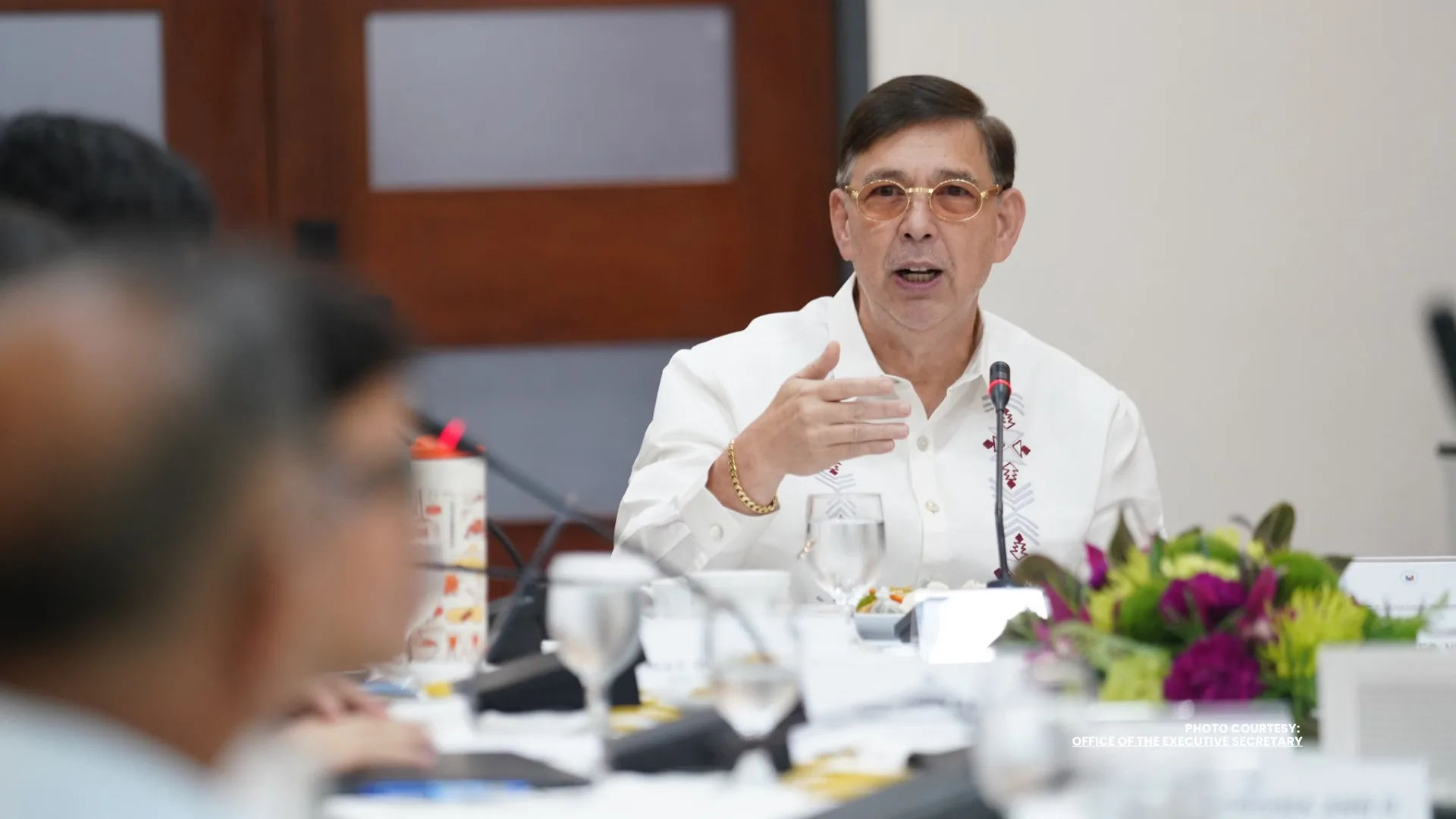
Key government agencies met in Malacañang on May 14 to review the implementation of President Ferdinand Marcos Jr.’s priority programs and discuss ways to accelerate project delivery amid global economic challenges.
The meeting focused on improving budget utilization and narrowing the gap between fund releases and actual disbursements to ensure that government programs reach the public more quickly.
Five agencies handling major government programs took part in the discussions: the Department of Agriculture, Department of Transportation, Department of Public Works and Highways, Department of Education, and Department of Budget and Management.
Executive Secretary Ralph Recto said allocation releases programmed for the second quarter have already reached P1.287 trillion.
“It is a must that the social good that this will fund be enjoyed by the people soonest,” Recto said.
He noted that some agencies continue to face underspending issues that must be addressed immediately.
“There are spots of underspending and these must be resolved immediately,” he said.
Officials present during the meeting said recently updated procurement rules should be maximized to speed up project acquisition and reduce delays in implementation.
Recto stressed that government agencies could accelerate projects without compromising transparency and accountability.
“There is a way that we can speed up the process without taking legal shortcuts. Red tape that causes paralysis without sacrificing transparency can be done away with,” he said.
According to Recto, President Marcos has repeatedly directed Cabinet members to prioritize programs that would generate jobs, strengthen food security, fight inflation, and stimulate economic growth amid global headwinds.
“The President’s order is to fast-track priority programs to push economic growth against global headwinds,” he said.
The Palace also discussed government preparations to address economic disruptions linked to tensions in the Middle East, particularly rising oil prices.
To mitigate the impact, the administration rolled out a multi-agency response program called UPLIFT, which aims to protect households, support vulnerable sectors, ensure energy supply stability, and keep food affordable for Filipino families.
Officials emphasized that government spending remains critical in supporting economic growth and sustaining the country’s overall development momentum.