
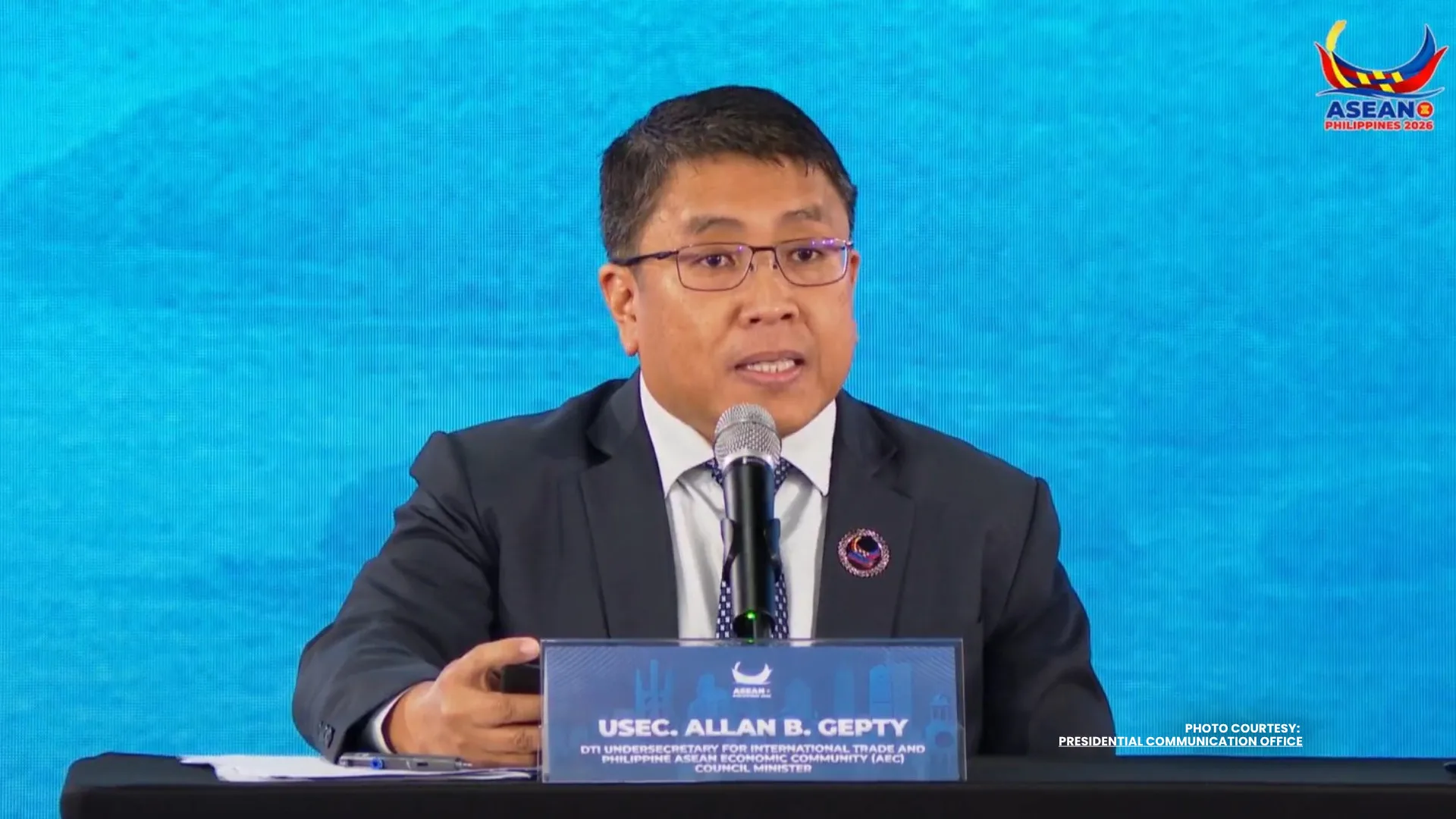
The Department of Trade and Industry (DTI) said ASEAN is working to give more micro, small, and medium enterprises (MSMEs) access to regional and global markets as Southeast Asian economies push for deeper economic integration amid growing global uncertainties.
Speaking during a joint press briefing with the Department of Foreign Affairs (DFA), DTI Undersecretary Allan Gepty said ASEAN’s long-term goal is to ensure that smaller businesses benefit more from regional trade, investments, and digital connectivity, not just large corporations.
“ASEAN is an economic community which is positioned not only as a market but also as a production [hub],” Gepty said. “One of the important trade agenda of ASEAN is inclusivity and that includes integrating micro, small and medium enterprises to the global value chain. And one way to do that is for them to be given enhanced market access in the region.”
Gepty said stronger regional integration would help local MSMEs expand beyond domestic markets and become part of international supply chains operating across Southeast Asia.
He added that wider access to the ASEAN market would create more opportunities for local businesses to export products and connect with foreign companies already involved in global trade networks.
The trade official also emphasized that ASEAN economic integration goes beyond the exchange of goods, noting that businesses can benefit from increased opportunities in services, investments, and employment across the region.
“Being integrated in the ASEAN region is not limited to trade alone. MSMEs can also benefit from opportunities in services, investments, and other sectors that can help businesses grow and create jobs,” he said.
As part of the Philippines’ ASEAN chairmanship agenda, one of the country’s proposed Priority Economic Deliverables is the establishment of an ASEAN Center of Excellence for MSMEs.
The proposed center aims to consolidate support programs, projects, and capacity-building initiatives for small businesses across ASEAN member-states to help them compete more effectively in the global economy.
The Philippines is also advocating for the completion of the Digital Economy Framework Agreement and the creation of a regional payment connectivity framework to strengthen digital trade within ASEAN.
Gepty noted that digital platforms have become an important equalizer for MSMEs by giving smaller businesses direct access to international markets.
He added that harmonizing rules for online transactions and improving regional payment systems would make cross-border digital trade more efficient and accessible for businesses throughout Southeast Asia.