
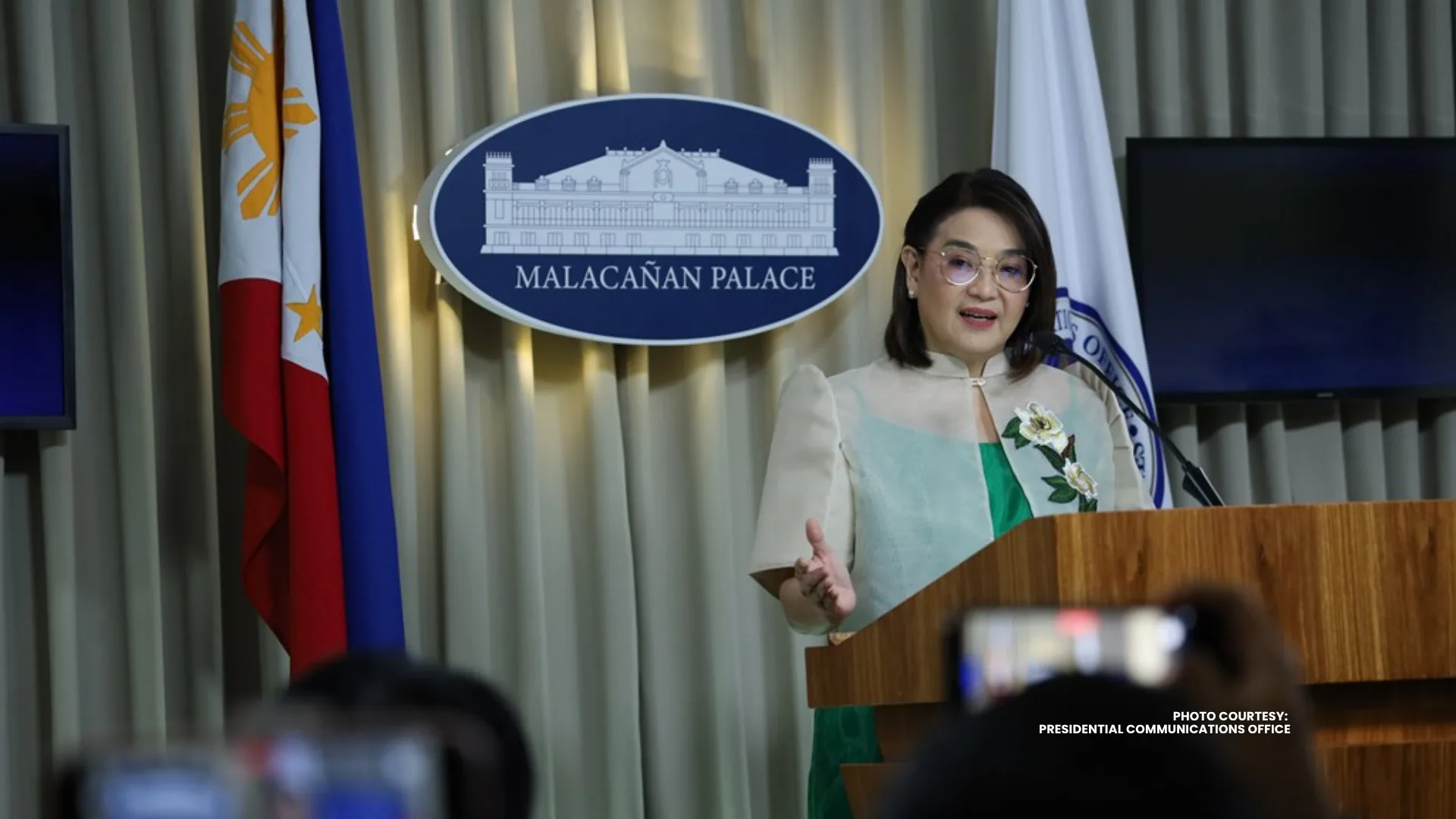
Malacañang on Tuesday assured the public that the national government is rolling out measures to address inflation, which it described as a “domino effect” of rising global commodity prices tied to the Middle East crisis.
Palace Press Officer Claire Castro said the administration is focusing on stabilizing food prices, particularly rice, as part of efforts to ease inflationary pressure on Filipino households.
“Ang sabi ng Pangulo ay dapat na bumaba ang presyo ng bigas, isa po ito sa dahilan kung bakit tumataas po ang inflation rate natin (The President said that the price of rice should go down, this is one of the reasons why our inflation rate is increasing),” she said.
Castro said Department of Economy, Planning, and Development (DEPDev) Secretary Arsenio Balisacan reported during the Unified Package for Livelihoods, Industry, Food, and Transport (UPLIFT) committee meeting that the April inflation rate of 7.2 percent was driven largely by higher transportation costs, fuel prices, and related supply chain pressures.
She added that rising fertilizer costs and elevated electricity rates, partly influenced by the weakening peso, are also contributing factors that are affecting production and consumer prices.
“So, nagkakaroon po ng domino effect ito (so there is a domino effect),” she said.
Despite these pressures, Castro said the Department of Agriculture has assured that supply levels for several key commodities remain sufficient, with some products even recording stable prices due to adequate or oversupply conditions in certain areas.
To help vulnerable sectors cope with rising costs, the government has also released over P43.18 billion in funding under the direction of President Ferdinand Marcos Jr., according to the Palace.
The Department of Budget and Management (DBM) said the funds will support continuous delivery of financial aid, food assistance, pensions, and livelihood programs for low-income households.
A large portion of the allocation will go to the Department of Social Welfare and Development (DSWD), including P36.8 billion for the Protective Services for Individuals and Families in Difficult Circumstances (PSIFDC) program.
Additional allocations include more than P3.4 billion for the Supplementary Feeding Program, P2 billion for the Social Pension for Indigent Senior Citizens, and P810 million for the Sustainable Livelihood Program.
Officials said these interventions are aimed at softening the impact of inflation while broader economic measures are implemented to stabilize prices and support household purchasing power.