
Discrepancies between official annual financial disclosures and actual bank activity sit at the center of the House prosecution’s strategy as financial analysts separate routine transactions from unexplained income streams involving Vice President Sara Z. Duterte and Atty. Manases Carpio.
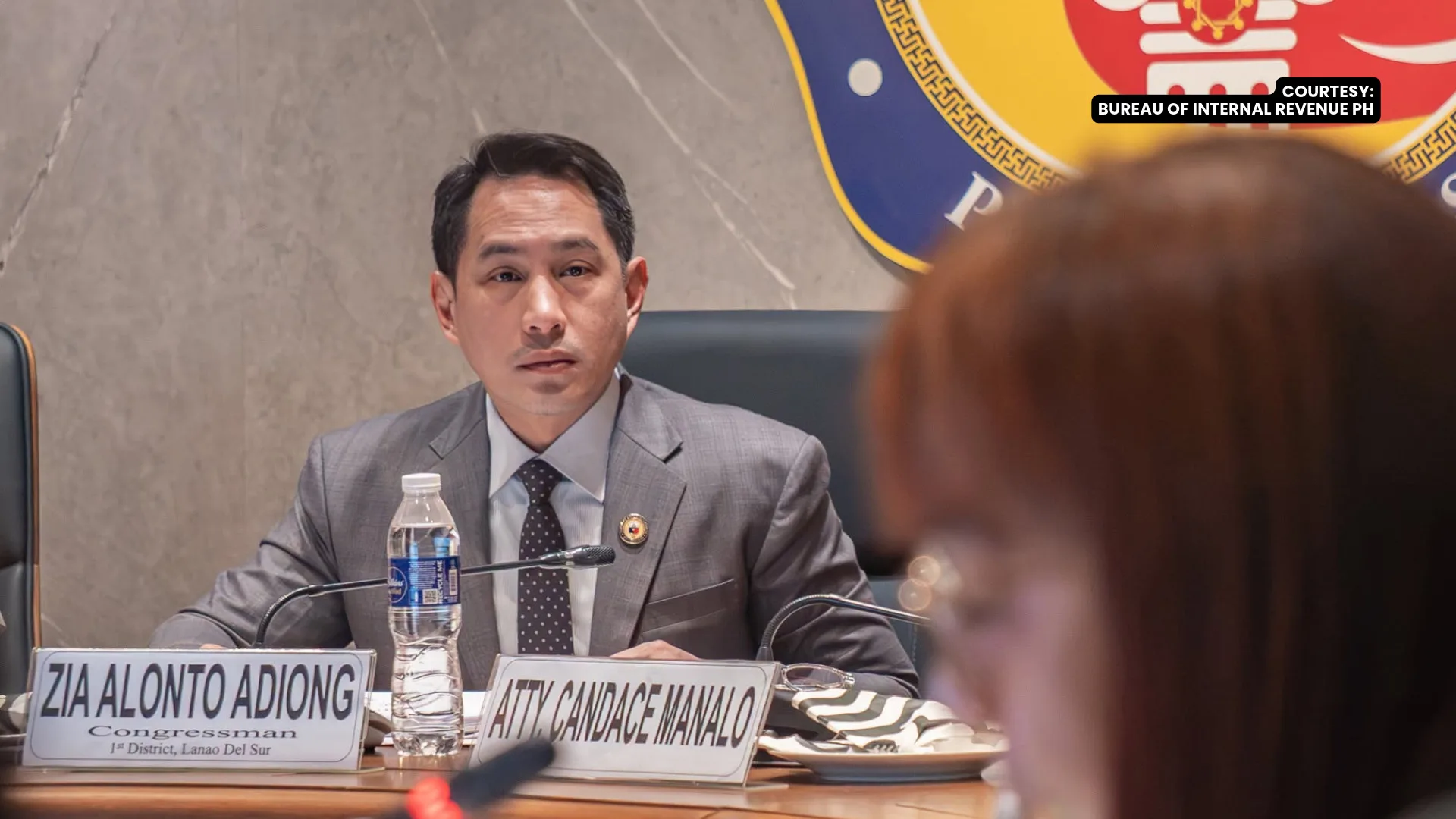
Addressing questions on how prosecution experts calculated questioned personal inflows, House trial spokesperson and Lanao del Sur Rep. Zia Alonto Adiong detailed the forensic approach used to isolate unverified funds from legitimate financial movements.
The prosecution’s financial analyst, Atty. Alexander Cabrera, filtered out non-income movements prior to finalizing figures under Article II, which addresses alleged unexplained wealth, asset disclosures, and business interests.
Excluded items comprised P8 million in housing-loan proceeds, P102 million in time-deposit rollovers, P10.29 million and P5 million in investment proceeds, alongside P72.18 million transferred between accounts belonging to the couple.
“Kasi hindi naman ito kita, ito ay utang,” Alonto Adiong said regarding the loan proceeds.
The spokesperson noted that Cabrera’s methodology ensured that existing assets and debt obligations were not miscategorized as new earnings.
“Hindi ito kita, hindi ito fresh money,” Alonto Adiong also said.
The technical distinction underpins the prosecution’s argument that relying solely on a Statement of Assets, Liabilities, and Net Worth (SALN) provides an incomplete picture of an official’s true financial standing.
Because a SALN functions merely as a year-end snapshot reflecting assets on December 31, it fails to account for volume movements, short-term liquidity, or intra-year cash flows.
“Dahil snapshot lang ang SALN kung ipabangga po natin sa kanyang actual na kita,” Alonto Adiong said.
Analyzing full transaction records alongside year-end figures allows investigators to trace the complete trajectory of funds entering and exiting personal accounts throughout the calendar year.
“Hindi po naipapakita ng SALN yung kabuuang transaction engagement ng isang tao at yung kumpanya niya kung mayroon siyang kumpanya sa buong taon na ito,” he also said.
By comparing remaining unaccounted inflows against the official tax returns filed with the Bureau of Internal Revenue (BIR), the panel aims to highlight income mismatches that year-end declarations obscure.
“So ibig sabihin, titingnan natin kung ano yung mga dumaang pera at ano yung inilabas na pera,” Alonto Adiong said.
With non-income transfers removed from the baseline calculation, the inquiry pivots entirely to verifying the origin of the net remaining receipts.
“Yung pinaka-importanting tanong, saan nanggaling ang pera at tugma ba ito sa kanyang idiniklarang tax returns sa BIR?” Alonto Adiong added.