
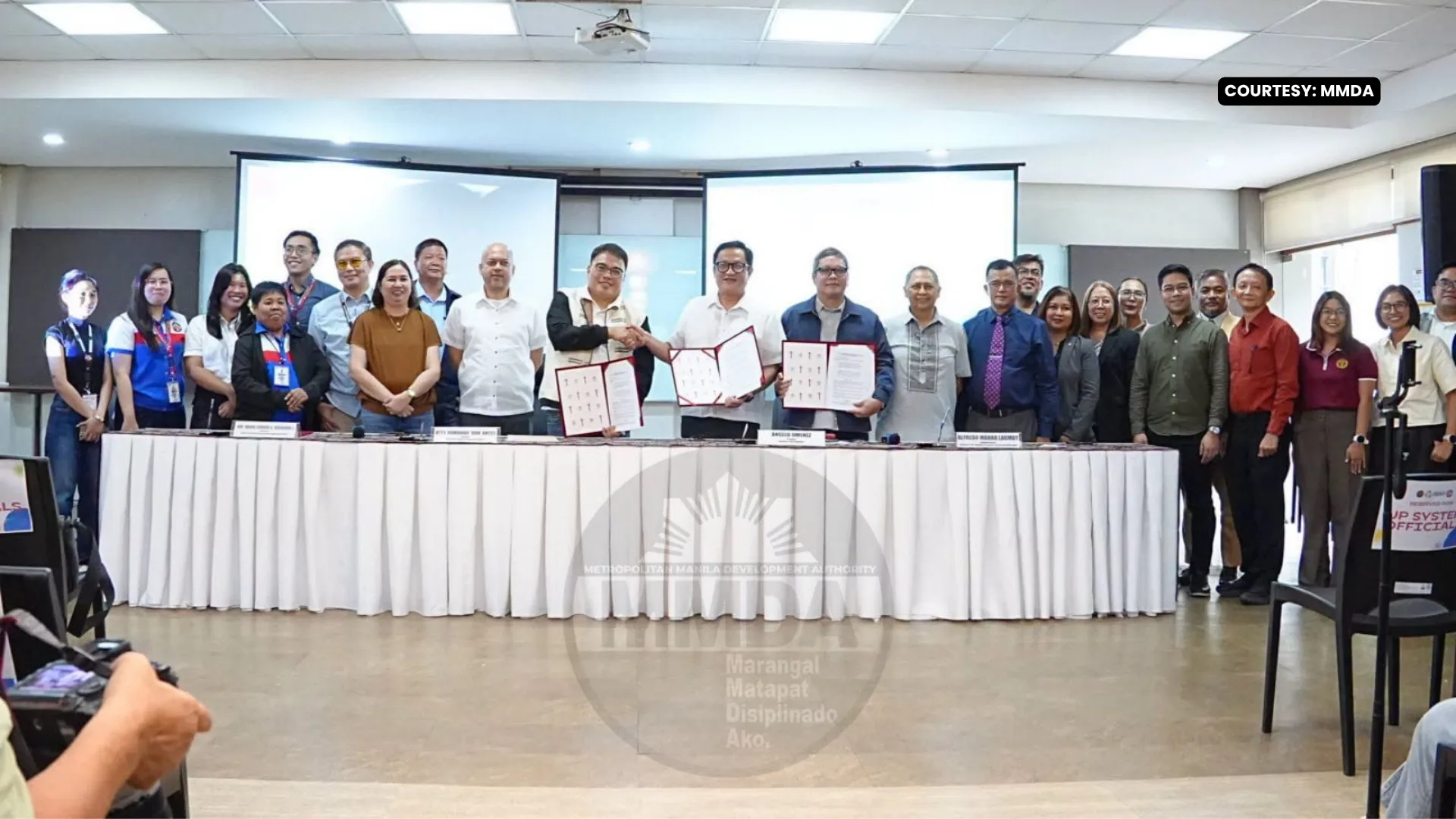
The University of the Philippines (UP) and the Metropolitan Manila Development Authority (MMDA) have partnered to strengthen flood management in Metro Manila through research, technical assistance, and science-based planning.
The two institutions signed a memorandum of understanding on Wednesday, October 21, establishing a framework for cooperation in research, knowledge-sharing, capacity-building, and the development of practical tools to mitigate flooding.
The partnership supports the government’s Oplan Kontra Baha initiative, which includes plans to construct 39 detention basins under the Metro Manila Sponge City Project. These facilities are designed to temporarily hold rainwater before releasing it into drainage systems to help reduce flooding.
MMDA Chair Atty. Don Artes said the initiative would combine infrastructure projects with nature-based solutions to slow flooding while creating useful spaces for communities.
Artes also said the MMDA was discussing with UP Resilience Institute-NOAH Executive Director Alfredo Mahar Lagmay the possible expansion of the Efficient Flood Control Operating System, which currently monitors rainfall and water volume in the upper Marikina area.
Expanding the system across Metro Manila would allow authorities to assess rainfall conditions and share data with UP Resilience Institute-NOAH to simulate potential flooding and identify vulnerable areas, Artes said.
Lagmay emphasized the importance of science-based forecasts and historical data in assessing flood risks and guiding mitigation efforts, saying authorities should rely on evidence rather than changing or improvised explanations.
UP President Angelo Jimenez said the partnership would enable both institutions to identify common priorities and develop joint activities based on their respective mandates and capabilities.
“The challenges confronting Metro Manila are too complex for any institution to address alone,” Jimenez said, stressing the importance of combining government agencies’ operational capacity with universities’ research and technical expertise.
He added that the partnership reflected UP’s commitment to applying scientific knowledge and research to public service.
“Research must not remain confined to laboratories or academic publications. It must help inform decisions, improve public programs, and ultimately serve the people who need it most,” Jimenez also said.