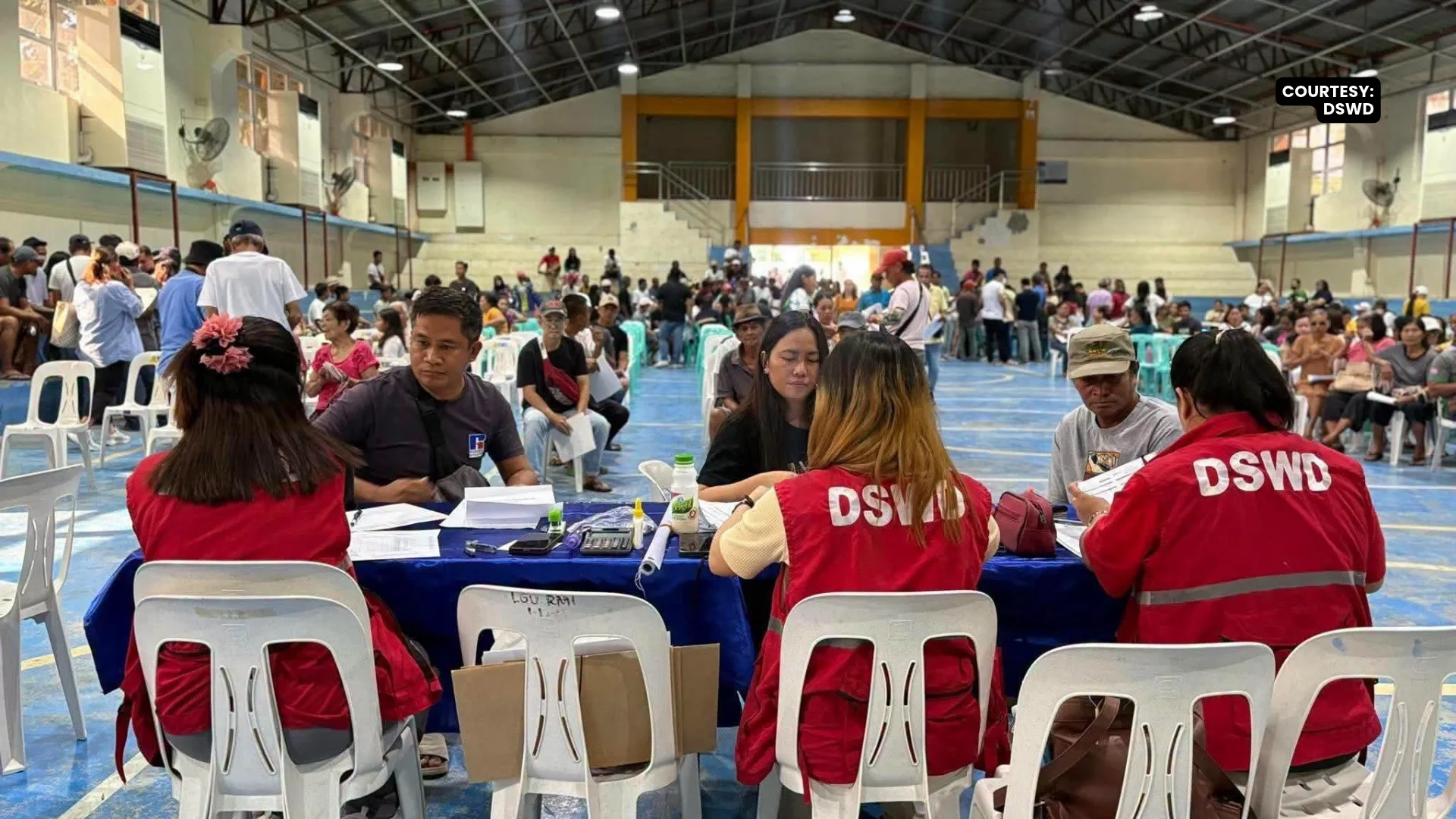
Nearly 10 of 10, or 96 percent, of surveyed tricycle and jeepney drivers and other transport workers who received fuel and cash assistance under the Unified Package for Livelihoods, Industry, Food, and Transport (UPLIFT) program said the aid helped them stay on the road amid soaring fuel prices.
Executive Secretary Ralph Recto on Tuesday said a May 26 to 27 surveys by the Social Weather Stations (SWS) showed that 96 percent said the P5,000 UPLIFT cash aid helped them stay on or return to their routes.
Recto said the SWS also found that eight in 10 beneficiaries used part of the cash aid to buy food.
Recto noted that overall, 84 percent of the beneficiaries were satisfied with the personnel who handled the disbursement.
Recto said the survey provided concrete feedback on how government assistance is reaching its intended beneficiaries and helped identify what else the government could do to assist those who were affected by the high prices of fuels and commodities due to the continuing Middle East crisis.
Recto pointed out that among the key findings is that more than a third of respondents were not enrolled in any government program, including the Social Security System (SSS) and PhilHealth.
“Mahalaga ang ganitong mga survey dahil nakikita natin kung talagang nakakarating sa tao ang suporta ng gobyerno at kung paano ito nakakatulong sa kanilang pang-araw-araw na buhay,” Recto said.
“This is proof that the President’s timely assistance is working and making a big difference,” Recto also said.
The survey, commissioned by the Australian government’s Social Protection, Inclusion and Gender Equality (SPRING) Program, was conducted among 1,200 registered Department of Social Welfare and Development (DSWD) cash relief beneficiaries.
Upon President Marcos Jr.’s directive, the government expanded its cash assistance under the UPLIFT program, targeting 7.5 million vulnerable families to help cushion the impact of rising global oil and commodity prices.
Beyond transport workers, the expanded program covers beneficiaries of the Pantawid Pamilyang Pilipino Program (4Ps) and the Walang Gutom Program; poor and near-poor families identified through the Community-Based Monitoring System (CBMS) who are outside these two programs; and low-income workers covered by the SSS.
As of October 7, the first tranche of assistance already reached 6.49 million Filipinos, representing PHP 19.55 billion in aid distributed.