
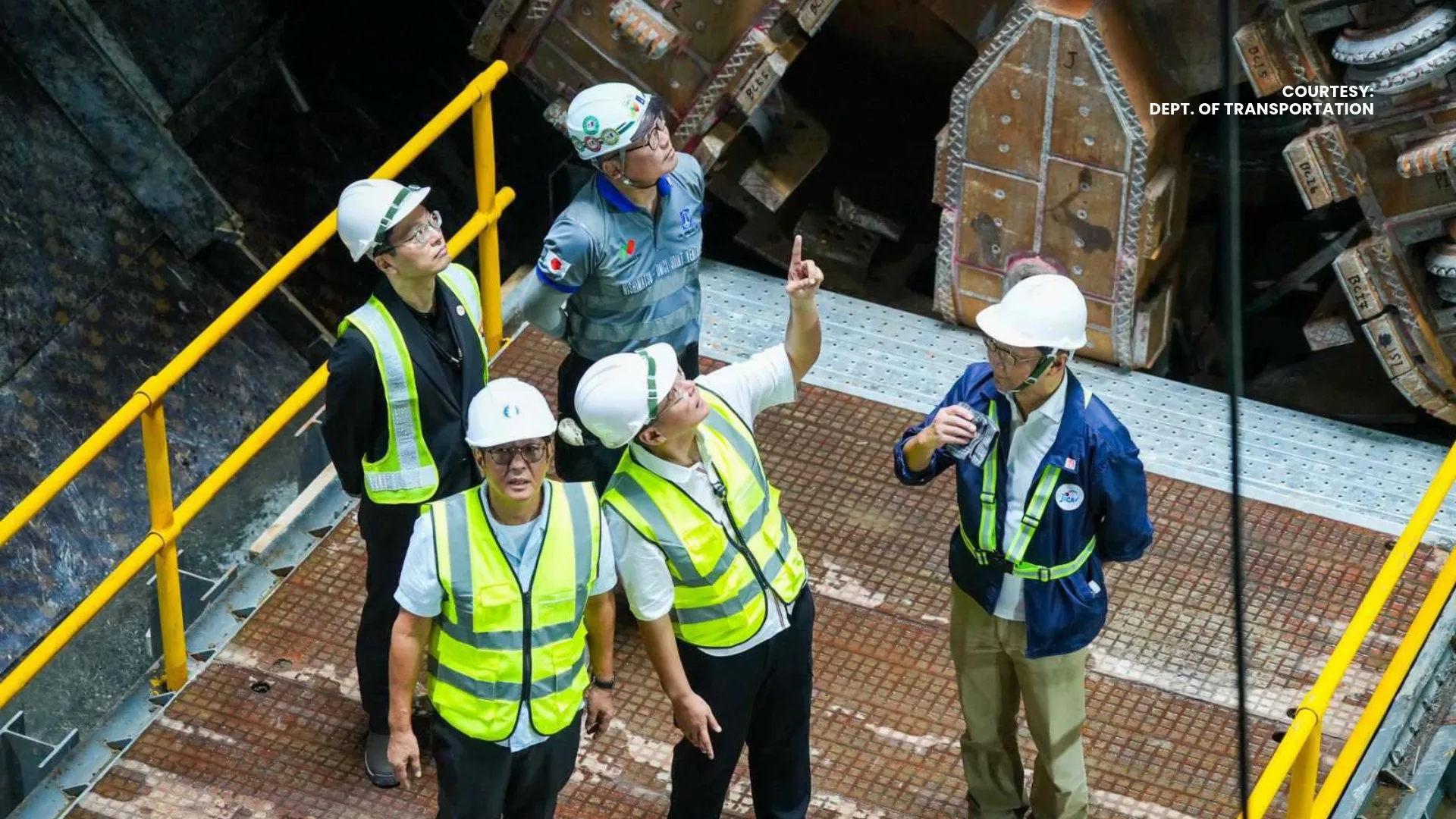
The Department of Transportation (DOTr) is inviting European businesses to invest in the country’s transport infrastructure projects aimed at improving mobility and easing daily commutes across the Philippines.
“The DOTr is optimistic that the private sector sees the endless possibilities of the Philippine transport projects that will contribute to the country’s economic growth and address the concerns of the commuting public,” Transportation Secretary Giovanni Lopez said.
“We hope that expanded public-private partnerships can help sustain our efforts in pursuit of a revitalized Philippine transportation system,” Lopez added.
Speaking at the ASEAN 2026 Transportation Forum organized by the European Chamber of Commerce of the Philippines (ECCP), Transportation Undersecretary for Planning and Project Development Teodorico Delfin emphasized the critical role of foreign business partners in enhancing nationwide connectivity.
Delfin noted that Secretary Lopez directed the agency to accelerate construction across major infrastructure corridors to deliver prompt benefits to the public.
“We need the private sector and our development partners. And with partners such as the ECCP and the European business community, we can connect more Filipinos to jobs and opportunities, move people and goods more efficiently, and strengthen the Philippines’ connections with ASEAN and the wider world,” Delfin said.
Key rail infrastructure presented to investors included the Metro Manila Subway Project, the North-South Commuter Railway (NSCR), and the proposed Subic-Clark-Manila-Batangas Railway, which aims to link major Luzon ports and economic centers.
For road transport, the DOTr highlighted ongoing expansion of the EDSA Busway, the Cebu Bus Rapid Transit (CBRT), the Davao Public Transport Modernization Project (DPTMP), and active transport network initiatives.
In aviation, the agency cited completed upgrades at Antique, Laoag International, and Siargao airports, as well as active development projects at Busuanga, Bicol, Bukidnon, and Davao international airports.
Delfin also pointed to public-private partnership milestones, including the privatization of Ninoy Aquino International Airport (NAIA), Laguindingan Airport, and Bohol-Panglao International Airport, as key drivers for modernizing facility operations.