
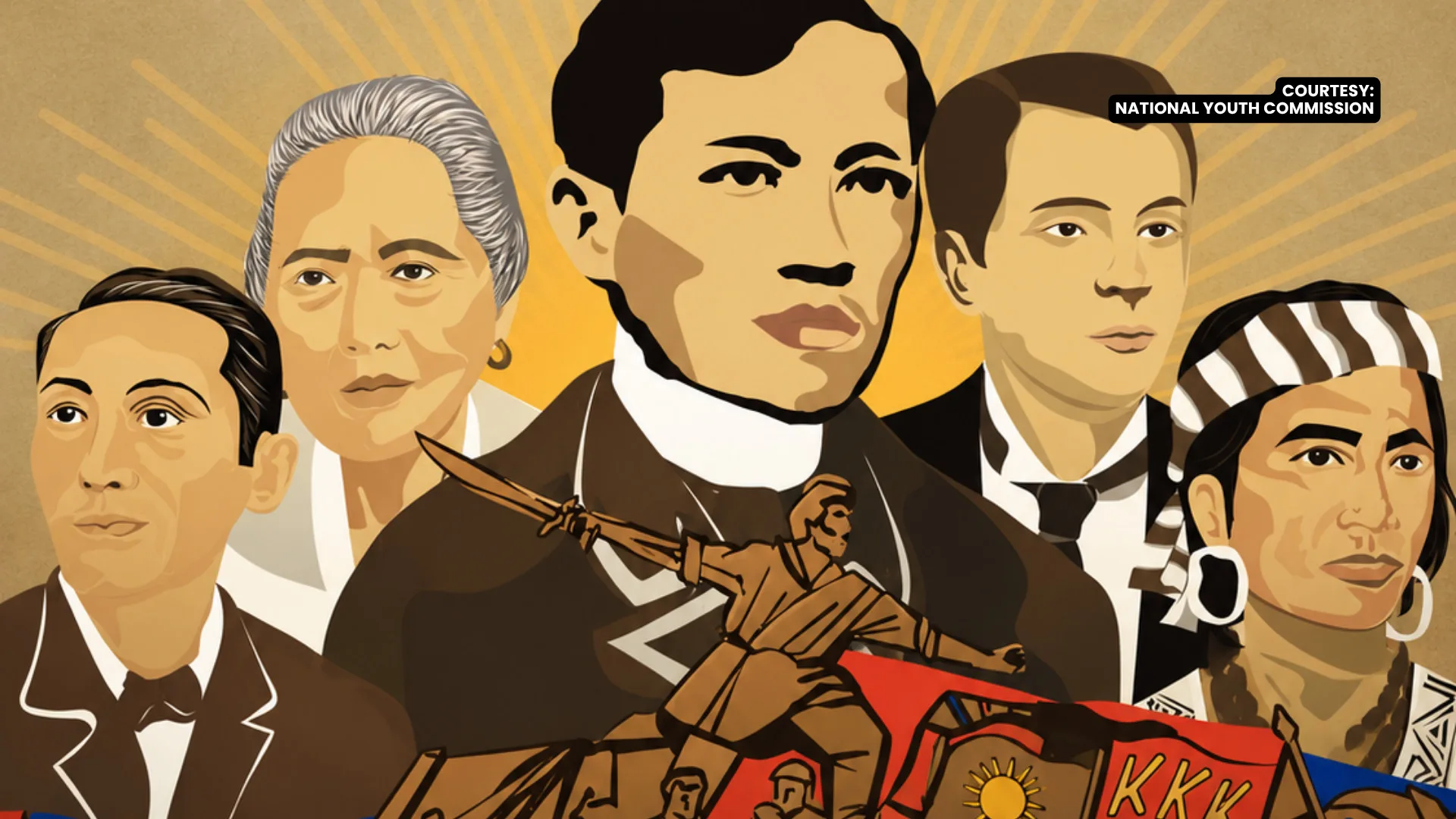
Nine historical figures were recommended as national heroes in 1995, but none has been formally proclaimed through a law, executive order or proclamation.
National Heroes Day is observed every last Monday of August and honors Filipinos who contributed to the country’s history and struggle for independence.
No Filipino historical figure, however, has been formally proclaimed a national hero through a law, executive order or proclamation.
In 1993, President Fidel Ramos created the National Heroes Commission to study and recommend individuals who could be recognized as national heroes.
On November 15, 1995, the commission’s technical committee submitted nine names to the Department of Education, Culture and Sports. No formal proclamation followed.
These historical figures remain widely recognized and commemorated in Philippine history despite the absence of a formal proclamation naming them national heroes:
1. Jose Rizal (1861–1896)
Jose Protasio Rizal Mercado y Alonso Realonda was born on June 19, 1861, in Calamba, Laguna. A physician, ophthalmologist, writer and artist, he wrote Noli Me Tangere in 1887 and El Filibusterismo in 1891, both of which depicted abuses under Spanish colonial rule and the friars. Rizal was exiled to Dapitan in 1892 and later arrested and tried for sedition and rebellion after the Philippine Revolution began in 1896. He was executed at Bagumbayan on December 30, 1896, a date now commemorated as Rizal Day. Republic Act No. 1425, or the Rizal Law of 1956, requires the study of his life and works in schools.
2. Andres Bonifacio (1863–1897)
Andres Bonifacio was born on May 1, 1863, in Tondo, Manila. In 1892, he co-founded the Kataastaasang Kagalanggalangang Katipunan ng mga Anak ng Bayan, or Katipunan, which sought independence from Spain through armed revolution. He became one of the leaders of the Philippine Revolution in 1896. At the Tejeros Convention in March 1897, Emilio Aguinaldo was elected president of the revolutionary government, but Bonifacio rejected the election results. He was later arrested, tried for treason and executed in Cavite on May 10, 1897. November 30, his birthday, is observed as a national holiday.
3. Emilio Aguinaldo (1869–1964)
Emilio Aguinaldo was born in Kawit, Cavite, and became a leading figure in the Philippine Revolution. He led the revolutionary government beginning in 1897 and negotiated the Pact of Biak-na-Bato with Spain. On June 12, 1898, he declared Philippine independence from Spain in Kawit and later became president of the First Philippine Republic. Aguinaldo led Filipino forces during the Philippine-American War until American troops captured him in March 1901, after which he swore allegiance to the United States. Andres Bonifacio was executed in 1897 under the authority of the revolutionary government led by Aguinaldo. Aguinaldo died in 1964 at the age of 94.
4. Apolinario Mabini (1864–1903)
Apolinario Mabini was born on July 23, 1864, in Talaga, Tanauan, Batangas. He contracted polio in 1896, which left him paralyzed from the waist down. Mabini served as a chief adviser to Aguinaldo and played a major role in the revolutionary government and the First Philippine Republic, earning the title “Sublime Paralytic.” He opposed American rule and refused to take an oath of allegiance to the United States following his capture. Mabini was deported to Guam before returning to the Philippines in 1903. He died of cholera later that year.
5. Marcelo H. Del Pilar (1850–1896)
Marcelo H. Del Pilar was born on August 30, 1850, in Bulakan, Bulacan. A lawyer and journalist, he founded Diariong Tagalog in 1882 and wrote against abuses committed by Spanish colonial authorities and friars. Del Pilar left the Philippines for Spain in 1888 and later became editor of La Solidaridad, the newspaper of the Propaganda Movement, where he worked with other Filipino reformists seeking political and social reforms. He died of tuberculosis in Barcelona on July 4, 1896. August 30 is now observed in the Philippines as National Press Freedom Day.
6. Sultan Dipatuan Kudarat (c. 1581–1671)
Sultan Dipatuan Kudarat, also known as Muhammad Kudarat, led the Maguindanao Sultanate during the 17th century. He resisted Spanish attempts to expand colonial control over Mindanao from around 1619 until his death in 1671. Among the nine figures recommended by the National Heroes Commission’s technical committee, Kudarat represents an earlier period of resistance to Spanish colonization, preceding the 18th- and 19th-century uprisings associated with the other figures on the list.
7. Juan Luna (1857–1899)
Juan Luna was born on October 23, 1857, in Badoc, Ilocos Norte. He studied art in Europe and won a gold medal at the 1884 Madrid Exposition of Fine Arts for his painting Spoliarium. Luna was associated with Jose Rizal, Marcelo H. Del Pilar and other members of the Filipino reform movement in Europe and participated in the Propaganda Movement. He died of a heart attack in Hong Kong in 1899 at the age of 41.
8. Melchora Aquino (1812–1919)
Melchora Aquino, also known as Tandang Sora, was born in Caloocan and was 84 years old when the Philippine Revolution began in 1896. She provided Katipunero fighters with food, shelter and care for their wounds. Spanish authorities later arrested and interrogated her, but she refused to identify members of the Katipunan. Aquino was deported to Guam in 1897 and later returned to the Philippines. She died in 1919 at around 107 years old.
9. Gabriela Silang (1731–1763)
Maria Josefa Gabriela Cariño de Silang was born in Santa Cruz, Ilocos Sur, and became a leader of the Ilocano revolt against Spanish rule. Her husband, Diego Silang, led the uprising until he was assassinated on May 28, 1763. Gabriela then took command of his forces and continued the rebellion, rallying around 2,000 Igorot fighters before she was captured. She was publicly executed by hanging in Vigan on September 20, 1763, at the age of 32.