
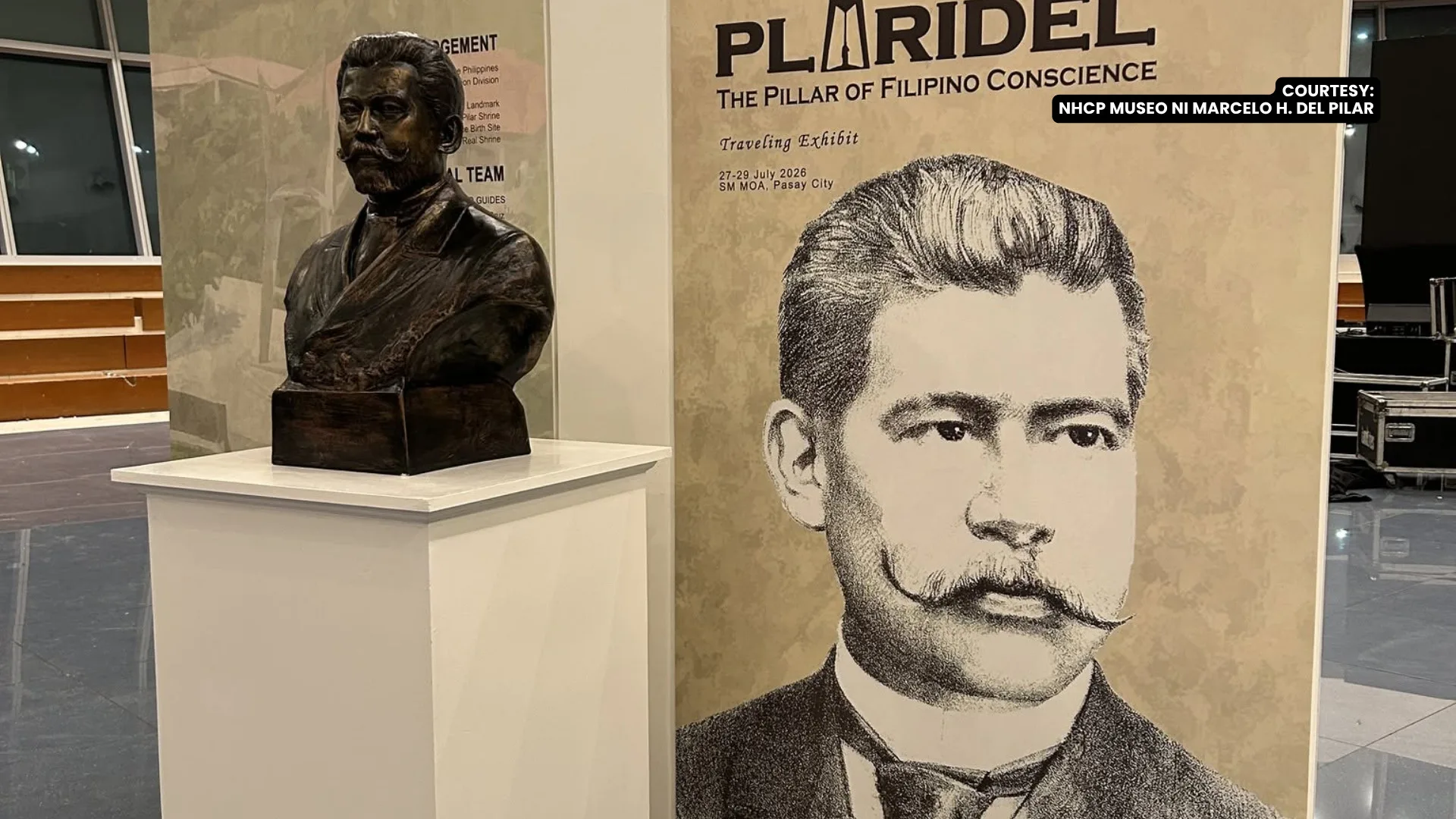
Marcelo H. Del Pilar occupies a familiar place in Philippine history. He was Plaridel, the journalist and propagandist who challenged Spanish colonial rule with his pen and became one of the leading voices of the reform movement.
Less familiar is what that struggle cost him.
A new exhibition at Ayala Museum turns to that personal history, examining Del Pilar’s exile, financial hardship and separation from his family alongside the political work for which he is remembered.

Lolo Marcelo: The Man Behind the Hero (Reflections on the Legacy of Marcelo H. Del Pilar) opens September 4, days after Del Pilar’s 176th birth anniversary, and runs until October 17.
At the center of the project is 17-year-old Pax Pineda, Del Pilar’s great-great-great-grandson, who approaches the propagandist’s history as part of his own family’s inheritance.
“I am very grateful to have this opportunity to tell, show, and share my Lolo Marcelo’s story the same week as what would have been his 176th birth anniversary,” Pineda said.
Born in Bulakan, Bulacan, on August 30, 1850, Del Pilar trained in law before emerging as an influential journalist and advocate for political reform. Writing under the pen name Plaridel, he used satire and journalism to criticize abuses under Spanish colonial rule, including in Dasalan at Tocsohan.
Facing persecution, Del Pilar left the Philippines for Spain in 1888. There, he became closely associated with La Solidaridad, the newspaper that served as the principal voice of the Filipino reform movement in Spain.
Through the publication, Del Pilar and other propagandists pressed for political reforms and greater equality for Filipinos. But sustaining that campaign became increasingly difficult.
As La Solidaridad struggled financially, Del Pilar used his own limited resources to help keep it in publication while living thousands of kilometers from his wife and children.
For Pineda, those circumstances are essential to understanding the historical figure his family knew as Lolo Marcelo.
“Last month at NHCP’s HistoEx, Lolo Marcelo’s journey was also shown and discussed in an exhibit there and I’m so happy it was well attended. But I also want to share the other side felt by his family, and how their lives were marked by profound sacrifice,” he said.
“He left his family and his homeland in 1888 to escape persecution and continue his fight for justice in Madrid. He not only edited it, wrote for it, but also ended up financing La Solidaridad when funds dried up leaving him penniless. Yet, his legacy endures,” Pineda added.
“His dedication to the cause of freedom, coupled with his roles as a devoted father and husband, humanizes his storied life.”
La Solidaridad ceased publication in 1895. Del Pilar, living in poverty and suffering from tuberculosis, died in Barcelona on July 4, 1896, at age 45. He never returned to the Philippines.
Ayala Museum curator Tenten Mina sees a contemporary resonance in Del Pilar’s experience, particularly in the separation from family that defined his years abroad.
He “endured physical separation from family and loved ones for the sake of the greater good, a sacrifice many Filipinos still make today,” Mina said.
That connection gives the 19th-century story a familiar dimension. More than a century later, leaving one’s family behind remains part of the experience of many Filipinos who go abroad for work and opportunity.
The exhibition brings together artifacts, letters and artworks, including materials loaned by the National Historical Commission of the Philippines from the Marcelo H. Del Pilar Shrine in Bulakan, Bulacan.
Through them, the exhibition presents a Del Pilar beyond the familiar pen name, writings and political campaigns. It places the public legacy alongside the private consequences of pursuing reform under colonial rule.
The history of the Propaganda Movement is often told through its ideas, publications and leading personalities. Lolo Marcelo adds the family perspective, asking what those political convictions demanded of the people who pursued them and those they left behind.