
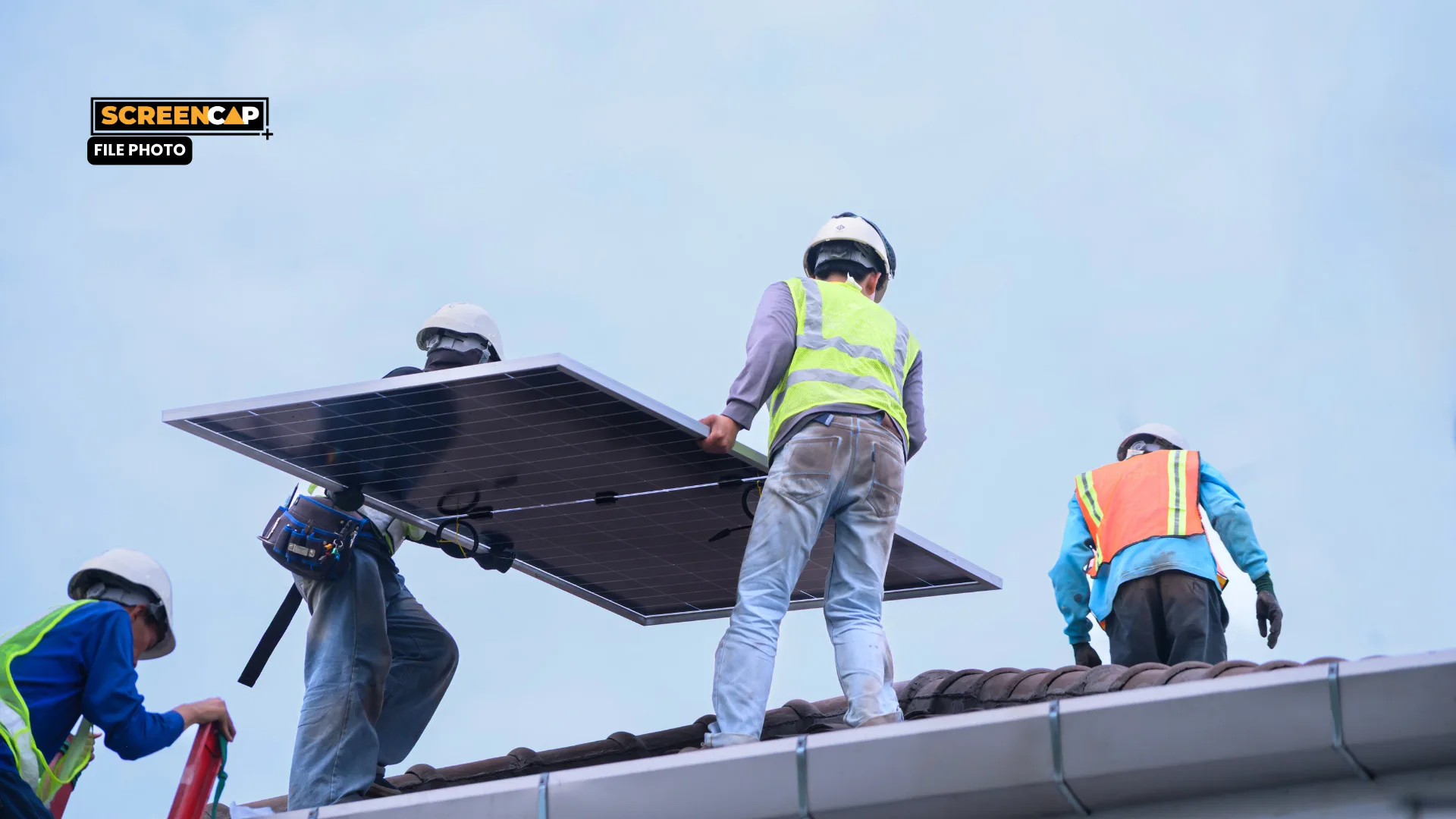
Filipino households and businesses would be given greater freedom to generate and store electricity for their own use without being subjected to requirements intended for commercial power producers under a bill filed in the House of Representatives.
House Bill No. 10431, or the proposed Sariling Kuryente Act, was filed by Speaker Faustino “Bojie” G. Dy III and House Majority Leader Ferdinand Alexander “Sandro” A. Marcos.
The measure seeks to remove unnecessary barriers to the installation of rooftop solar panels, battery storage systems, and other behind-the-meter energy technologies.
“President Ferdinand ‘Bongbong’ R. Marcos Jr. wants energy policy to give people real choices, and Speaker Bojie Dy and I believe those choices should begin at home. Kung kaya ng isang pamilya o negosyo na gumawa at mag-store ng sariling kuryente, government should clear the path instead of treating them like a commercial power producer,” Marcos stressed.
The bill would amend the Electric Power Industry Reform Act of 2001 to distinguish electricity generated for personal consumption from power produced for commercial sale.
Under the proposal, an end-user operating a behind-the-meter generation or storage system solely for personal use would not be classified as a generation company.
Systems using equipment certified under standards recognized by the Energy Regulatory Commission to prevent electricity from flowing into the distribution grid would no longer require a certificate of compliance or prior ERC authorization.
Distribution utilities would also be barred from requiring prior approval, an agreement, a technical study, meter replacement, or additional charges for qualified non-exporting systems.
Owners may only be required to notify the distribution utility once the installation has been completed.
Systems capable of exporting electricity to the grid would remain subject to interconnection rules, but utilities would be required to act on complete applications within 10 working days.
An application would be deemed approved if the utility fails to issue a decision within the prescribed period. Unauthorized procedures, technical requirements, equipment specifications, and charges would also be prohibited.
The Department of Energy would be directed to promote the wider adoption of behind-the-meter systems, remove national and local administrative barriers, and improve access to financing, qualified installers, and reliable equipment.
Homeowners’ associations, subdivision developers, and property managers would be prohibited from blocking installations on property owned or exclusively controlled by the end-user, subject only to reasonable conditions involving structural safety, public safety, and common property.
“This bill protects consumers from needless delays without compromising safety, which is the balance President Ferdinand ‘Bongbong’ Marcos Jr. has consistently demanded and Speaker Bojie Dy has helped us pursue in the House. Ang mensahe nito ay malinaw: families should be free to invest in their own power supply under fair and uniform rules,” Marcos noted.
The DOE, in consultation with the ERC and concerned stakeholders, would issue the implementing rules within 90 days. The law would take effect 15 days after publication.