
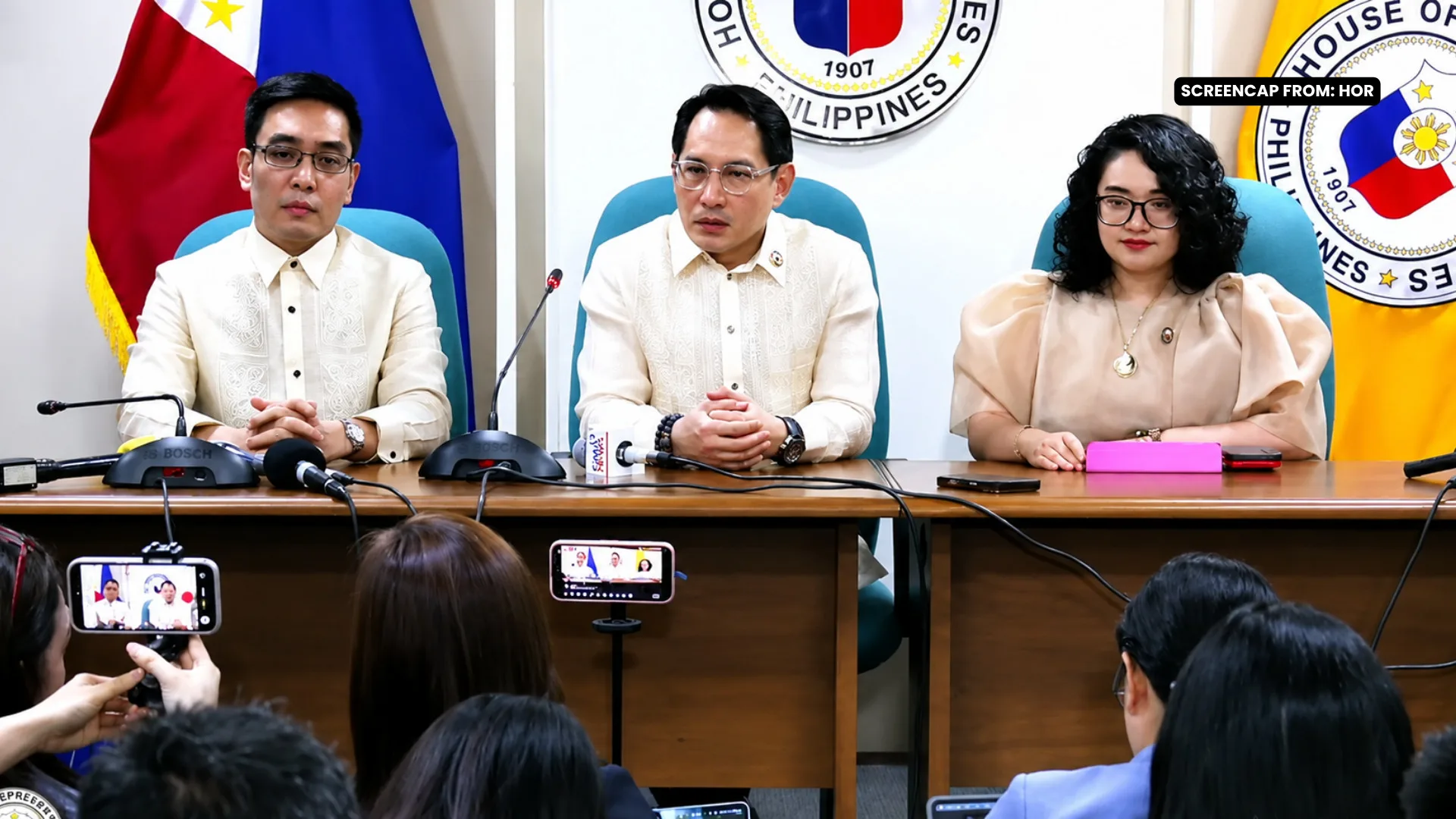
The House prosecution panel said Vice President Sara Duterte’s resignation would not erase accountability or automatically stop the impeachment proceedings against her.
At a press conference, House trial spokespersons Zia Alonto Adiong and Renee Louise Co, along with legal spokesperson Atty. Benjamin “Jay” Tolosa Jr., said the impeachment case remains a constitutional accountability process that must be allowed to proceed.
“Hindi naman ho masasayang dahil unang-una, pananagutan po ang pinag-uusapan natin dito,” Alonto Adiong said.
He said the trial should continue because the allegations in the Articles of Impeachment must still be heard, examined, and decided by the Senate impeachment court.
“The trial will continue; the trial must continue because the resignation does not automatically condone the acts committed,” Alonto Adiong said.
He said the House of Representatives has already impeached Duterte, leaving the Senate with the constitutional duty to try and decide the case.
“Na-impeach na po siya, as far as the House of Representatives is concerned, na-impeach na po siya, so the procedural conclusion from that stage, according to the Constitution, is for the Senate to try and decide,” he said.
Alonto Adiong said resignation is available to public officials, whether elected or appointed, but accountability should not be treated as optional.
“Resignation is an option given to all public officers, either appointed or elected,” he said. “Accountability should not be made an optional issue.”
Co said resignation would only address whether Duterte remains in office, but would not answer the substance of the impeachment complaint.
“Wala pong sayang sa proseso ng pananagutan,” Co said. “If ever it comes to that, resignation only evades accountability.”
She said resignation would not resolve the four Articles of Impeachment or the issue of possible permanent disqualification from holding public office.
“It only answers the question of occupation of office,” Co said.
“Hindi pa nito sinasagot ‘yung four Articles of Impeachment, hindi nito sinasagot ‘yung other constitutional, ipinapataw na permanent or perpetual disqualification from office,” she added.
Co said the prosecution remains ready to proceed regardless of any developments.
“The trial is promised to the Filipino people today. We will continue regardless of kung ano pong maging development,” she said.
Tolosa said the question of resignation assumes that leaving office would end the case, but the prosecution maintains that impeachment carries two constitutional penalties: removal from office and perpetual disqualification from holding public office.
“Dalawa ang penalty dito sa constitutional impeachment: removal and perpetual disqualification from holding public office,” Tolosa said.
He cited a Supreme Court ruling in an administrative case in which resignation did not render the proceedings moot because other penalties could still be imposed.
“The resignation does not render the entire proceedings moot dahil again mayroon pang other penalties,” Tolosa said.
Tolosa said the same principle should apply more strongly in Duterte’s impeachment case because of the gravity of the allegations.
“Here we’re talking about billions of financial transactions, hundreds of millions of confidential funds,” he said.
For the House prosecution panel, resignation may settle the question of continued occupancy of office, but it would not erase the alleged acts, the Articles of Impeachment, or the Senate impeachment court’s duty to try and decide the case.