
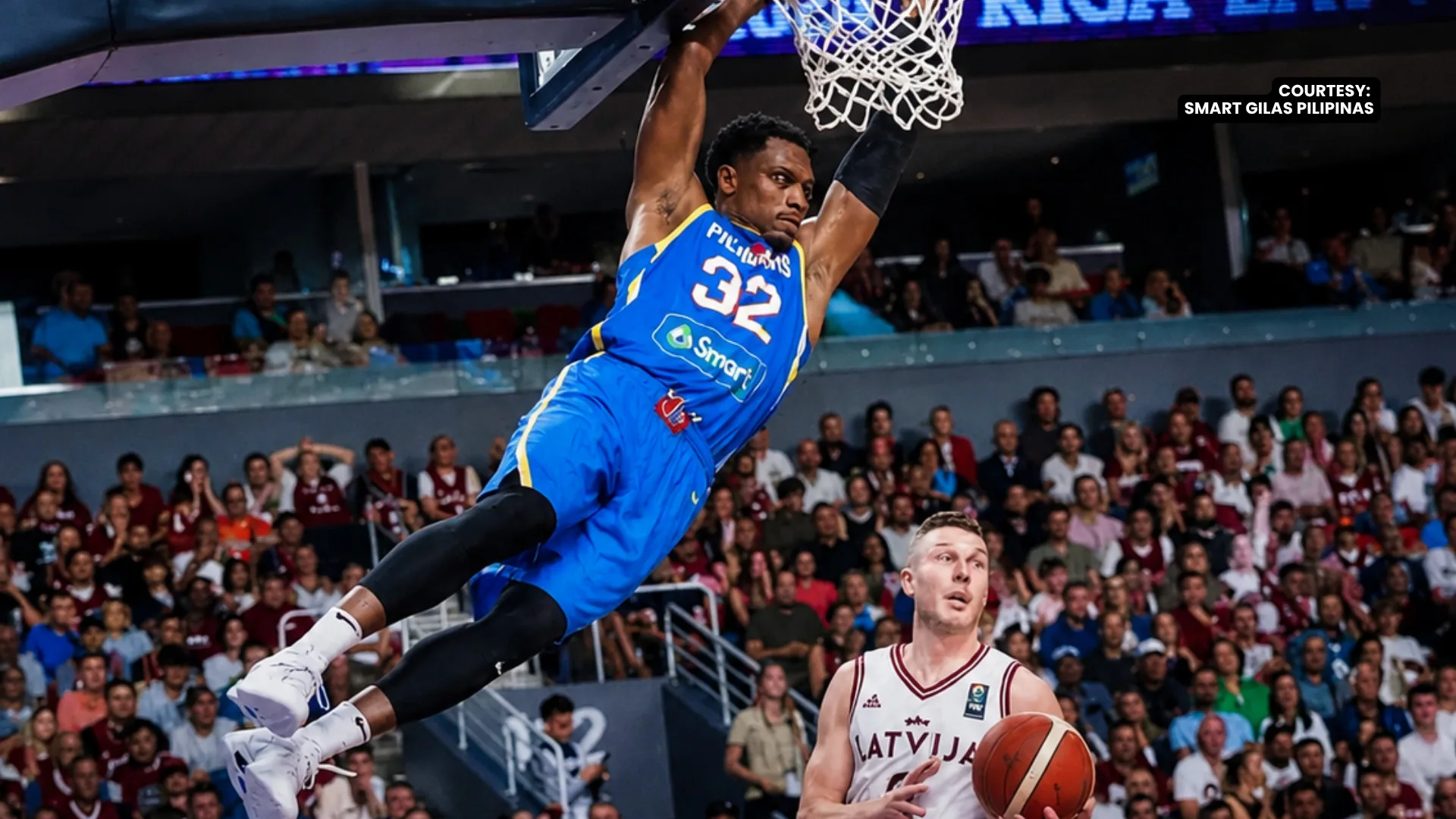
The Philippine men’s basketball team has left for a weeklong training camp in Brisbane, Australia, as it sharpens preparations for the third window of the FIBA World Cup Asian Qualifiers, which are critical to the country’s long-term bid to return and re-establish itself on basketball’s biggest stage.
Head coach Tim Cone and his 12-man roster departed for Australia after an open practice in San Juan, where fans caught a glimpse of a squad balancing continuity with new additions ahead of high-stakes road matches against New Zealand and Australia.
“We’ll be there for four days before we proceed to New Zealand,” Cone said, noting that the team will also play two tune-up games on June 28 and 29, including a matchup against the Brisbane Bullets, who have provided access to facilities and scrimmage opportunities to help the Filipinos acclimatize.
Beyond conditioning and systems work, the camp carries a broader competitive weight: Gilas enters the window with a 2–2 record in Group A, already assured of a second-round berth but still in pursuit of positioning and momentum against regional powerhouses.
Australia leads the group at 4–0, while the Philippines is tied with New Zealand at 2–2, with Guam still winless.
The Brisbane stint is expected to test not only execution but resilience, especially with adjustments to colder weather and road-game conditions that often define success in international play.
Cone’s roster features a blend of established core and fresh reinforcements, including Justin Baltazar, Mike Philips, Troy Rosario, and Juan Gomez de Liaño, who steps in for the injured Scottie Thompson. Veterans Justin Brownlee, June Mar Fajardo, Chris Newsome, Dwight Ramos, RJ Abarrientos, Carl Tamayo, and AJ Edu round out a lineup being shaped for both present competitiveness and long-term continuity.
Baltazar’s length and rebounding, Philips’ defensive versatility, and Gomez de Liaño’s pace and perimeter creativity are seen as potential boosts to a team still evolving its identity in the post-World Cup cycle.
For Gilas, the upcoming window is more than just qualification math, but part of a larger national ambition to return to the FIBA World Cup and compete consistently at that level. In that context, every road game, every possession, and every adjustment carries weight not just for standings, but for the program’s trajectory.
Against elite Asian opposition, the margin for error is thin, and the expectations are higher. The qualifiers are shaping into a test of depth, discipline, and adaptability, qualities that will define whether the Philippines can move beyond participation and into sustained competitiveness on the world stage.