
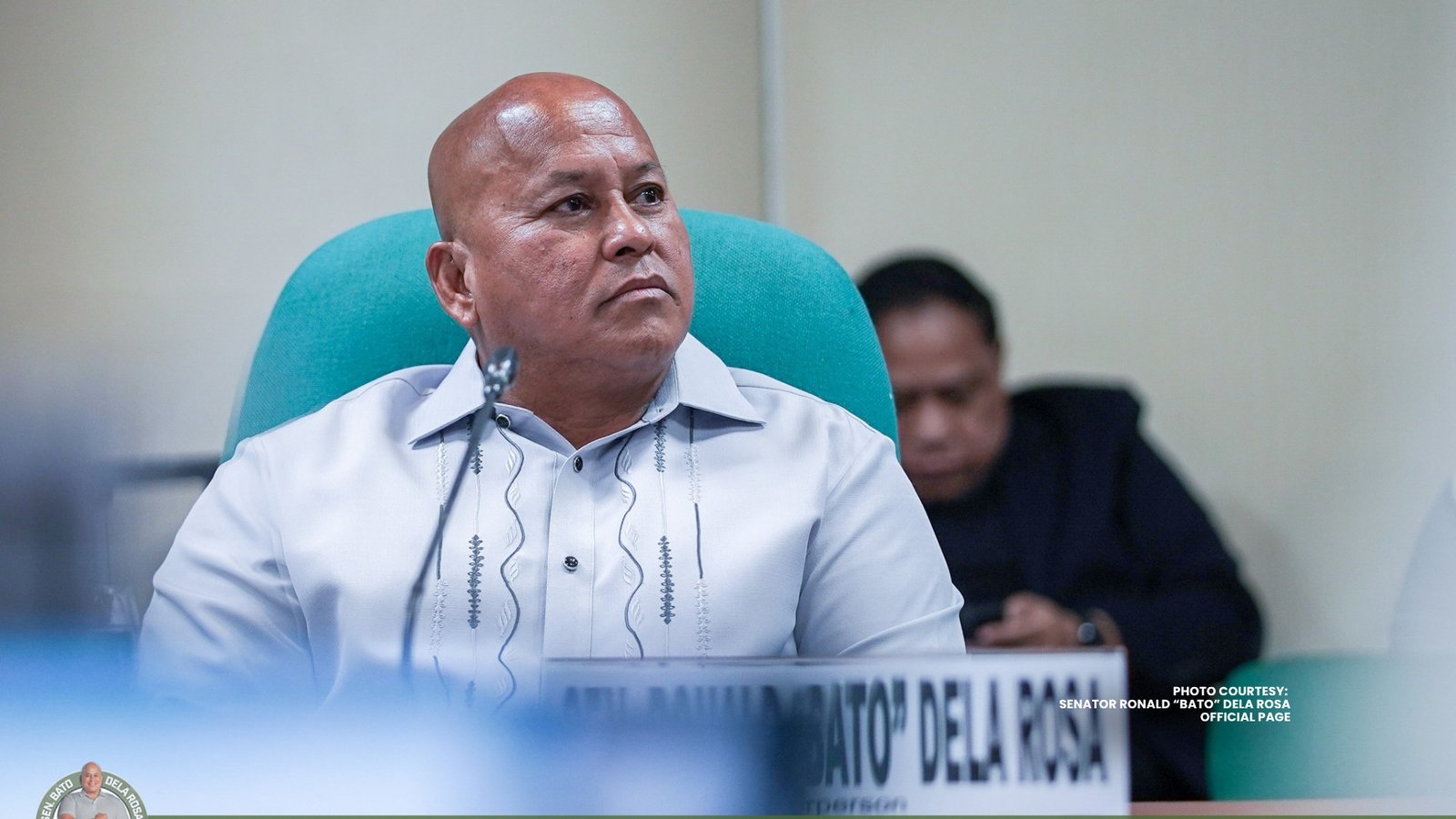
Arrest warrants against Senators Ronald “Bato” dela Rosa and Christopher Lawrence “Bong” Go could be issued by the International Criminal Court (ICC) following their identification as alleged indirect co-perpetrators in the crimes against humanity case against former president Rodrigo Duterte, an ICC-accredited lawyer said Tuesday.
Gilbert Andres, common legal representative of victims in the drug war case, said that while applications for arrest warrants remain confidential, it is reasonable to expect that warrants may be issued.
Under ICC rules, Andres explained, requests for arrest warrants are sealed and known only to the Office of the Prosecutor and judges of the Pre-Trial Chamber. The public would only be informed once warrants are transmitted to relevant state authorities.
Aside from dela Rosa and Go, the ICC document named former Philippine National Police chiefs Oscar Albayalde, Camilo Cascolan and Vicente Danao; former Justice secretary Vitaliano Aguirre II; former National Bureau of Investigation director Dante Gierran; and former Philippine Drug Enforcement Agency chief Isidro Lapeña as alleged co-perpetrators.
Andres clarified that ICC arrest warrants are not governed by Philippine extradition procedures because the ICC is an international tribunal, not a sovereign state.
Instead, he cited Republic Act No. 9851, which allows the Philippine government to cooperate with international courts investigating international crimes.
He noted that the same legal framework was applied in Duterte’s surrender to the ICC in March last year and could likewise apply to other officials if warrants are issued.
On whether sitting senators could be arrested, Andres said holding public office does not shield anyone from accountability.
While he acknowledged that arrests inside Senate premises might be avoided as a matter of courtesy, he said lawmakers could still be arrested outside the Senate if valid ICC warrants exist.
“No individual should be shielded from accountability for international crimes by virtue of position or office,” he said.
Andres also addressed the release of a less redacted ICC document identifying alleged co-perpetrators. He said prosecutors determined that revealing the names would not endanger victims or witnesses.
According to him, the document outlines the prosecution’s theory of a “common plan” behind what it describes as a systematic and widespread attack on civilians, and previews how the case for crimes against humanity will be argued.
He distinguished between “co-conspirators” under Philippine domestic law and “indirect co-perpetrators” under Article 25 of the Rome Statute, which refers to individuals who allegedly orchestrated or enabled crimes without directly committing them.
Andres rejected claims that the disclosure of names was politically motivated, stressing that ICC proceedings are not influenced by political considerations.
The developments come ahead of the Feb. 23 confirmation of charges hearing against Duterte.
Separately, the ICC Office of the Prosecutor informed Pre-Trial Chamber I that it would take no position on a request by Duterte’s defense team to disqualify external legal representatives for the victims.
In a public redacted filing dated Feb. 16, Deputy Prosecutor Mame Mandiaye Niang confirmed the prosecution’s neutral stance on the “Defense Request for the Disqualification of the External Legal Representatives for the Victims.”
The filing also disclosed that the prosecution would not rely on two specific pieces of evidence during the confirmation of charges hearing, nor would it use the same material at trial. The document was classified as confidential due to sensitive information affecting witness security and ongoing investigations.
Earlier, Duterte’s defense team sought the disqualification of lawyers Joel Butuyan, Gilbert Andres and Nicolene Arcaina, alleging conflicts of interest.
In a Feb. 11 filing, the defense asked Pre-Trial Chamber I to revoke their appointments, citing Arcaina’s previous employment at CenterLaw Philippines, where she worked with Butuyan and Andres, and alleging potential access to case materials involving a government official.
The defense claimed that responses to inquiries about such contacts were “evasive,” and argued that Arcaina’s dual role created an appearance of bias.
“The resulting web creates an objective appearance of bias incompatible with the integrity of the proceedings,” the filing stated.
The defense requested the immediate suspension of the lawyers’ access to case records pending a decision on their disqualification.
Of the two senators named in the ICC document, Go has publicly rejected the allegations, calling them “entirely unfounded, one-sided and unfair,” and continues to perform his Senate duties.
Dela Rosa, who served as PNP chief during Duterte’s presidency, has not regularly attended Senate sessions since November 2025 amid speculation about a possible warrant, although no confirmed arrest order has been publicly released.