
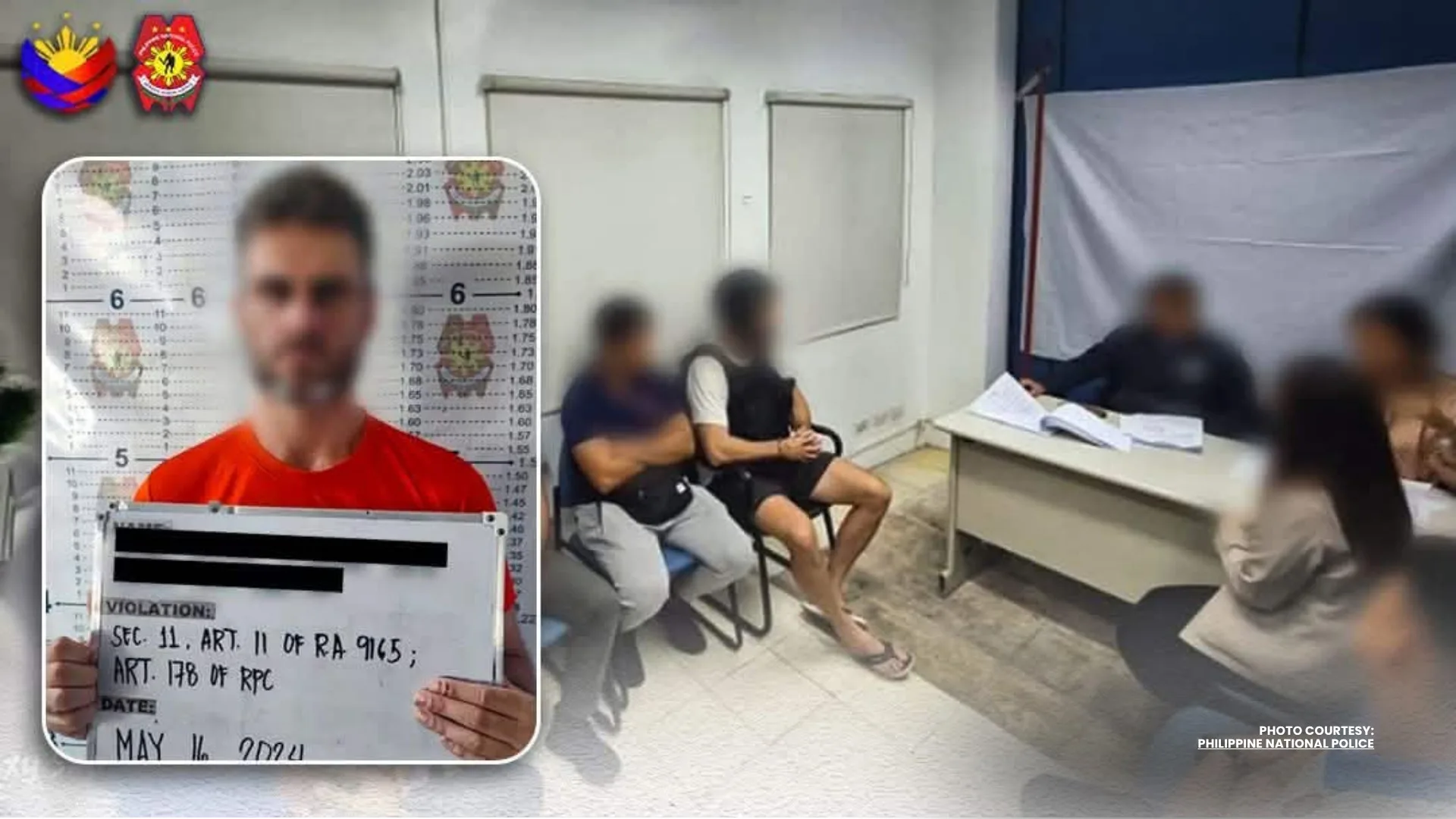
A Tagaytay City court has convicted Canadian national Thomas Gordon O’Quinn on drug possession charges stemming from an investigation into the P9.5-billion shabu shipment seized in Batangas in 2024.
The Philippine National Police (PNP) welcomed the ruling, saying it showed that major anti-drug operations must end not only in arrests and confiscations but also in convictions that hold up in court.
PNP chief Gen. Jose Melencio Nartatez Jr. said the case demonstrated the importance of evidence preservation, proper procedure, and coordination among law enforcement agencies.
“This case highlights that our anti-illegal drugs campaign is not only measured by arrests and seizures but also by successful convictions. The suspect was arrested without loss of life, evidence was preserved, and the judicial process ultimately resulted in a conviction, reflecting the effectiveness of a rules-based approach to law enforcement,” Nartatez said.
In a 19-page decision dated May 29, 2026, the Tagaytay City Regional Trial Court Branch 135 found O’Quinn guilty of two counts of illegal possession of dangerous drugs under Republic Act 9165, or the Comprehensive Dangerous Drugs Act of 2002.
The court sentenced him to life imprisonment and ordered him to pay a P500,000 fine for possession of 45 grams of shabu. He was also handed another life sentence and a P10-million fine for possession of 81.65 grams of cocaine.
Presiding Judge Andy De Vera said the prosecution was able to establish that the seized drugs were properly handled from confiscation to presentation in court.
“The court finds that the chain of custody over the seized dangerous drugs remained unbroken, and the integrity and evidentiary value of the corpus delicti have been properly preserved,” the decision read.
O’Quinn was arrested on May 16, 2024 inside a wellness resort in Tagaytay City after police linked him to the April 15, 2024 interdiction in Alitagtag, Batangas, where authorities seized around 1.4 tons of suspected shabu valued at about P9.5 billion.
Court records showed that the van driver in the Batangas drug haul, Ajalon Michael Zarate, identified several alleged associates, including a man using the name “James Toby Martin.” Investigators later found that the name was allegedly one of the false identities used by O’Quinn.
The Philippine Center for Transnational Crime also confirmed that O’Quinn was the subject of an Interpol Red Notice for drug-related offenses in the United States.
Authorities later received information that O’Quinn had been regularly visiting the Tagaytay resort for detox therapy. Police surveillance teams monitored the area on May 16, 2024 and coordinated with the Bureau of Immigration’s Fugitive Search Unit.
Immigration officers entered O’Quinn’s villa that night under a mission order and arrested him after he allegedly failed to present valid identification documents.
A police search later yielded two vacuum-sealed sachets of suspected shabu, one sachet of suspected cocaine, tablets believed to be illegal drugs, and 14 identification cards bearing O’Quinn’s photo but different names.
The aliases cited in the ruling included James Toby Martin, Robert Wagner, Steve Wilson, Ryan Brooke, Steve McDonald, and Jay Mcallan.
The court said O’Quinn was the lone occupant of the villa where the drugs were recovered and failed to present any legal authority to possess them.
“Having been caught in flagrante delicto, there is prima facie evidence that he had animus possidendi,” the court said, referring to intent to possess the illegal drugs.
Nartatez said the conviction was consistent with the directive of President Ferdinand Marcos Jr. and Interior Secretary Jonvic Remulla to sustain the campaign against illegal drugs while respecting human rights and the rule of law.
He also ordered police units to maintain operational momentum and deepen coordination with the Bureau of Immigration, international law enforcement partners, and other concerned agencies.
“The successful prosecution of a suspect linked to one of the country’s largest drug seizures sends a strong message that drug syndicates will be held accountable under the rule of law. We will continue working with our local and international partners to ensure that those involved in the illegal drug trade are brought before the courts and held accountable,” Nartatez said.