
A growing bloc of senators is moving to abolish the country’s long-standing travel tax, with six separate measures now pending in the Senate aimed at removing what lawmakers describe as an outdated financial burden on Filipino travelers.
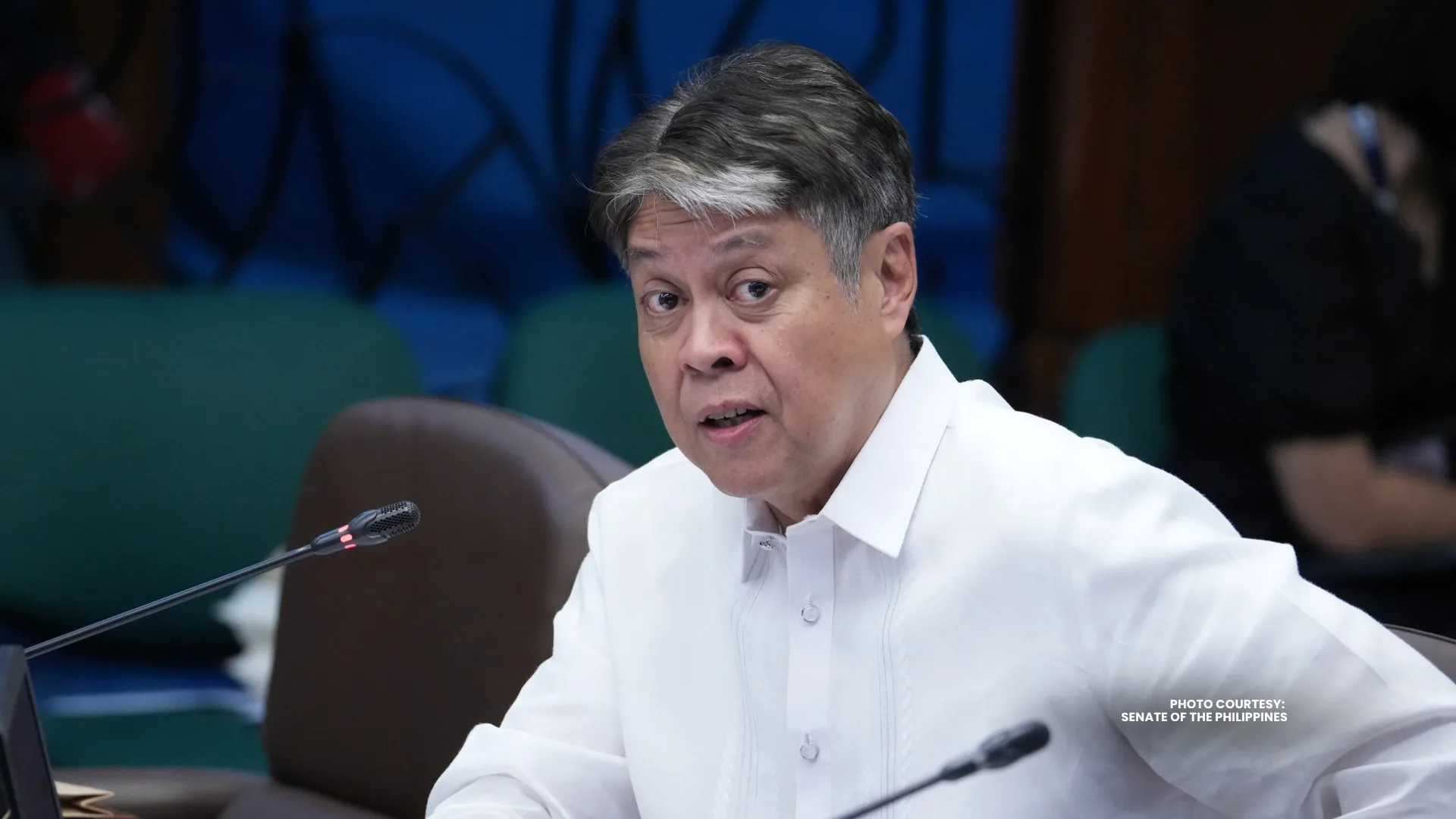
The latest proposal, Senate Bill 1843, was filed on Feb. 11 by Sen. Francis Pangilinan. His measure joins similar initiatives from Senate Majority Leader Juan Miguel Zubiri, Minority Leader Alan Peter Cayetano, and Senators Joel Villanueva, Erwin Tulfo and Raffy Tulfo.
In his explanatory note, Pangilinan said removing the levy could unlock broader economic gains.
“By lowering the cost of international travel, we expect to stimulate passenger volume, increase spending on transport, accommodation, food and services and generate positive spillovers across the economy,” Pangilinan stated.
“Increased travel activity also strengthens people-to-people exchanges and supports the Philippines’ positioning as a competitive and accessible destination,” he added.
The travel tax was introduced in 1977 through Presidential Decree 1183 under former president Ferdinand Marcos Sr., originally intended to limit foreign travel and conserve foreign exchange reserves.
At present, Filipino travelers pay P2,700 for first-class tickets and P1,620 for economy class.
Pangilinan argued that the mandatory charges affect the constitutional right to travel enshrined in Article III, Section 6 of the 1987 Constitution, particularly for citizens with limited financial capacity.
With the Philippines pursuing stronger regional integration within ASEAN, several senators contend that the tax no longer reflects current economic realities and instead serves as a barrier to mobility.
All pending measures propose full abolition of the travel tax, except for Sen. Raffy Tulfo’s version, which seeks to remove the charge specifically for economy-class passengers, aiming to make overseas travel more accessible beyond higher-income brackets.