
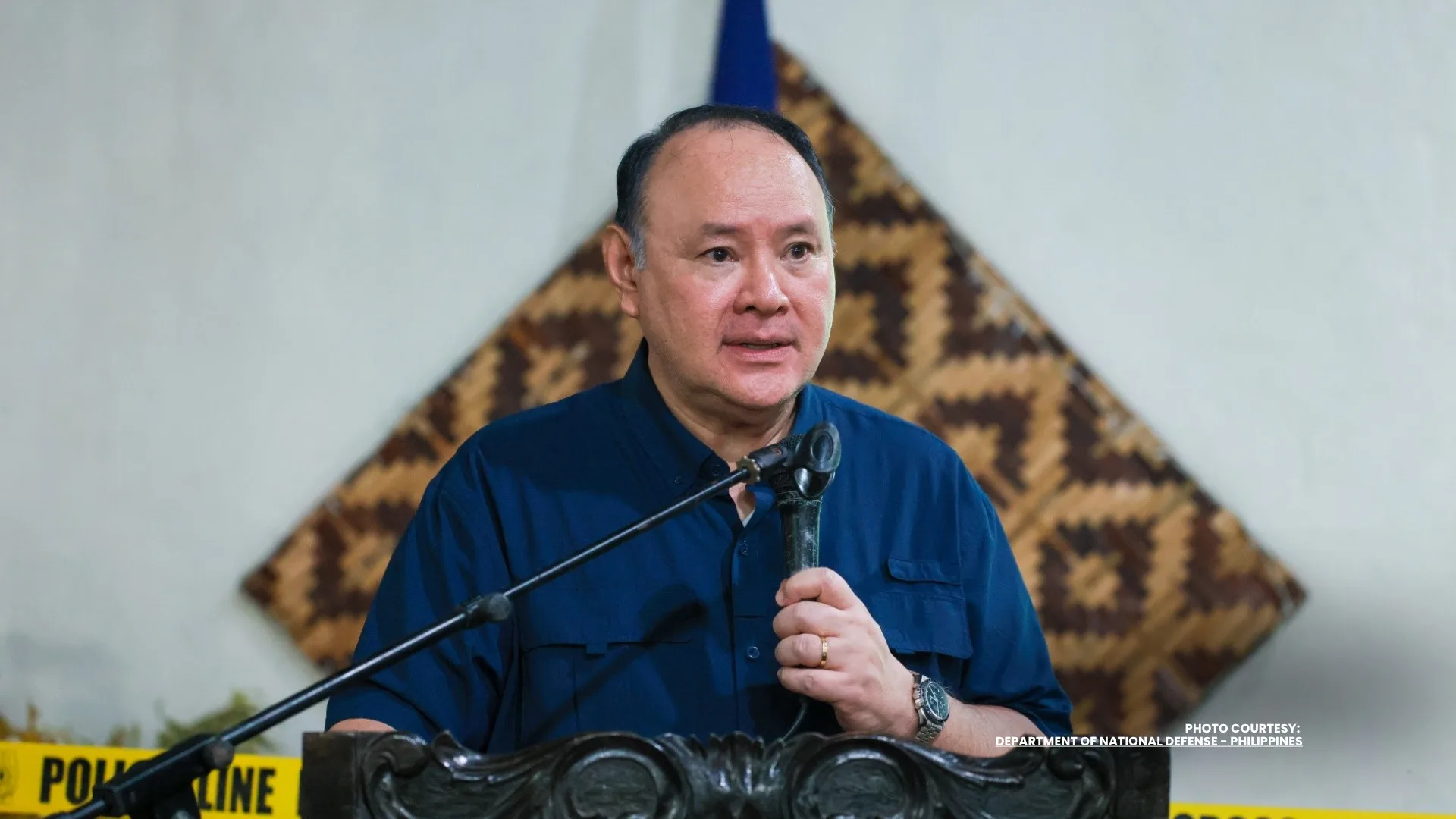
Defense Secretary Gilberto Teodoro Jr. said the Philippines is preparing for deeper defense engagement with partner-countries, including possible discussions on access arrangements and joint activities once pending security agreements move forward.
Speaking to reporters, Teodoro said that if the proposed Status of Forces Agreement (SOFA) is ratified and receives Senate concurrence, officials can immediately begin talks on access-related arrangements and specific activities. He said partner countries have also expressed interest in cooperation on disaster risk reduction.
Teodoro said he will present on Sunday a developing concept on why countries should “converge” in the Philippines, based on work by maritime law expert Professor Jay Batongbacal.
According to Teodoro, the concept seeks to define the Philippines’ unique value as a point of international engagement, especially as more countries deepen security and strategic cooperation with Manila.
“We are already converging in the Philippines,” Teodoro said, noting that countries from Europe, the United States, and other regions see the need to work with the country despite differing levels of understanding on regional issues.
Asked what he expects from US Defense Secretary Pete Hegseth, Teodoro said he had already received assurance that cooperation in the region would continue despite other US operations abroad, including in Iran.
“For me, basically, I heard from him that our convergence here in this area will continue,” he said.
Teodoro also described a General Security of Military Information Agreement, or GSOMIA, as a logical step for countries engaging at a higher defense level.
“When you are engaging at that level, you need a GSOMIA,” he said, adding that such an agreement would help facilitate cooperation by ensuring that sensitive information is handled only by authorized personnel.
He said the Philippines already has templates for similar agreements and expressed hope that discussions with other leaders could proceed.
On reports concerning structures in Bajo de Masinloc, Teodoro said authorities have received raw information but stressed that the area remains closely monitored.
“Bajo de Masinloc is a dynamic area. So, even if it’s small, we are still protecting it,” he said.
Asked whether the Philippines and China could someday overcome present tensions in the same way the Philippines and Japan rebuilt relations into a comprehensive strategic partnership, Teodoro said this would depend on China’s system of government.
“We don’t have a problem with the Chinese people. But their government is the problem,” he said.
Teodoro said deterrence remains necessary as long as uncertainty persists in the region, though he expressed hope that such measures would one day no longer be needed.
“I hope that deterrence won’t be needed,” he said. “But you can’t be sure when it will be needed. That’s why it shouldn’t be neglected.”