
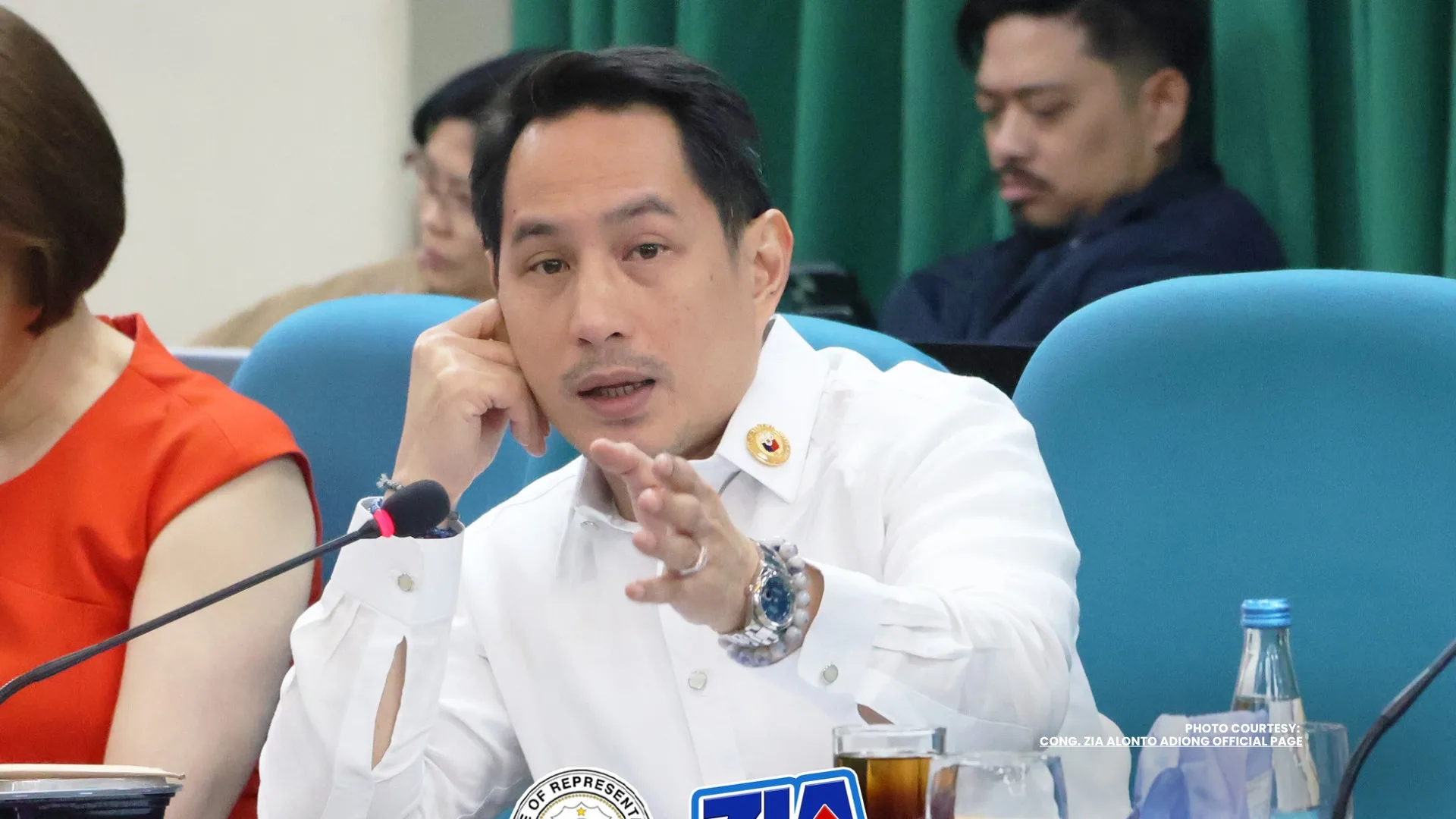
The House impeachment trial team stressed that senator-judges must be physically present during the impeachment trial of Vice President Sara Duterte, saying online participation should be limited only to emergencies or force majeure situations.
A House trial spokesperson said physical presence is “indispensable” in impeachment proceedings, which carry a constitutional mandate and require senator-judges to personally assess evidence, witnesses, and the overall conduct of the trial.
The lawmaker said remote voting may be allowed in legislative proceedings only under extraordinary circumstances, such as a national emergency or force majeure. He cited the House Committee on Justice proceedings on the impeachment complaint against Duterte, where some members sought to cast their votes online after deciding to support the finding of sufficient grounds to impeach.
The request, he said, was denied because there was no emergency or force majeure situation at the time.
“But then the chairperson of the committee on justice declined the request of some of these members to have a remote voting precisely because there’s no force majeure, there’s no emergency that is happening in this country,” according to House impeachment trial spokesperson and Lanao del Sur Rep. Zia Alonto Adiong.
He said rules exist not merely to secure quorum or settle procedural matters, but to protect the integrity of legislative and constitutional proceedings.
“So to me, rules are placed there in order not to maintain procedural matters or to secure the required number of legislators in order to establish a quorum, but the integrity of the legislation itself,” he said.
At the same time, the House official said the prosecution panel would respect whatever decision the Senate makes on online participation and voting, citing the need to maintain institutional respect between co-equal chambers.
“Well, of course, we respect whatever is the decision of the Senate because we have to maintain the institution of the Senate… because we have to maintain an institutional respect to our co-equal branch,” he noted.
Still, he emphasized that Senate rules must ultimately preserve the credibility of the impeachment court.
“The rules are placed there precisely to protect the integrity of the legislation or the Senate,” he added.
In arguing for physical attendance, the House spokesperson compared the role of senator-judges to that of judges in regular courts, who must personally observe witnesses as they testify.
He said trials are not limited to spoken testimony or documentary evidence, as a judge must also assess a witness’ demeanor, manner of speaking, reactions during cross-examination, and overall disposition while presenting evidence.
“Imagine ‘yung isang huwes, in regular courts… it’s really important and indispensable the presence of the judge. In a trial court, kasi ‘pag nandun po ‘yung testigo dyan sa witness stand, the judge also examines and observes the mannerism,” he said.
He said the same standard should apply more strongly to an impeachment court, given the Senate’s exclusive constitutional authority to try impeachment cases.
“Imagine in the impeachment court, ang pinag-uusapan po dito, Constitution,” he said. “No matter how high you have obtained in terms of the positions that you were elected to, hindi nangangahulugan na hindi ka aabutin ng accountability mechanism ng ating Constitution.”
“So how much more for an exclusive mandate given to the Senate by the Constitution to perform?” he added.