
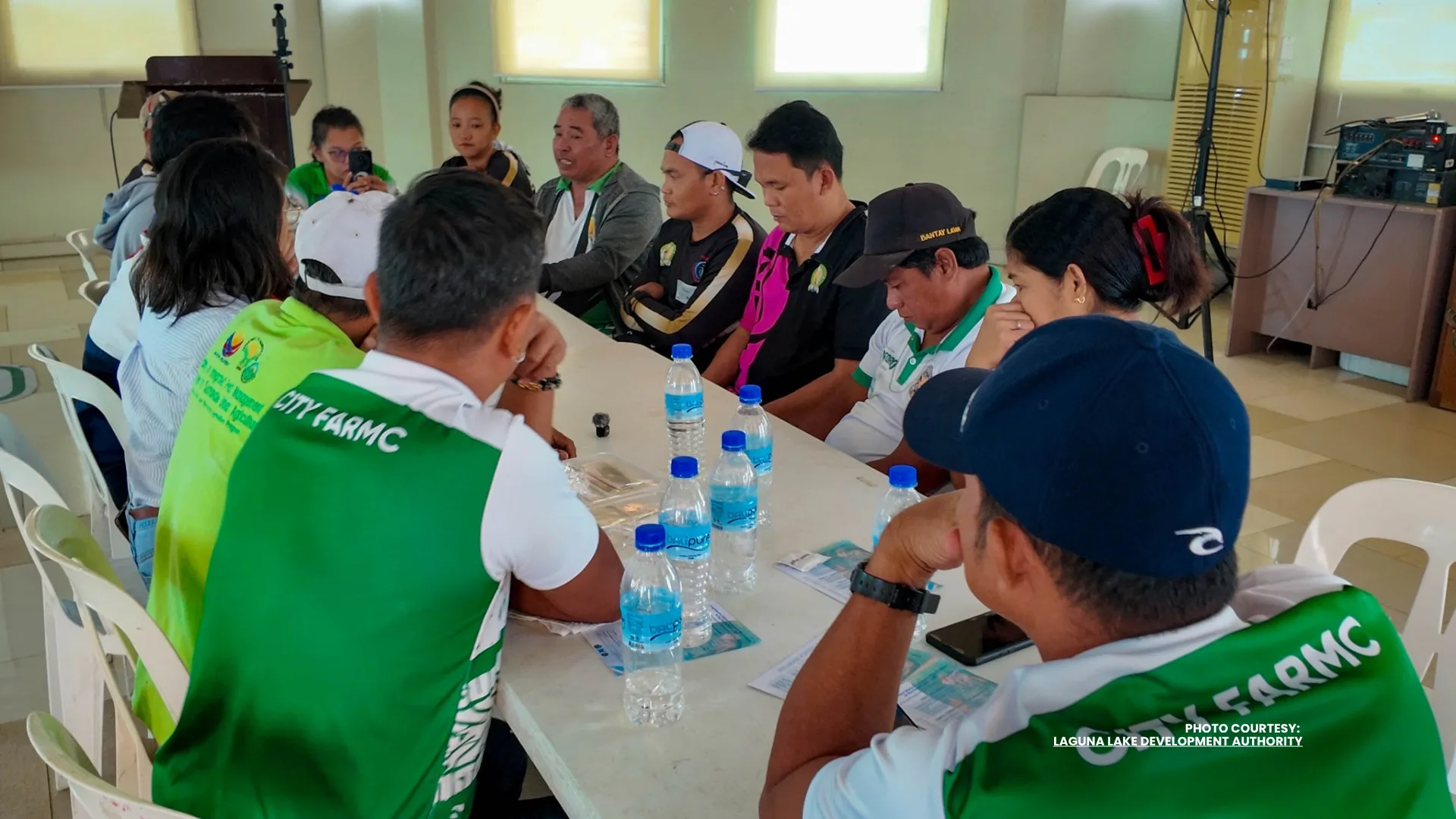
Fisherfolk in Laguna are seeking firm safeguards for their livelihood as major infrastructure and energy projects move forward around Laguna Lake.
In Barangay Sampiruhan, Calamba City, officers and members of the Laguna Integrated Fisheries and Aquatic Resources Management Council raised concerns over the proposed Laguna Lake Road Network project and the planned 2,000-hectare floating solar project, warning that both could affect access to fishing grounds and disrupt daily operations.
The fishing community said clear protection measures are needed before the projects proceed, particularly on which areas of the lake will remain open for fishing and how construction will affect water flow, navigation, and flood conditions.
For the floating solar project, talks have already been held with the Laguna Lake Development Authority (LLDA) and the companies involved. A Memorandum of Agreement (MOA) is being prepared to identify protected fishing zones and define where project facilities may be built.
“Sinisigurado namin na iyong solar project hindi po maaantala ang lugar na inyong pinapangangisdaan,” Senator Bam Aquino said during the meeting.
“Kapag matuloy po iyan, meron tayong MOA signing kasama ng mga kompanya, kasama ng LLDA, kasama ng grupong ito at ng probinsya para malinaw kung saan nila itatayo iyong proyekto at saan iyong lugar ng ating pangingisdaan,” he added.
Fisherfolk leaders also expressed concern over the Department of Public Works and Highways’ (DPWH) proposed Laguna Lake Road Network, particularly its planned embankment design along portions of the lake.
They warned that the embankment could block water flow, worsen flooding, trap water lilies and debris, and make it more difficult for small fishing boats to reach their fishing areas. The community suggested that the government consider a viaduct or elevated-road design instead.
Initial discussions have been held with the DPWH to raise the possible impact of the project design on fishing communities. Further consultations among the agency, residents, and private stakeholders are expected to explore possible design adjustments.
“Hindi naman ho natin pinipigilan iyong road network. Gusto natin matuloy pero kailangan lang bigyan ng konting malasakit naman sa mga mamamayan po dito,” Aquino said.
Aside from livelihood and infrastructure concerns, the meeting also touched on education assistance for students from fisherfolk families, including support under the Free College Law and scholarship programs.
Families with children taking nursing and other allied health sciences courses were encouraged to apply for the Commission on Higher Education’s Allied Health Experiential Assistance for Deserving Students Grant.
The program provides a one-time P25,000 grant for Related Learning Experience (RLE) expenses, with 19,000 students expected to receive assistance.
“Sa June 1, magla-launch kami kasama ng CHED ng scholarship para sa RLE. May P25,000 grant para sa nursing students. Ngayong taon lang iyan ila-launch at pinaglaban talaga namin iyan,” Aquino said.
A P500-million allocation has been secured in the 2026 national budget to help cover RLE expenses of allied health sciences students.
A proposed measure, Senate Bill No. 123, also seeks to make RLE free in state universities and colleges and local universities and colleges, while allowing nursing students in private schools to apply for tertiary education subsidy assistance for RLE-related costs.